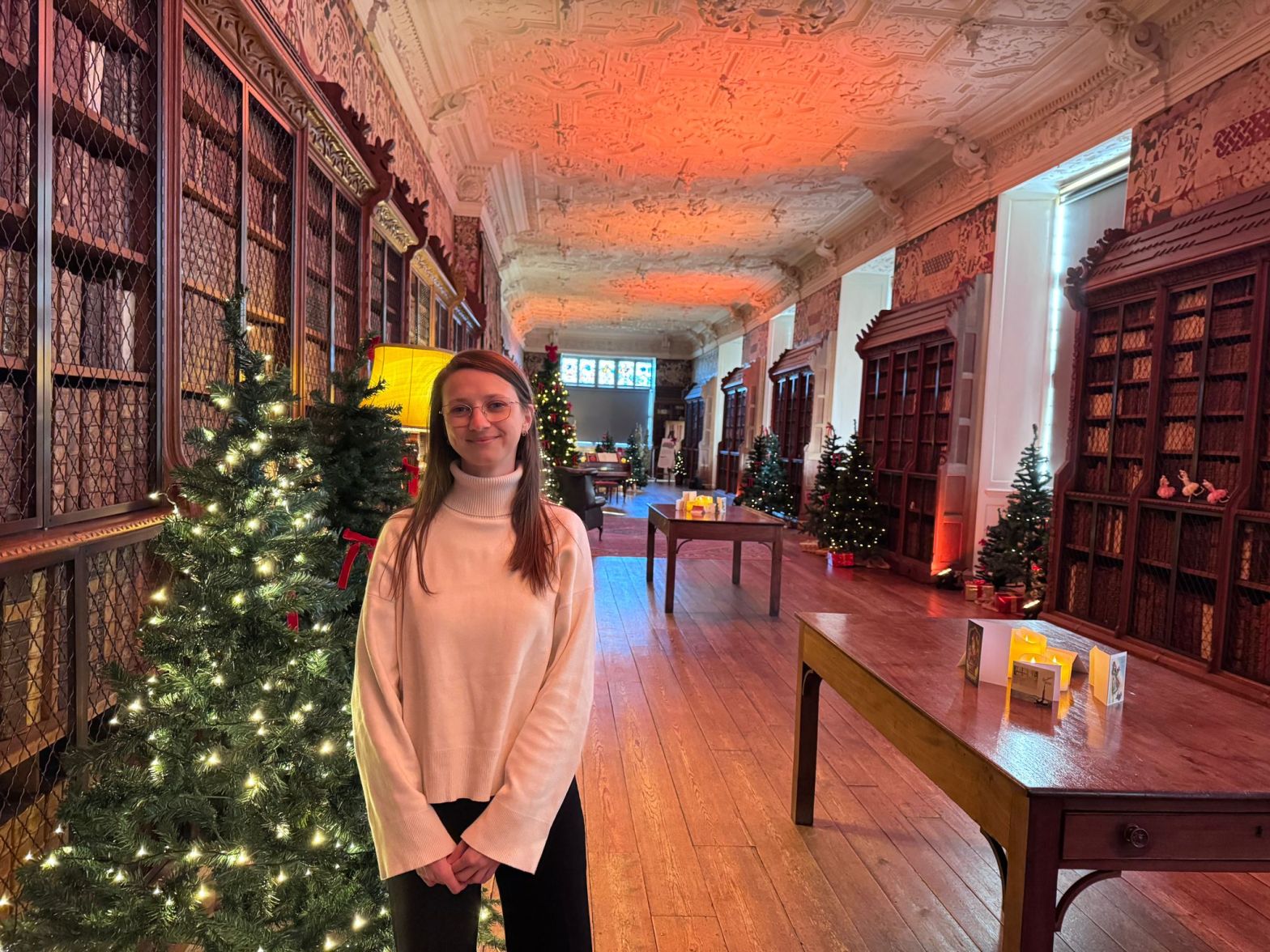
In November 2025, the Consortium of European Research Libraries (CERL) awarded CODEX member, Carmen Oanea, an internship at the largest library administered by the National Trust: Blickling Hall, Norfolk. Here is Carmen’s account, published today on the CERL blog:
My name is Carmen Oanea and I am a PhD student in Book History at the Faculty of Letters, Babeș-Bolyai University, Cluj-Napoca, Romania. My research focuses on Jesuit libraries, tracing the provenance of volumes and looking for early modern readers. Before applying for an internship, I catalogued more than half of the incunabula preserved at the Academy Library in Cluj in MEI. These books are part of the extant historic libraries that belonged to the religious orders running schools there in the early modern period, such as the Jesuits, the Unitarians, and the Reformed.
The opportunity to do a short internship at Blickling was a nice change for me and a good insight into private collections. I was able to see how they were put together, which books were selected, which markets were available to eighteenth-century book collectors and how these libraries are managed today. For this, I was assisted by Dr. Rebecca Feakes, the property librarian at Blickling, who was there daily to answer my question about the collection, about Ellys, and to help me navigate the intriguing library Ellys built with the help of his librarian and physician, John Mitchell. Although Blickling hosts the largest library in the National Trust, with over 12.000 volumes, the collection was mostly overlooked until the 1980s, when John Fuggles brought it back to light. Additional work was undertaken by Yvonne Lewis and Giles Mandelbrote in the mid-1990s (Purcell 17).
Before I go any further, I want to give a brief introduction to the collection, the house where it is preserved, and about the work undertaken today to take care of it. The site of Blickling is famous for its association with the Boleyn family, which acquired the property in the fifteenth century and built a family home there, where supposedly Anne Boleyn (c. 1501–1536 future wife of Henry VIII and Queen of England) was also born. The derelict property was then purchased in the early seventeenth-century by Sir Henry Hobart (c. 1560-1626), lawyer and baronet under James I. He hired architect Robert Lyminge to design the house, which was built between 1619-1626 in a Jacobean style (Purcell 3). The house underwent modifications especially during the Victorian era and even later in the twentieth century. Not much is known about Hobart’s library, and the collections which can be seen today in the Brown Drawing Room and mainly in the Long Gallery came to Blickling at a later date. But how did the books end up at Blickling, in Norfolk? Sir Richard Ellys was born at Nocton, Lincolnshire in a wealthy family with “a distinctive religious outlook” (Purcell 17), which Ellys himself adopted in his adult life. Due to his rejection of the Church of England, Ellys did not attend Cambridge or Oxford, and was presumably educated at home before travelling to the Continent to attend lectures in the Netherlands and in Italy. His wealth, education, connections, and interest in antiques (which became increasingly fashionable at the time), lead to his desire to build a fine library. He attended sales in London in the early 1720s and met John Micthell, Scottish physician, in “the early 1970s” (Purcell 3), who then became his librarian. Mitchell procured most of Ellys’ collection at auctions, both domestic and abroad, and managed the growing library. His signature “M” can now be seen on the flyleaves of many copies at Blickling (more information on Mitchell is available in Giles Mandelbrote and Yvonne Lewis, 2004). After his death, Ellys’ collection went to a distant cousin who had it transferred to Blickling by 1745. The 8th Marquise of Lothian, Philip Kerr, left the property to the National Trust in 1940. Today, both the collection and the house are taken care of by the regular staff and by volunteers who work with visitors and help take care of the books in the Long Gallery.
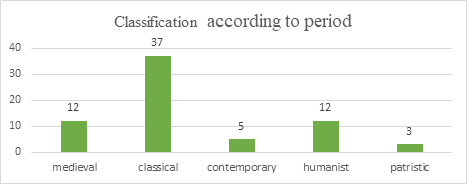
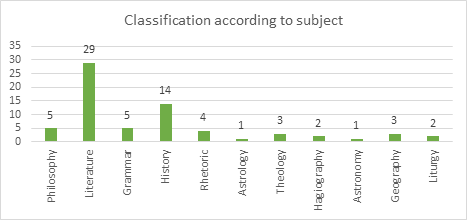
The collection includes sixty-nine incunabula, which cover basic subjects, such as Grammar, Philosophy, Geography, Astronomy, Rhetoric. Among the entire collection, volumes containing literary works are best represented, with twenty-nine titles. Ellys was also interested in History, of which he collected fourteen titles. More than half of his incunabula are classical work, while humanistic and medieval titles make up for 34.6% of the total number of works. More can be seen in Fig. 1 and 2 below. Ellys was fond of Aldine editions, especially in Greek, of which nine can be found in his collection. Around 52% of his incunabula come from Venice (thirty-six items), from the presses of Simon Bevilaqua, Vindelinus de Spira, Franciscus Renner (de Heilbronn), Philippus Pincius, and many others. Among the other Italian presses, he bought books printed in Rome, Milan, Florence, and Verona. A few editions with German provenance can be found as well, mostly from workshops in Nuremberg, Cologne, or Ulm.
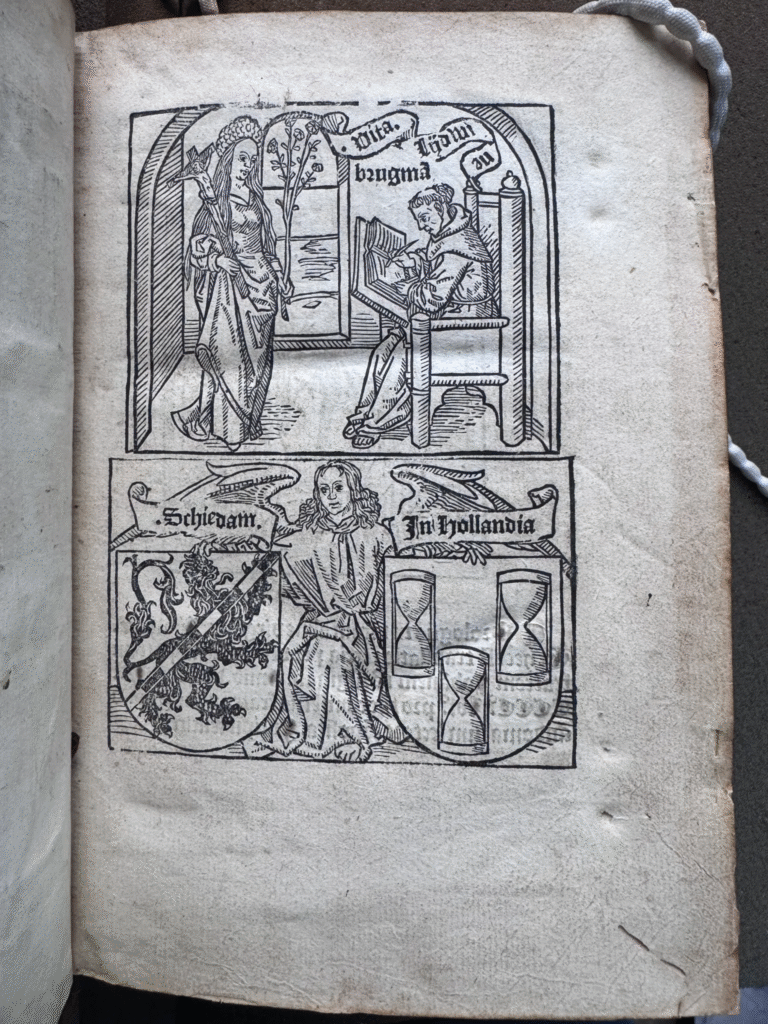
As I mentioned previously, Ellys and Mitchell were present at a selection of large auctions that included the libraries of John Bridges (1666 – 1724), English lawyer and book collector; Thomas Rawlinson (1681 – 1725), Mayor of London, lawyer and avid antiquarian; Jean-Baptiste Colbert (1619-1683), French Minister of State; and Victor-Marie d’Estrées (1660-1737), French military officer. Some of the items acquired for the library can be traced to earlier periods and a different type of owners. For instance, NT 3233524, a copy of Vita S. Lidwinae, printed in Schiedam, the Netherlands, in 1498, was owned by the Premonstratensian Canonesses of Koningsveld, Delft probably until 1572, when the order was dissolved (ib01220000). NT 3069900, a 1472 edition of Pharetra doctorum et philosophorum, printed in Strasbourg by Johann Mentelin (ip00571000) was owned by the Monastery of the Order of Saint Paul the First Hermit in Wiener Neustadt sometime after 1480, the date of its foundation.
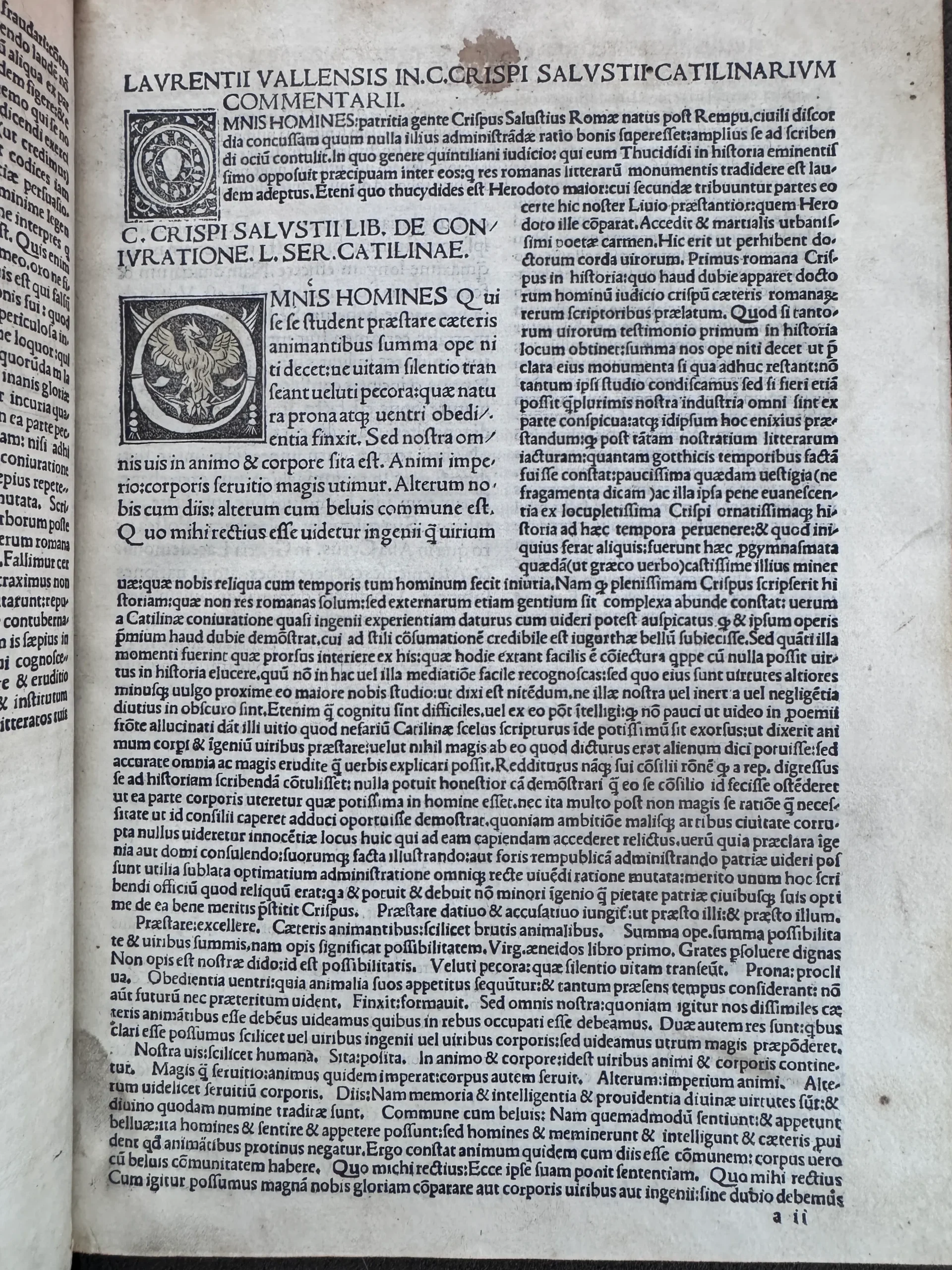
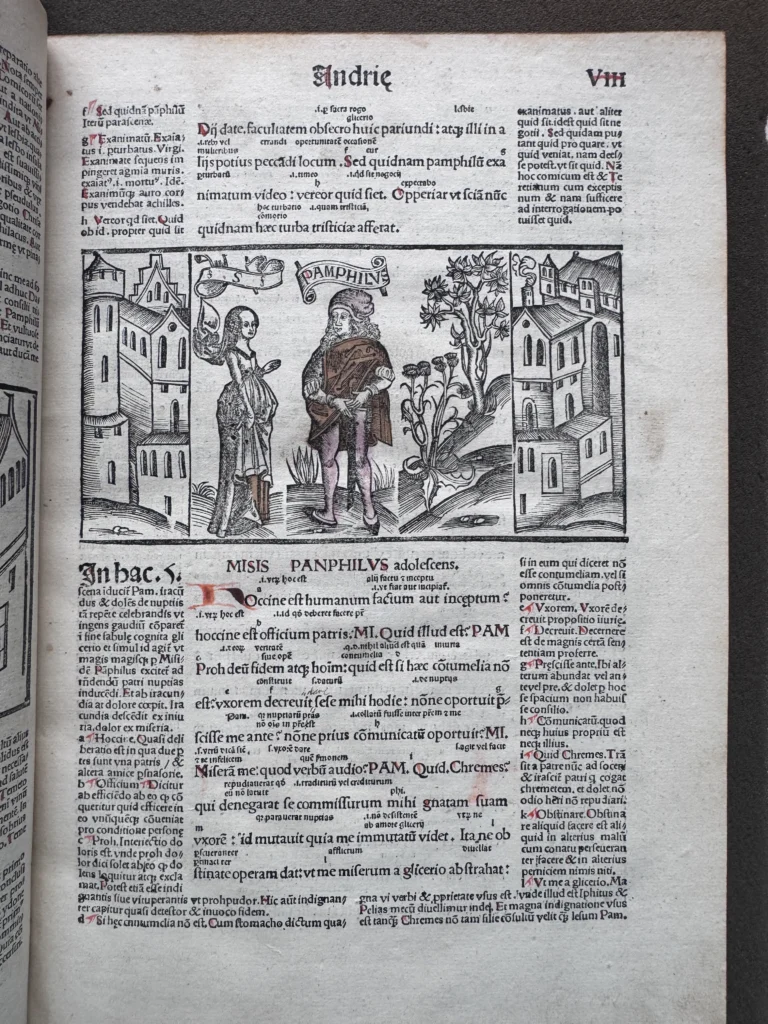
Both NT 3049891(Sallustius, De coniuratione Catilinae, is00084000) and NT 3008549 (Terence’s Commedies, it00101000) circulated in Zwolle, the Netherlands from the beginning of the sixteenth century until later in the seventeenth century.
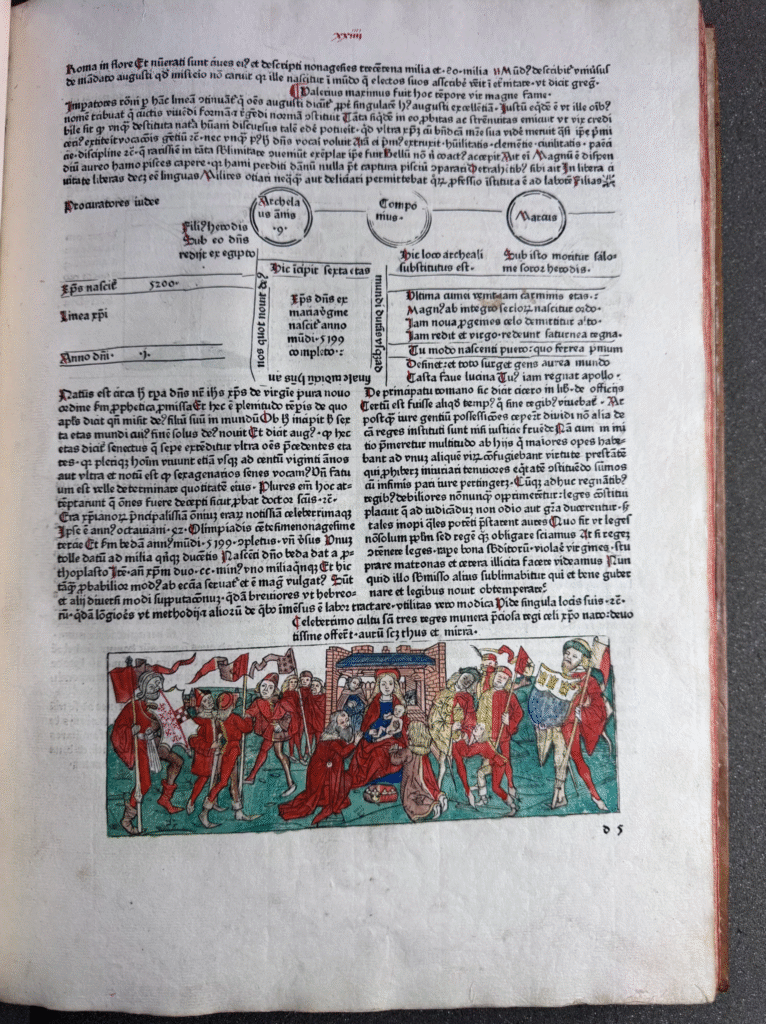
Before I arrived at Blickling in November of 2025, the book team together with Dr. Feakes found an unknown incunabulum among the volumes stored in the Long Gallery. The volume contains the Fasciculus temporum of Rolewinck Werner. We discovered along the way that the title is actually made of two distinct editions of the same work printed by Henry Quintell in Cologne, one year apart from each other. The 1479 edition runs continuously from leaf f1 recto and then alternates though choir “f” with the 1480 edition. From choir “g”, the 1480 edition is solely used. The book contains the colophon of the edition issued in 1480 (ir00262000).
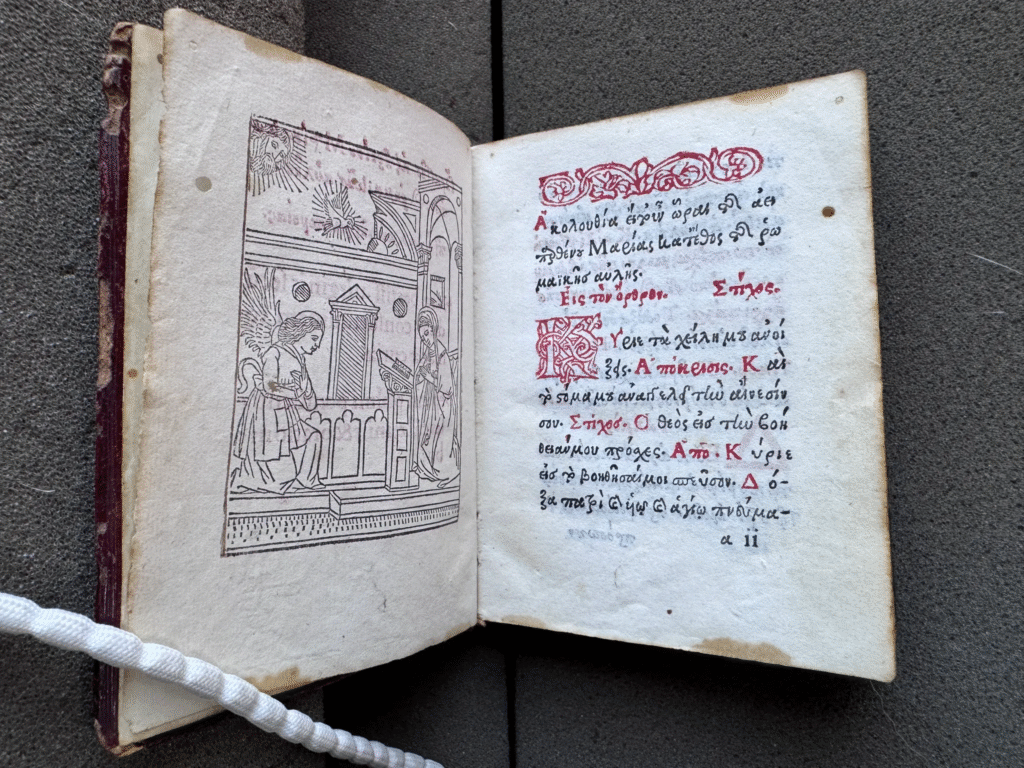
Most of the books at Blickling are bound in eighteenth-century full sprinkled calf, and some come in Cambridge panel bindings, while only a few still preserve original fifteenth- or sixteenth-century bindings. Some of these include the beautiful Italian brown goatskin binding with gilt and gauffered edges found on a Book of Hours in Greek printed by Aldus Manutius in 1497 (NT 3069935, ih00391000), or the sixteenth-century alum tawed pigskin covering NT 3069225, a copy of Julius Firmicus’Mathesis.
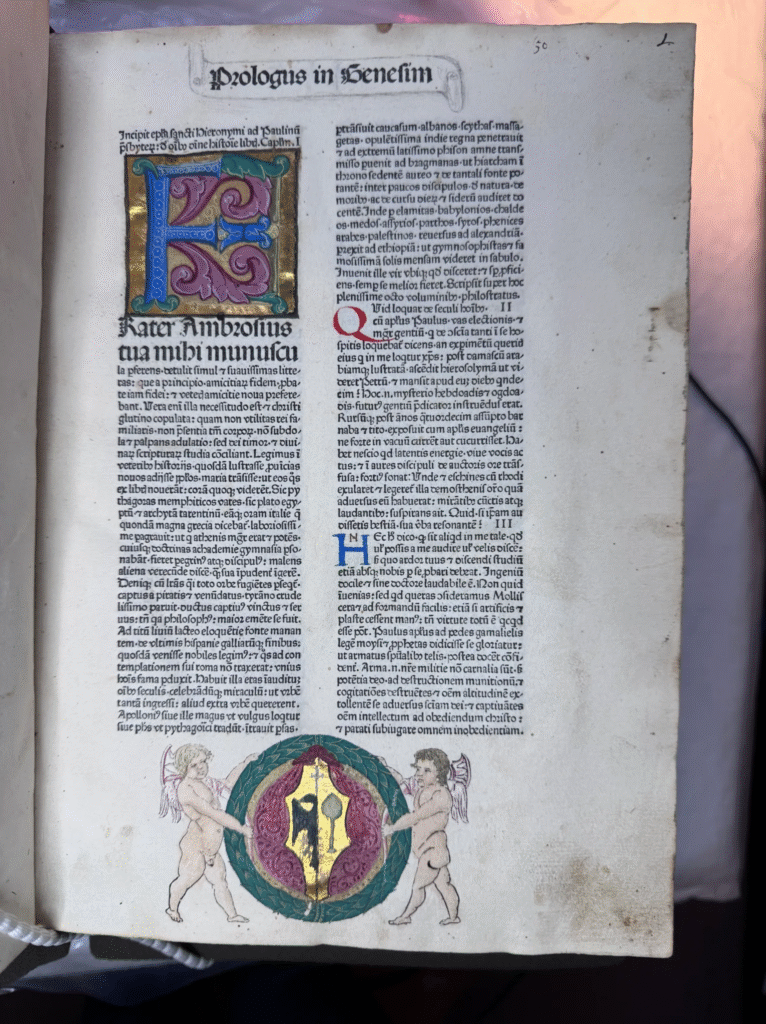
An interesting find was also NT 3069926, a Bible printed in Venice by Franciscus Renner, de Heilbronn and Nicolaus de Frankfordia in 1475. The book was bought in Venice, shortly after it was printed, by a member of the Roverella family of Ferrara and was decorated in Bologna, as the inscription on the rear pastedown indicates: “Emi Venetiis 1475 in mense Julii pro Miniatura (?) ducatus unus, pro ligatura bolig. 40”. The opening page contains the family’s coat of arms in the lower margin and is decorated with a foliated major initial. The rest of the book is also decorated with champ initials in gold on a red background.
These are some of the many treasures to be found among the collection of incunabula preserved at Blickling Hall. I am incredibly grateful to have worked with these books in person and catalogued them for MEI. I am much indebted to the work already conducted there by John Gandy, without which I wouldn’t have been able to upload all the descriptions in time. I also need to thank Rebeca Feakes and Tim Pye, Libraries Curator at the National Trust, as well as the whole team at Blickling for being extremely helpful and welcoming throughout this whole process. Last but not least, I want to thank CERL for making this whole experience possible, and for allowing me to learn more about early prints through hands on experience.
Photo credit: NT/Rebecca Feakes
Bibliography
Mandelbrote, Giles, Yvonne Lewis, Learning to Collect. The Library of Sir. Richard Ellys (1682-1742) at Blickling Hall, The National Trust, 2004.
Purcell, Mark, Blickling Library Survey. Executive Summary, 2006.
 Centrul CODEX