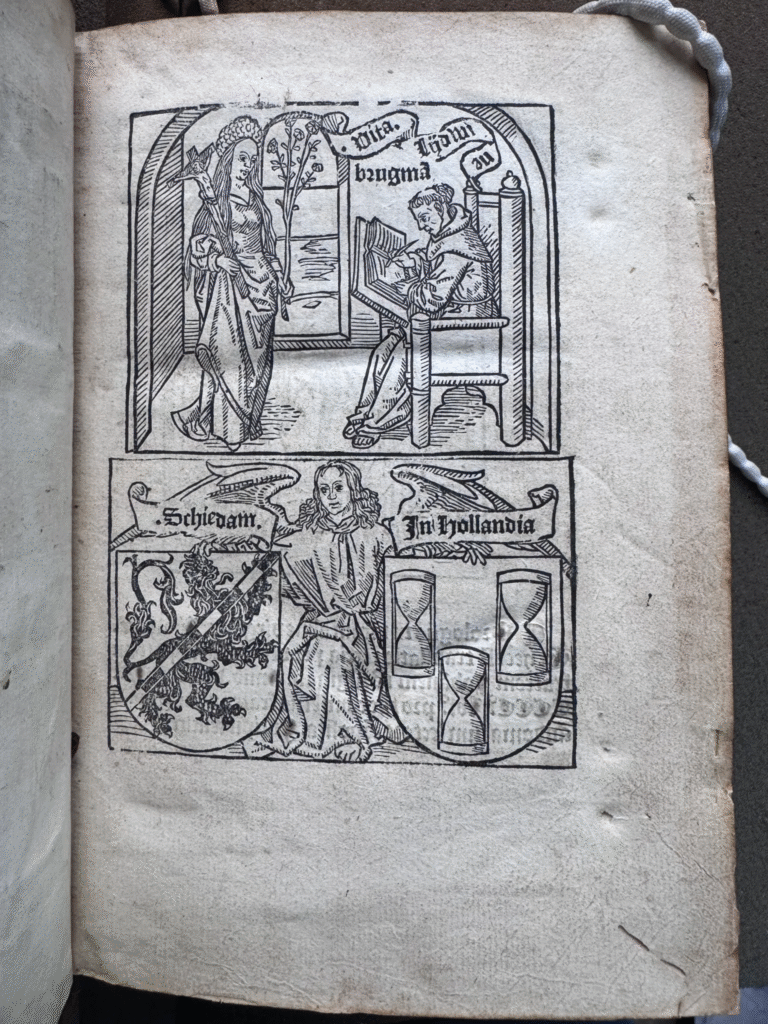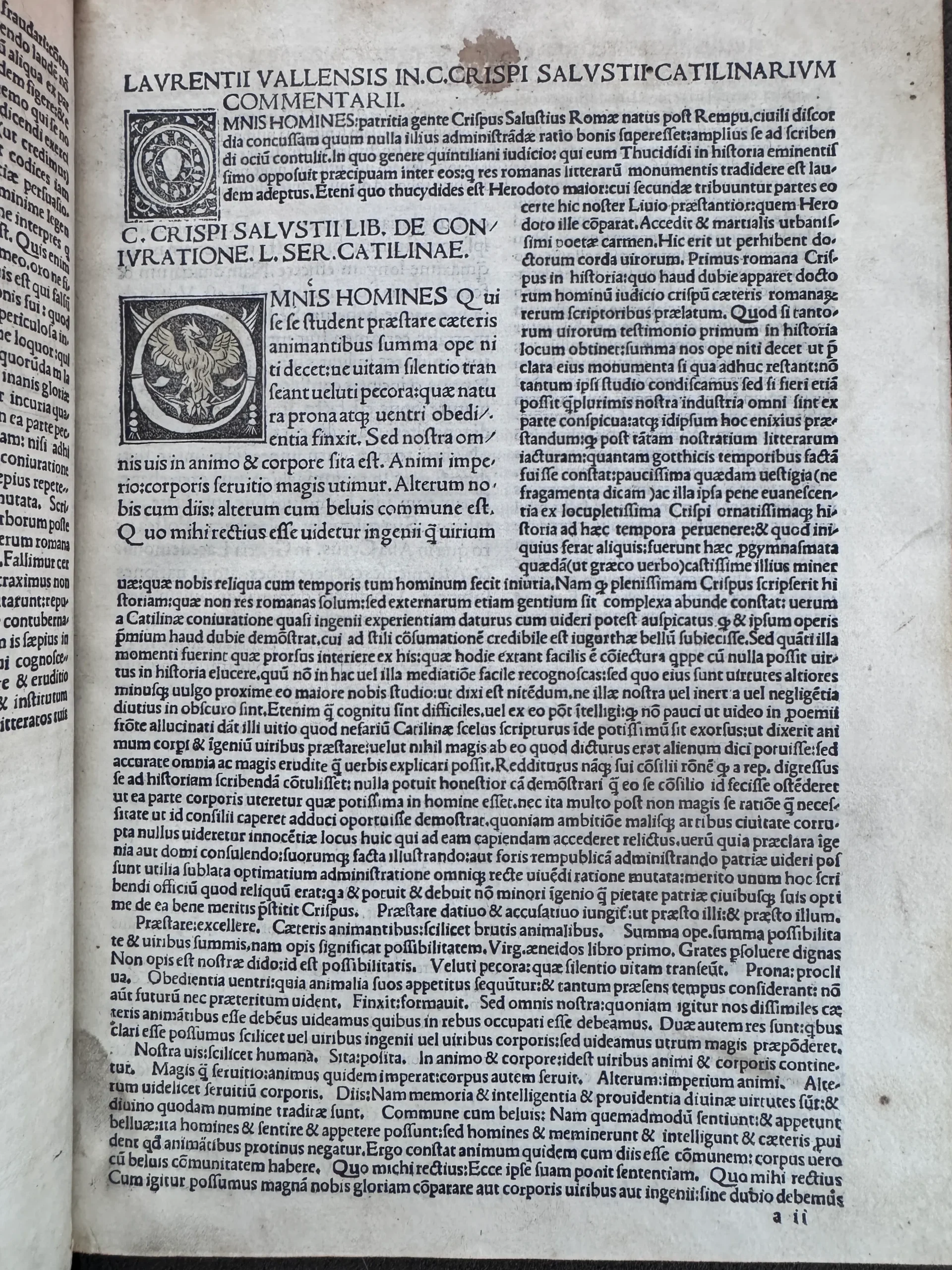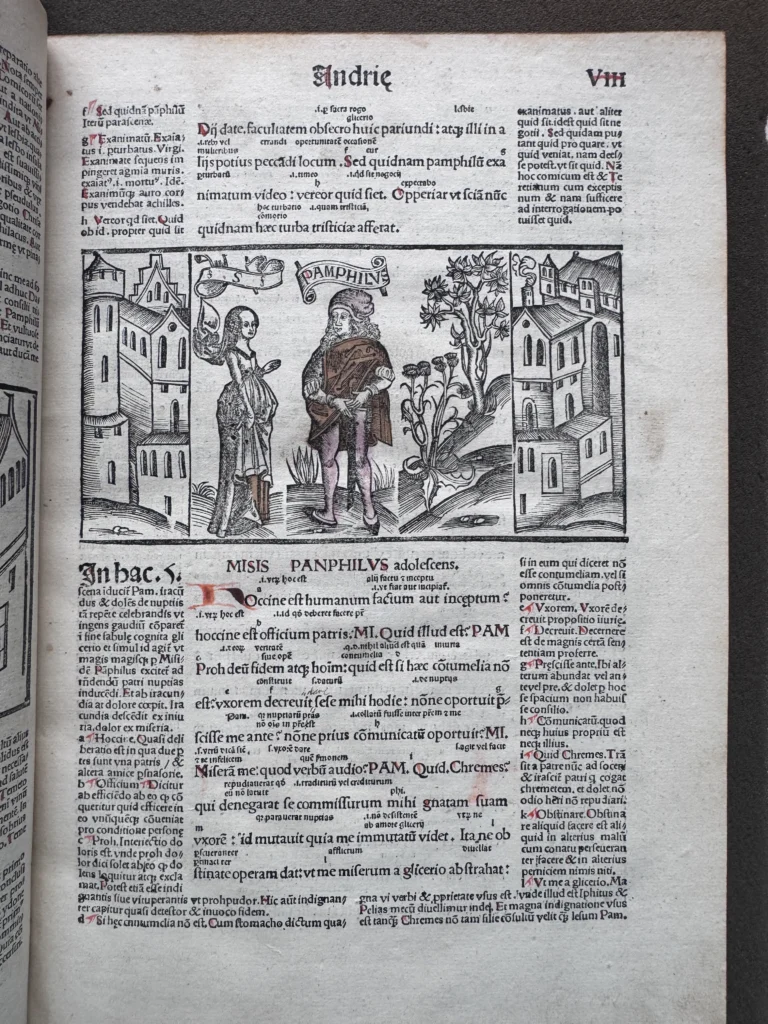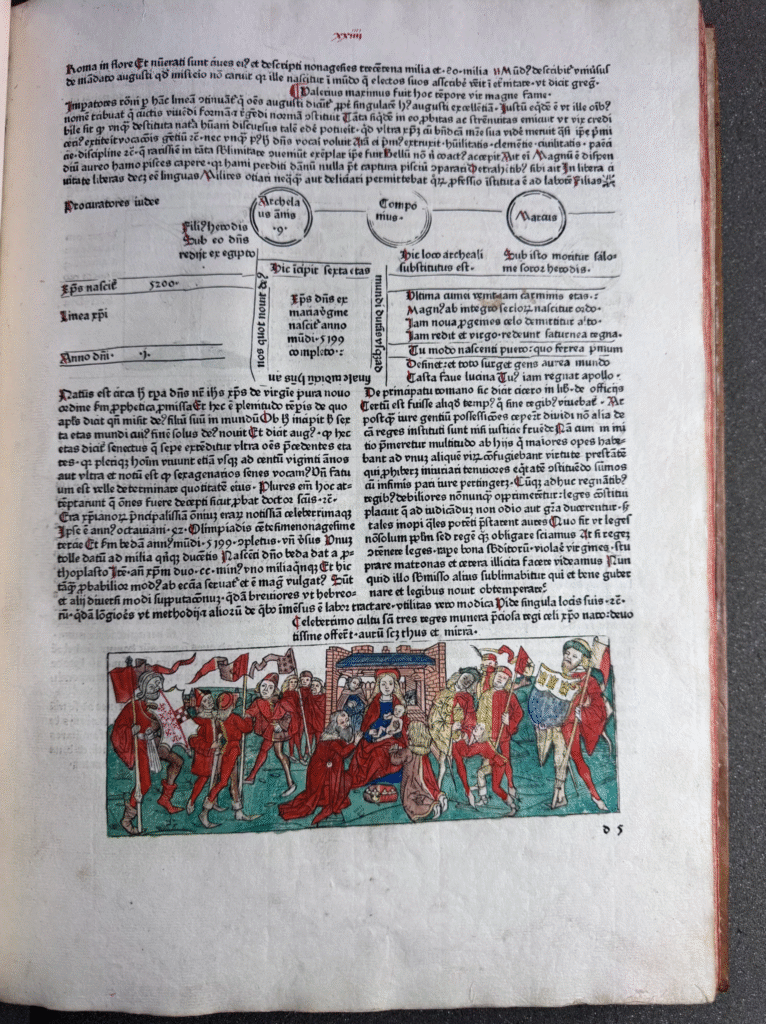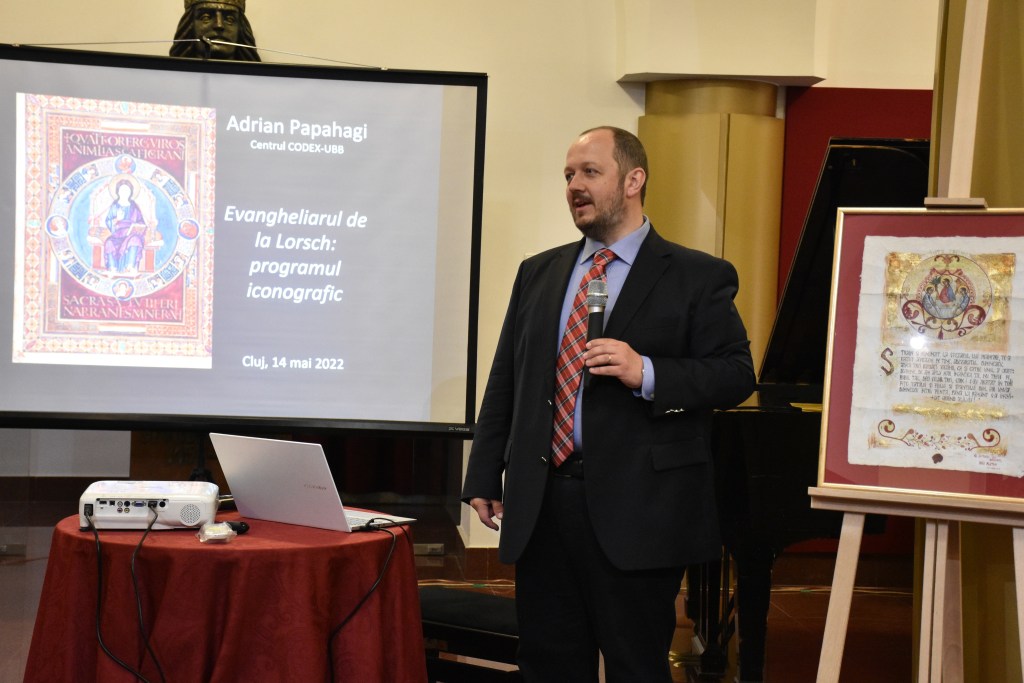
100 Manuscript Fragments from Cluj on Fragmentarium

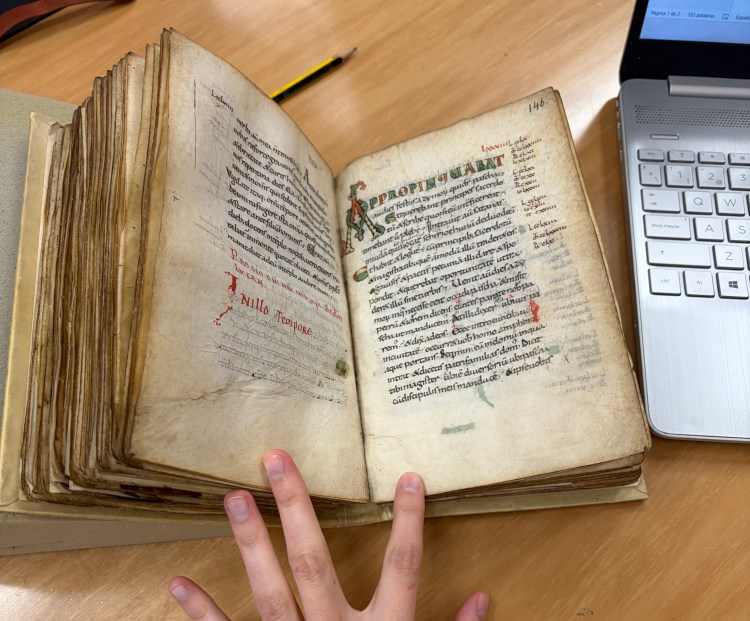
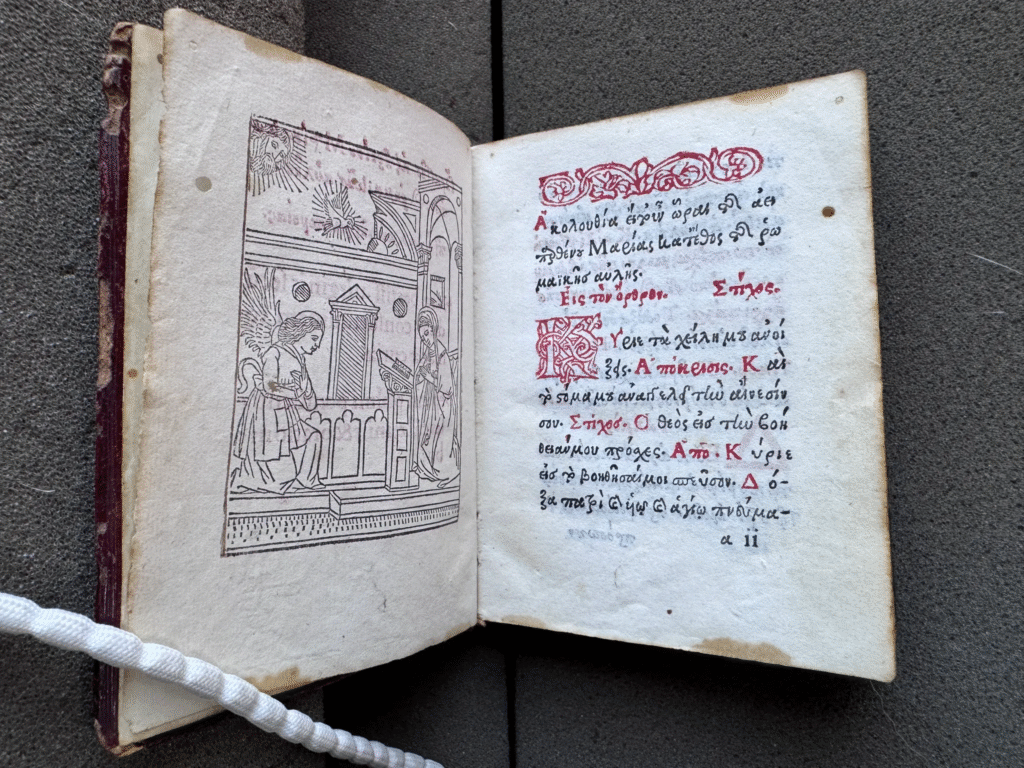
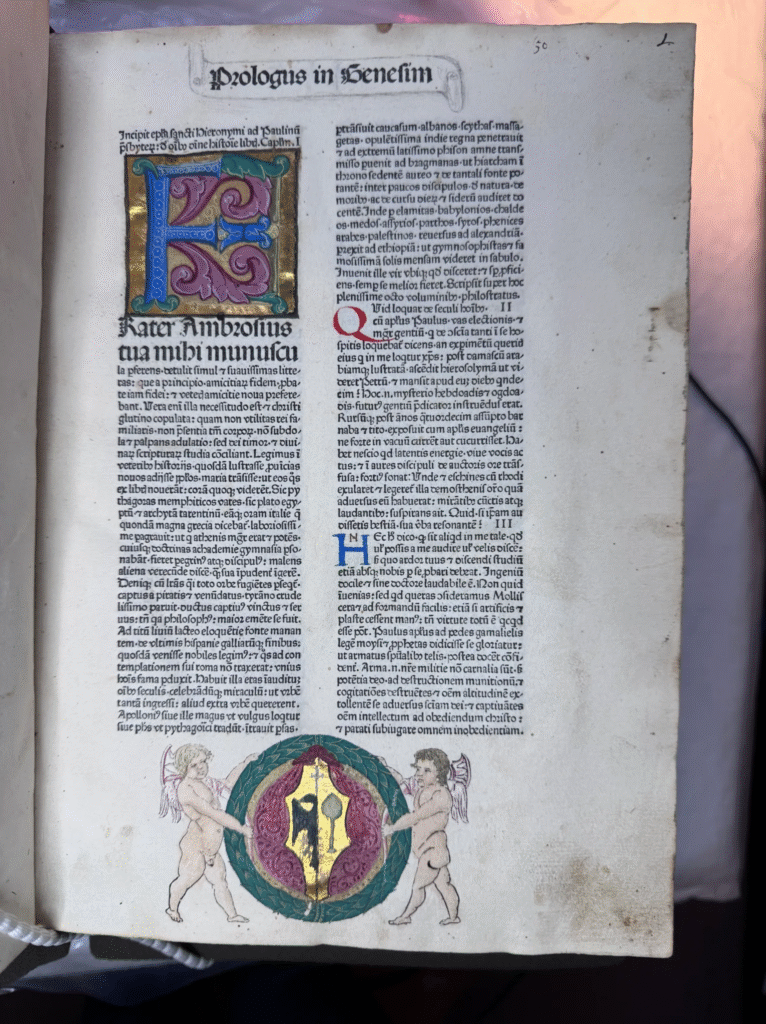
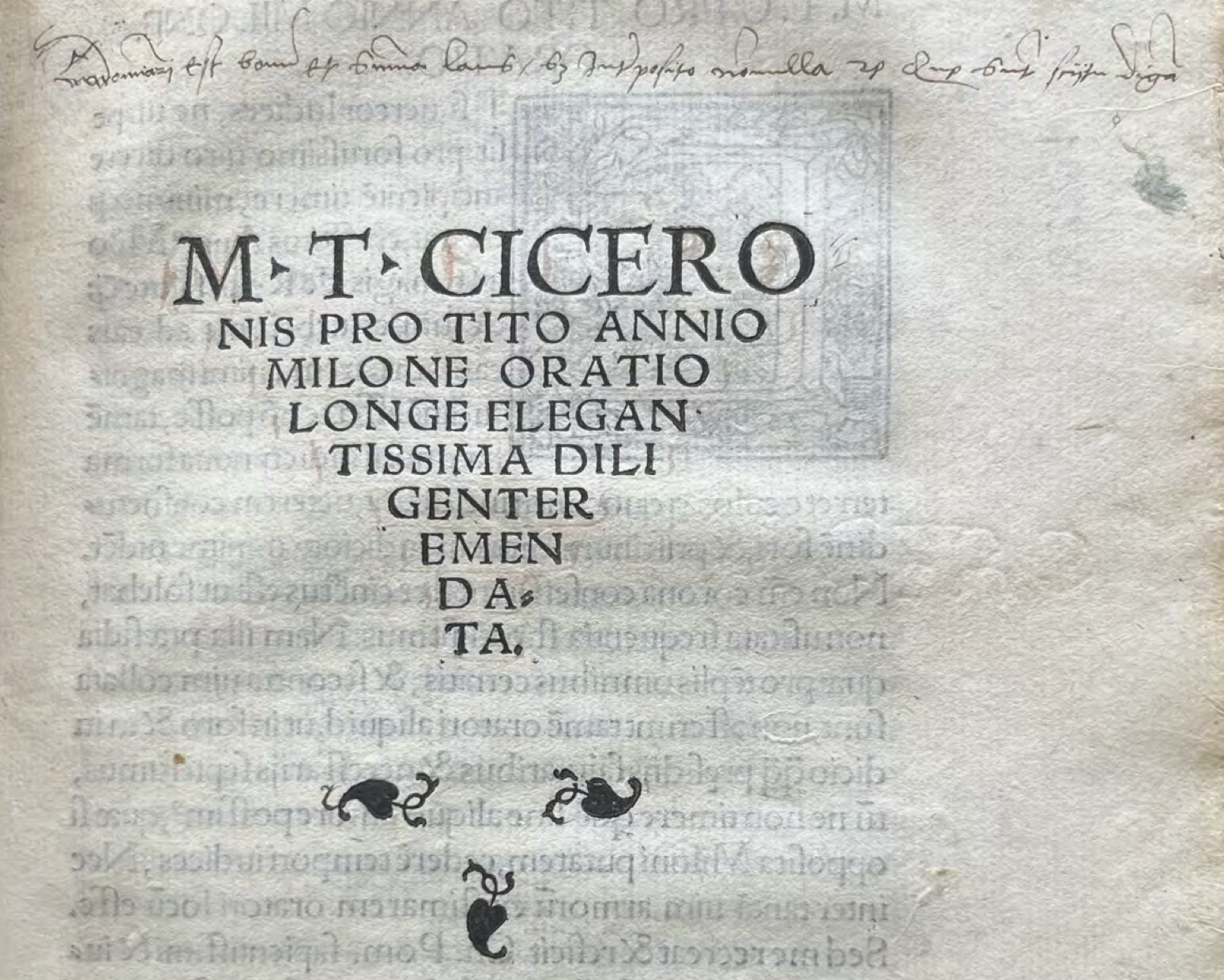
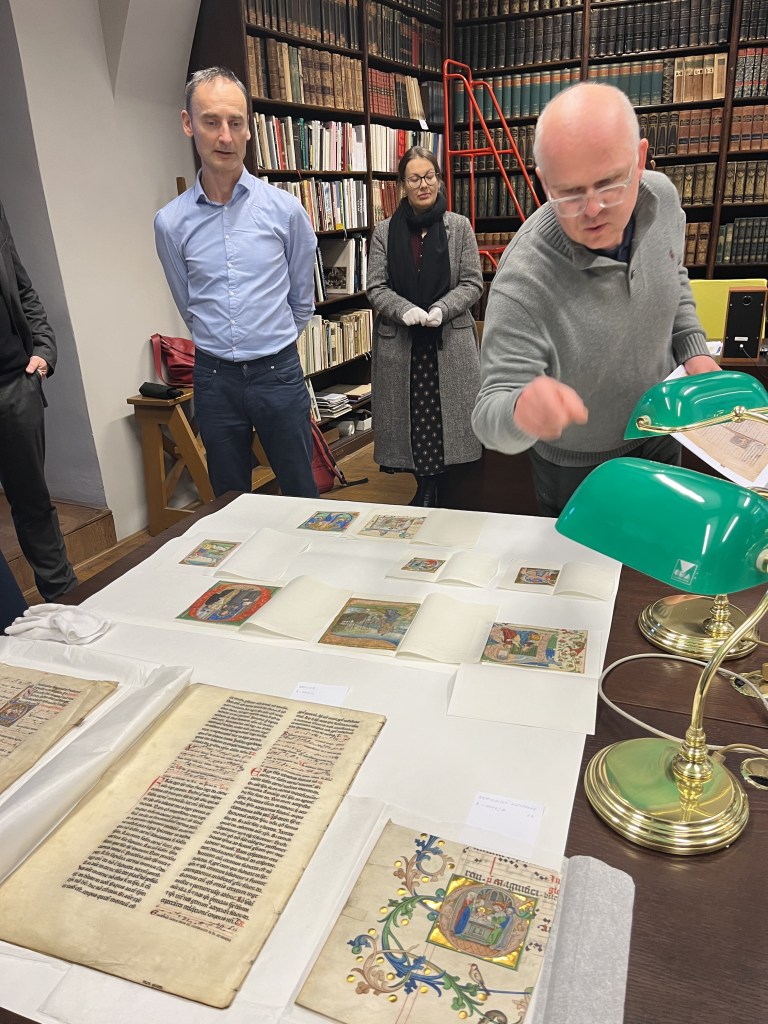
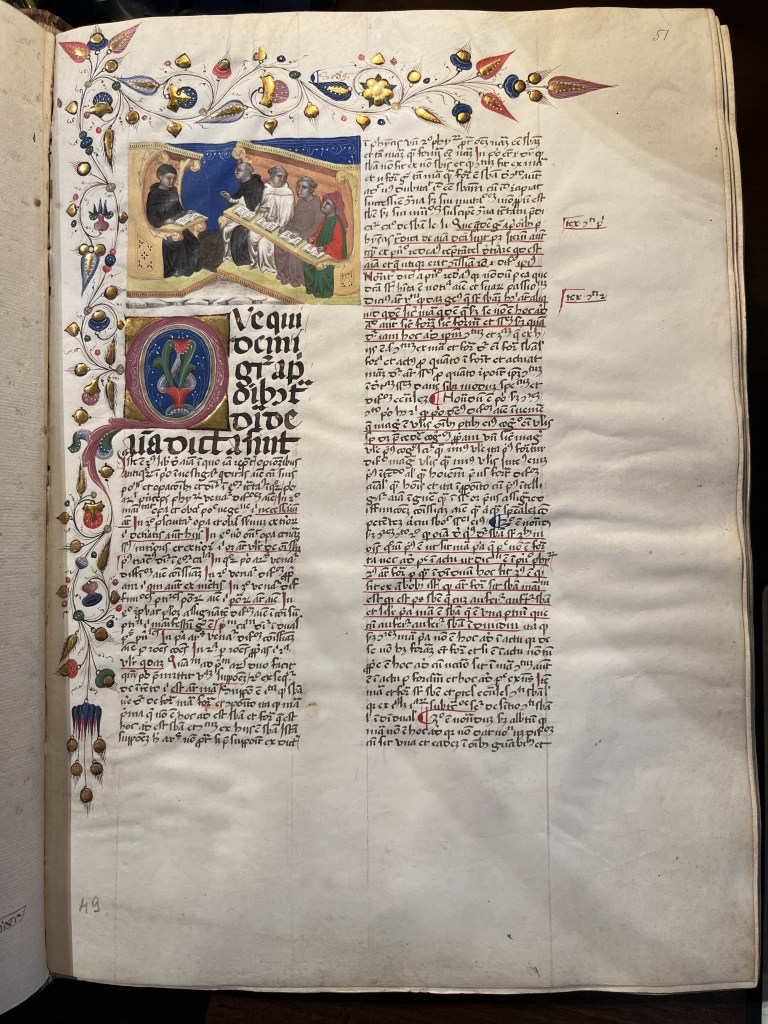
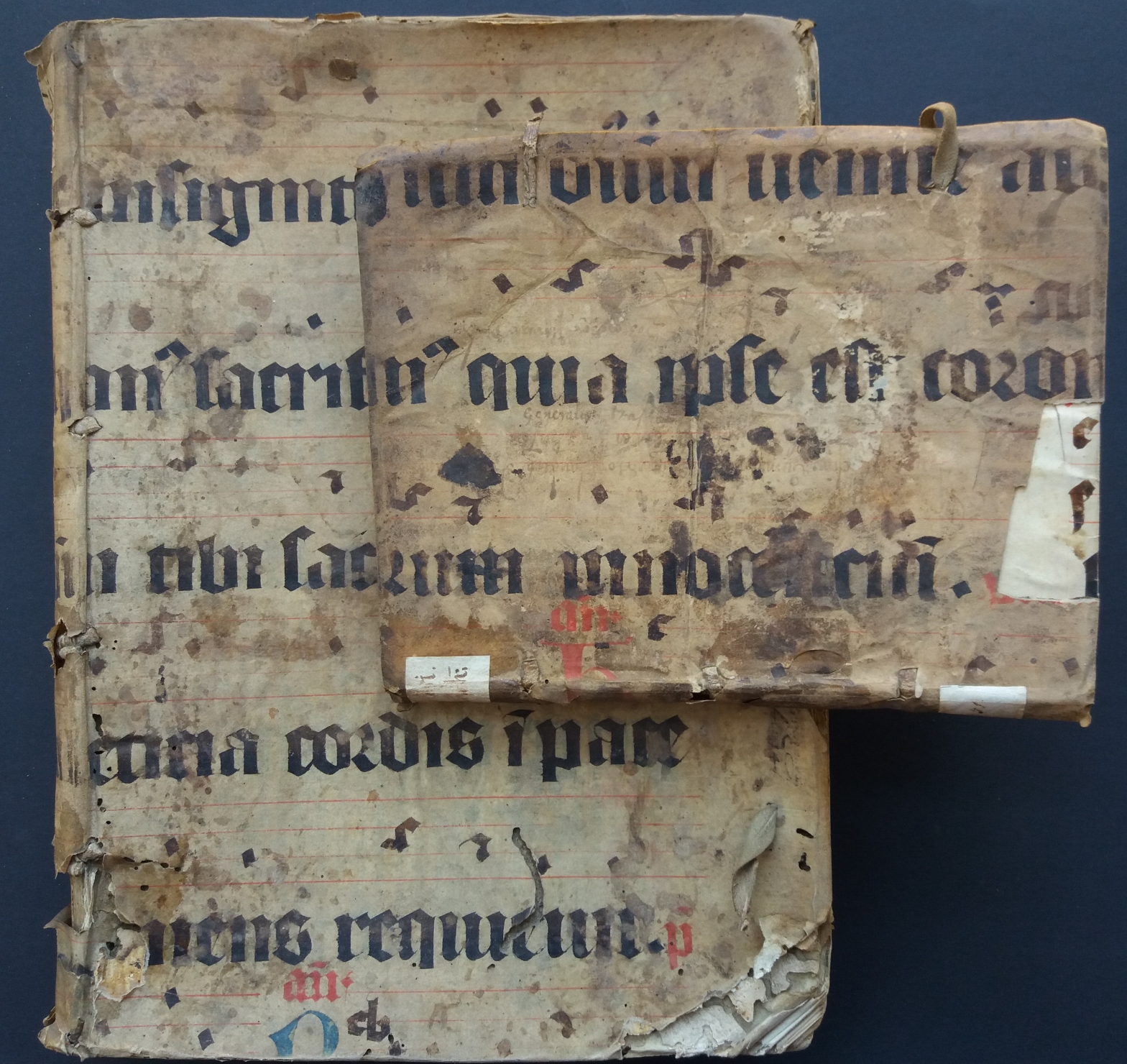
The first 100 medieval manuscript fragments from the Academy Library of Cluj are now online on Fragmentarium. This is the only collection of medieval fragmenta codicum from Romania described in any format so far.

Statistically, 86 of these fragments are in Latin, 9 are in Hebrew, and 3 are in German.

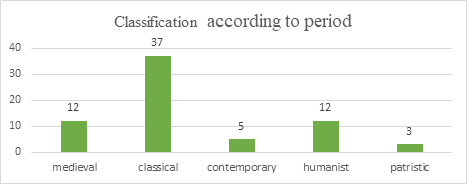
We dated the fragments as follows: one in the 11th century, 5 in the 12th century, 4 in the 13th century, 28 in the 14th century, 65 in the 15th century, and 7 in the 16th century (some were ascribed to a period spanning two centuries – e.g. s. XIII/XIV –, and thus the numbers do not add up to 100).

99 of these fragments were copied on parchment, and only one on paper. Most fragments were used as wrappers.

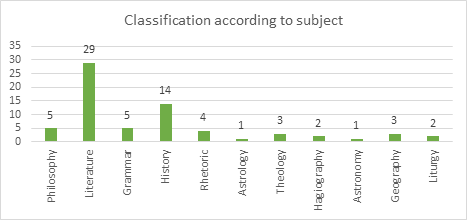
Most fragments belong to liturgical manuscripts: 24 missals, 18 antiphonals, 12 graduals, 10 bibles, 7 breviaries, 1 psalter, 1 lectionary, 1 pontifical, and 1 liber ordinarius. 29 liturgical fragments contain musical notation.

We expect to publish the entire collection of over 200 fragments by the end of 2026 on Fragmentarium, and as a printed volume by mid-2028.

Our research is financed by a grant of the Ministry of Research, Innovation and Digitization, CNCS – UEFISCDI, project number PN-IV-P1-PCE-2023-0465, within PNCDI IV.

Our team includes Prof. Adrian Papahagi, Dr Carmen Fenechiu, Ms. Carmen Oanea, and Mr Andrei Crișan. In 2026 we will be joined by Dr Szabolcs Márton. Hebrew manuscripts are described in partnership with Dr Miruna Belea (EPHE, Paris).

Conference on “Early Modern Humanist Canons” in Budapest

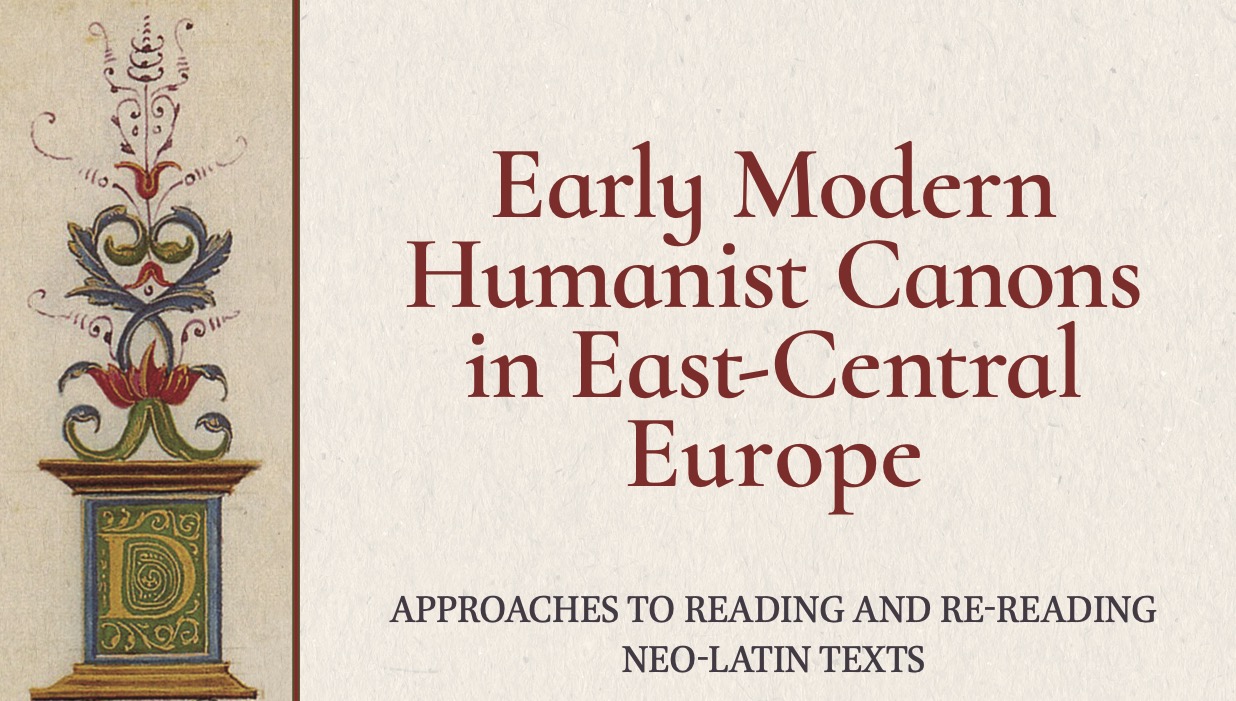
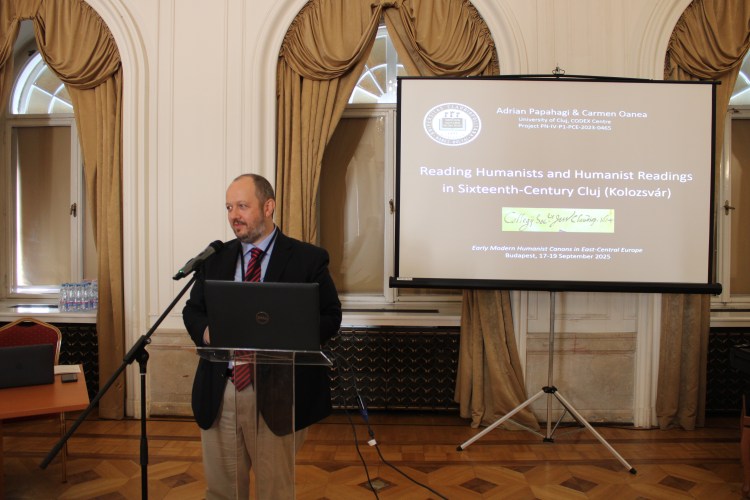
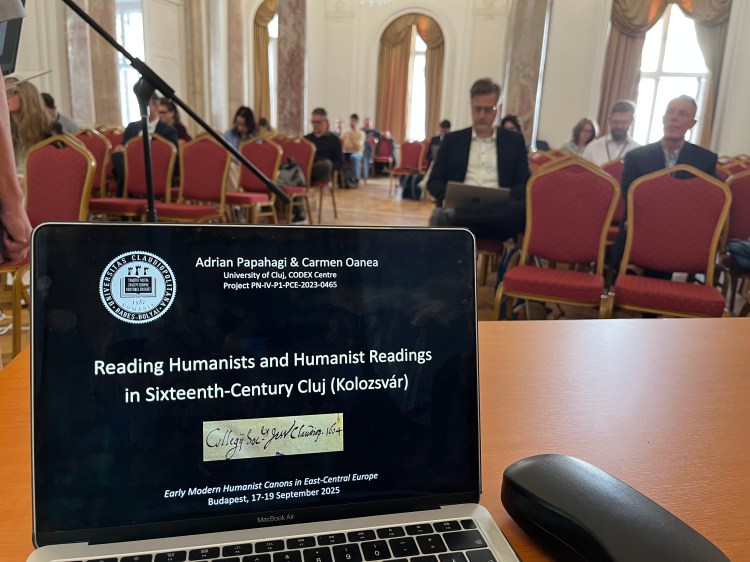
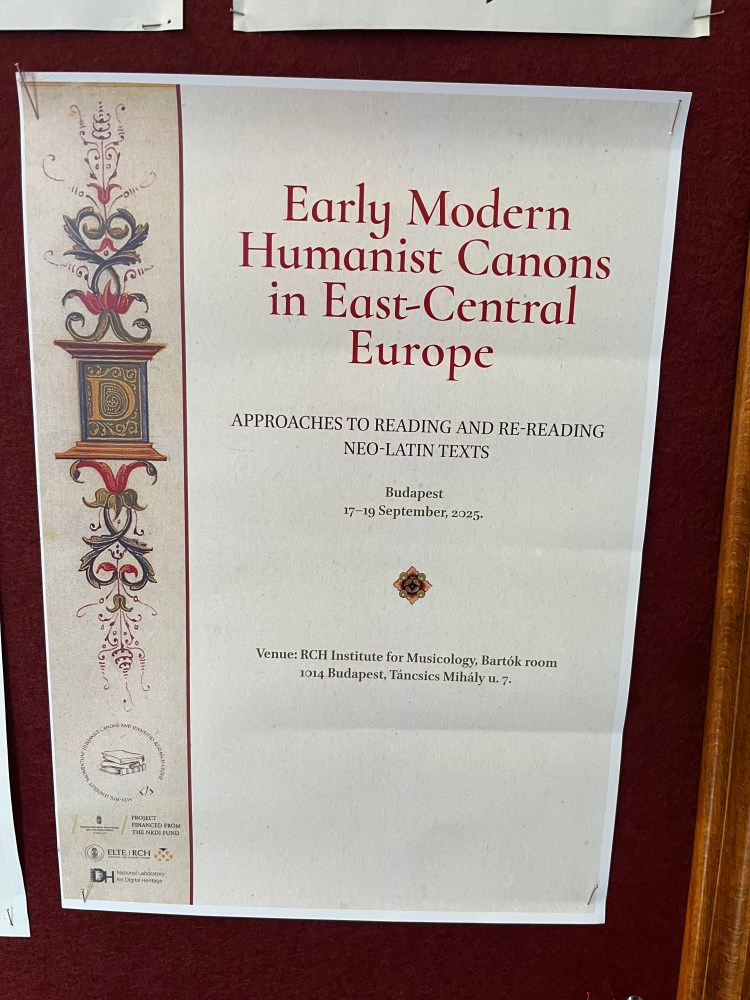
CODEX members Adrian Papahagi and Carmen Oanea were invited to give a paper to a conference on Early Modern Humanist Canons in East-Central Europe. The conference was organised by the RCH, Institute for Literary Studies of ELTE University, and took place at the
RCH Institute for Musicology in Budapest, on 17-19 September 2025.

Adrian Papahagi and Carmen Oanea’s paper, entitled “Reading Humanists and Humanist Readings in Sixteenth-Century Cluj/Kolozsvár” discussed the reading practices of the owners of books belonging to the earliest collection of the Jesuit College of Cluj (1581-1604).

The conference programme can be read below:

Call: DEEM-Rome 2026

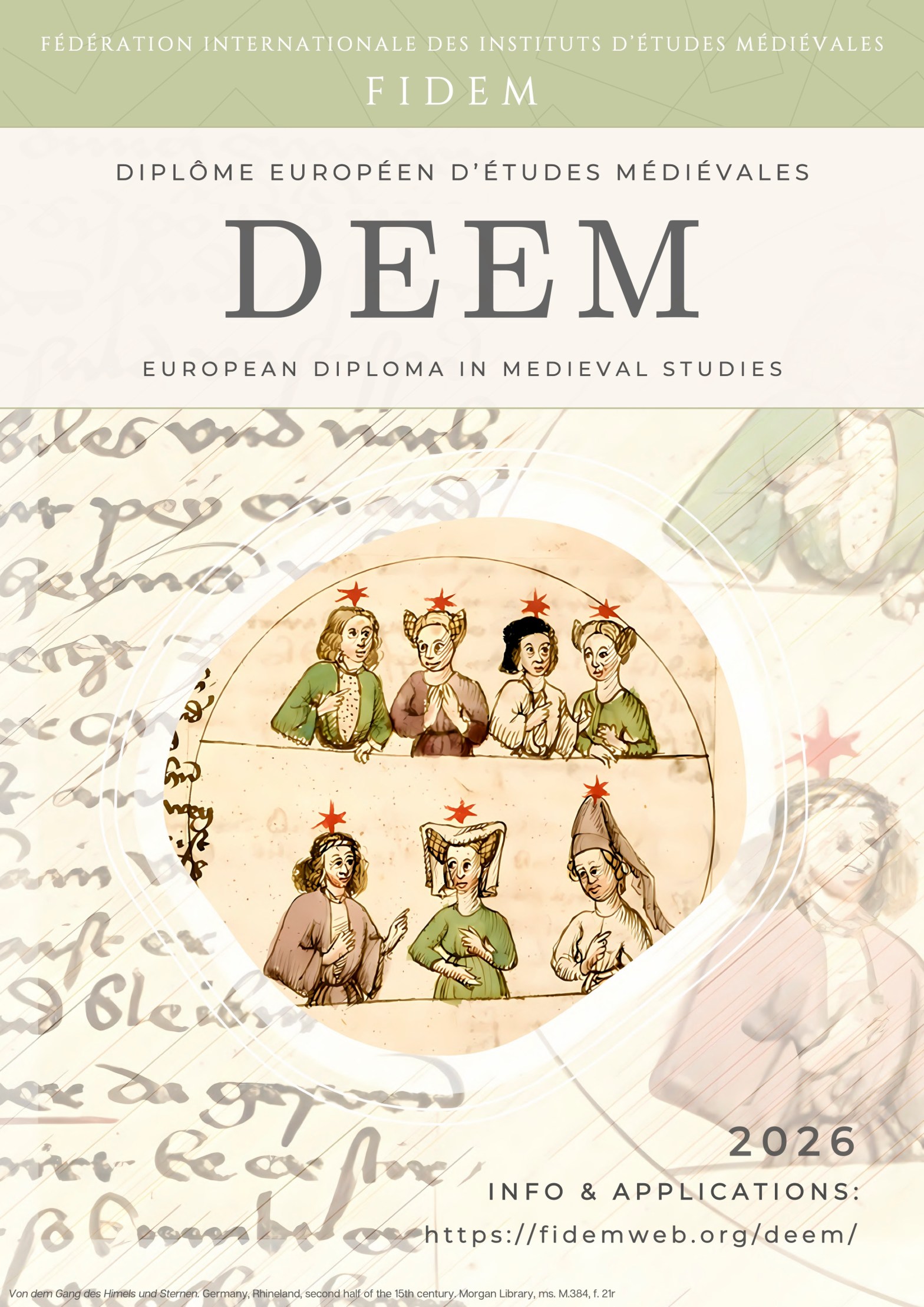
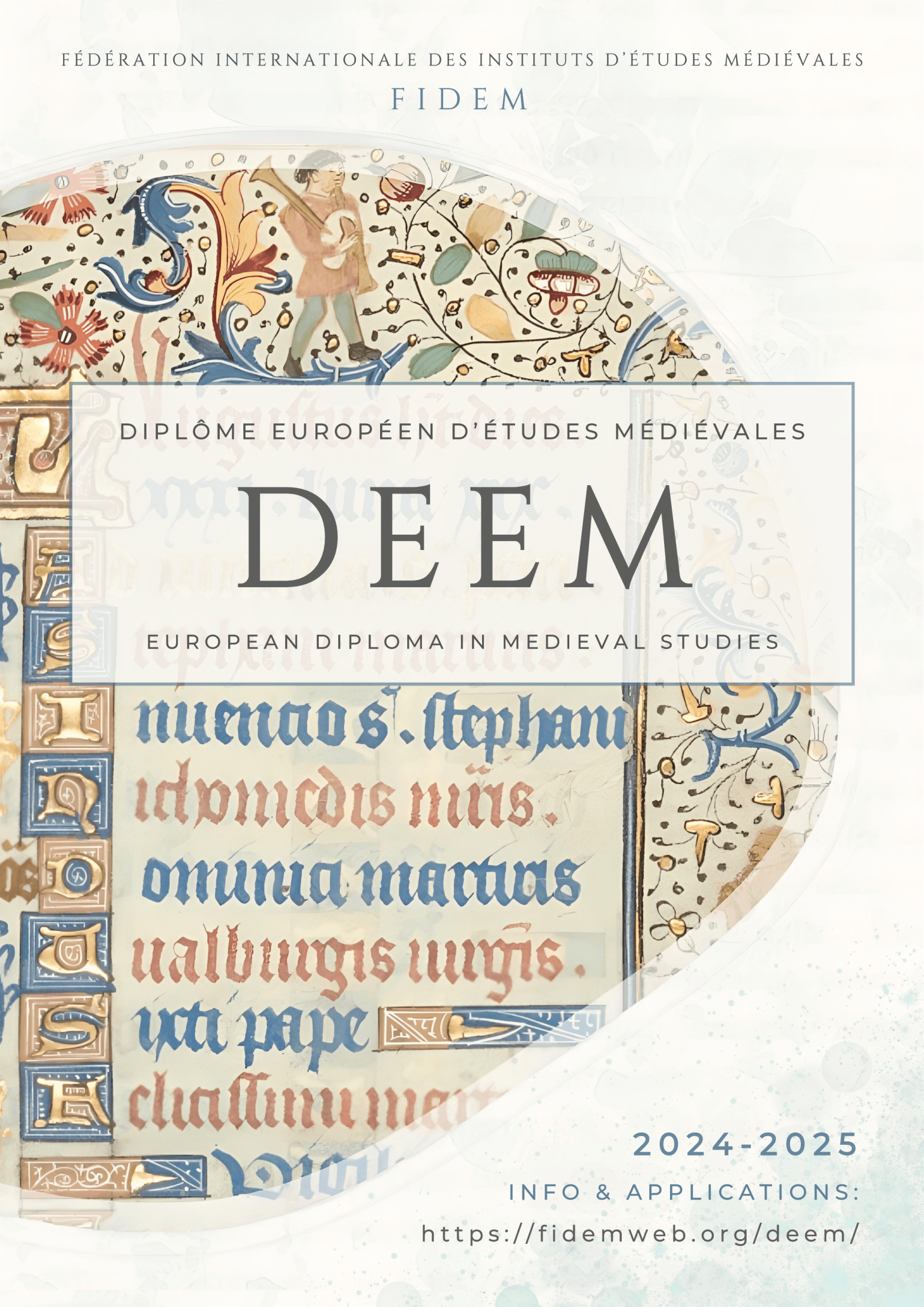
Established at Louvain-la-Neuve in 1991 by the Fédération Internationale des Instituts d’Études Médiévales (FIDEM), the European Diploma in Medieval Studies (DEEM) provides advanced academic training for students and scholars specialising in Medieval Studies. The programme is renowned for its methodological and practical approach to disciplines central to the study and interpretation of Latin manuscripts and archival sources. This specialised training is delivered through the expertise of leading scholars in each discipline and in collaboration with key institutions, such as Sapienza University of Rome, The Norwegian Institute in Rome and SIEPM (Société Internationale pour l’Étude de la Philosophie Médiévale). Since the 2024 academic year, the DEEM program has been offered in an updated format, running from mid-January to the end of May. The core disciplines of Classical Latin, Medieval Latin, Palaeography, Codicology, Diplomatics, and Textual Editing have been complemented by two new modules in Digital Scholarly Editing.

All classes will be conducted in English beginning on Monday, 19 January 2026. All courses will take place in Rome at the Norwegian Institute (https://www.hf.uio.no/dnir/english/) with options for partial online attendance. The mandatory in-person participation offers a unique opportunity to explore Rome’s remarkable manuscript collections through included library visits.

A minimum of six participants is required for the course to take place. Participants may choose from full DEEM participation, modular participation, or personalized attendance. For enrolment fees and available participation options, please visit: https://fidemweb.org/deem- application/.

One scholarship is planned for the year 2026. It will be co-funded by FIDEM and SIEPM. For eligibility and selection criteria, visit the provided link: https://fidemweb.org/wordpress/wp- content/uploads/2025/07/Documento-2-borsa-di-studio.pdf. Students from Sapienza University of Rome (including Erasmus students) and from the Norwegian Institute in Rome are exempt from the enrolment fee.

DEADLINE FOR APPLICATIONS: 1 DECEMBER 2025

New International Partnership to Catalogue Hebrew Manuscript Fragments

CODEX has started an international partnership in order to catalogue and publish the Hebrew manuscript fragments at the Academy Library in Cluj.

Our partner, Books within Books: Hebrew Fragments in European Libraries, will provide expertise in Hebrew palaeography and codicology, and will give the fragments from Cluj international visibility.

We would like to thank Professor Judith Olszowy-Schlanger, and Dr Miruna Belea (EPHE, Paris/ Univ. of Oxford), as well as Rev. Fr. Professor Ioan Chirilă, and Dr Bogdan Crișan, from the Library of the Romanian Academy, for their cooperation.

Andrei Crișan gives paper at ISSEME Conference in Düsseldorf

On July, 2nd CODEX member, Andrei Crișan, gave a paper entitled “Be þam þingum, þe þærto gebyrige: Re-editing Wulfstan‘s Evil Rulers in Context” to the 22nd Biennial Conference of the International Society for the Study of Early Medieval England.

“Communities” was the theme of the conference, taking place in Düsseldorf from July 2nd-4th, 2025. The conference was hosted by Heinrich-Heine-Universität’s Medieval English department at the Haus der Universität, with some events taking place on campus.

Here is the conference programme:

CODEX wins € 230K research grant

CODEX wins a new research grant from the Romanian Research Council.

Project PN-IV-P1-PCE-2023-0465 is entitled “Medieval Books in the Early Modern Period: The Case of Cluj in the Sixteenth and Seventeenth Centuries”. Prof. Adrian Papahagi, the principal investigator, will lead a team including four other CODEX members.

The project studies the provenance, nature and use of medieval books (manuscripts and incunabula) in the historical collections of the former Jesuit, Reformed and Unitarian colleges of Cluj (est. 16th-17th c.). Entire medieval manuscripts are rare in Cluj, but numerous ‘fragmenta codicum’ survive in the bindings of modern printed books. Some incunabula from the medieval collections of Cluj (especially from the Dominican and Franciscan convents) have survived, but new ones were acquired by the three colleges from the 16th to the early 18th c. What medieval books have survived, how, and where – and what books were destroyed? What fragments of manuscripts and incunabula have been recycled, and which of the extant ones may be of local provenance? Who read what and how (ownership notes and marginalia in incunabula need careful inspection)? Where did new acquisitions come from, and how? To answer these questions, we will study a collection of over 200 manuscript fragments, and 177 incunabula (in 138 volumes) kept at the Academy Library of Cluj, as well as items kept in other collections, and external evidence (booklists, historical records).

The three-year project was awarded 1.14 mil. lei (about € 230,000), and will start in July 2025.

Carmen Oanea receives grant to catalogue incunabula at Blickling Hall

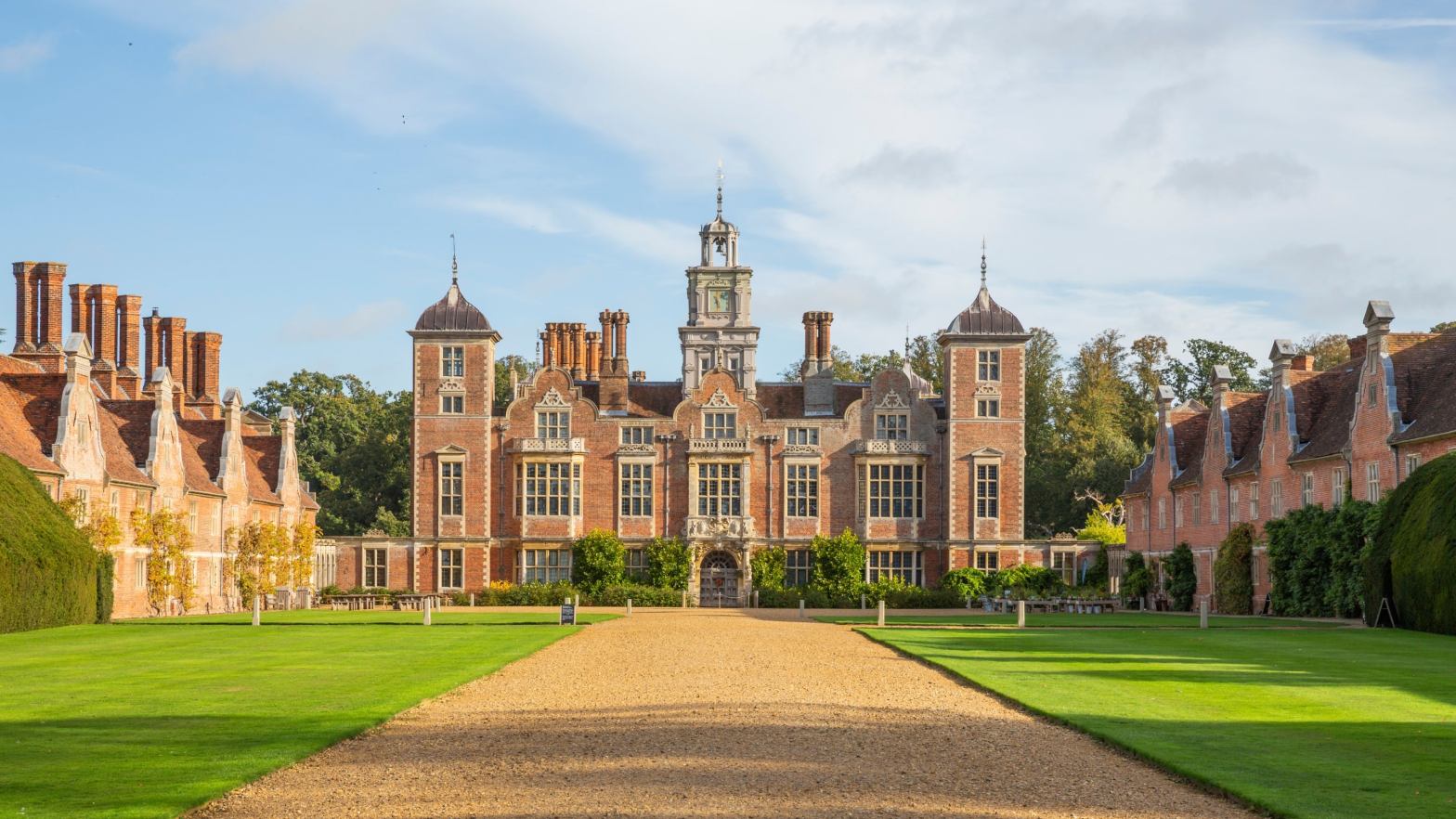
CODEX member, Carmen Oanea, has received a CERL grant to catalogue incunabula at Blickling Hall, Norfolk.

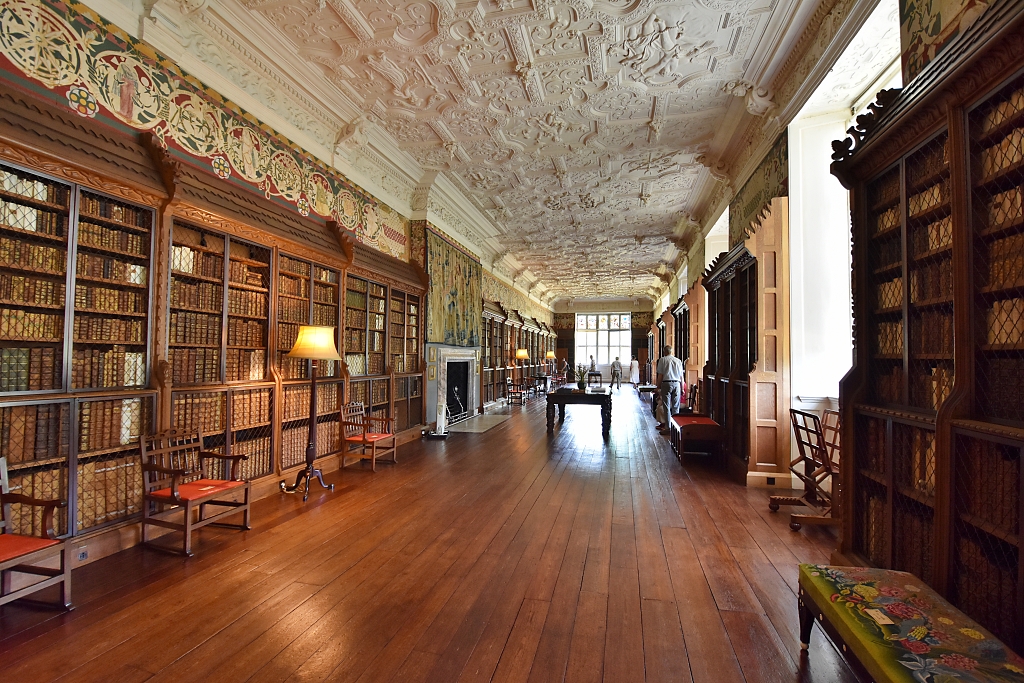
Blickling Estate, built in the early seventeenth century and situated a short distance away from Norwich on the edge of the market town of Aylsham, is a jewel in the National Trust’s crown. It is home to one of England’s most notable country house libraries: containing over 12,500 books, it is the biggest book collection cared for by the National Trust.”

“The Consortium of European Research Libraries (CERL) is the international focal point for the engagement with the historic printed books and manuscripts, the written heritage of Europe, represented by the collections of our members and beyond.”

Here is the announcement by the CERL Grant Committee:

“The CERL Grant Committee is very pleased to announce the conferment of six CERL Internship Grants: […]

5.⁠ ⁠To catalogue incunabula at Blickling Hall, Norfolk (National Trust) to Carmen Oanea (Romania), a PhD student at Babeș-Bolyai University in Romania exploring the reading practices and habits of early modern readers based on data obtained from former Jesuit libraries across Europe; and with experience in cataloguing Cluj incunabula in MEI.”

Heartfelt congratulations to Carmen!

16 May 2025 – CODEX member co-organises conference in Rome

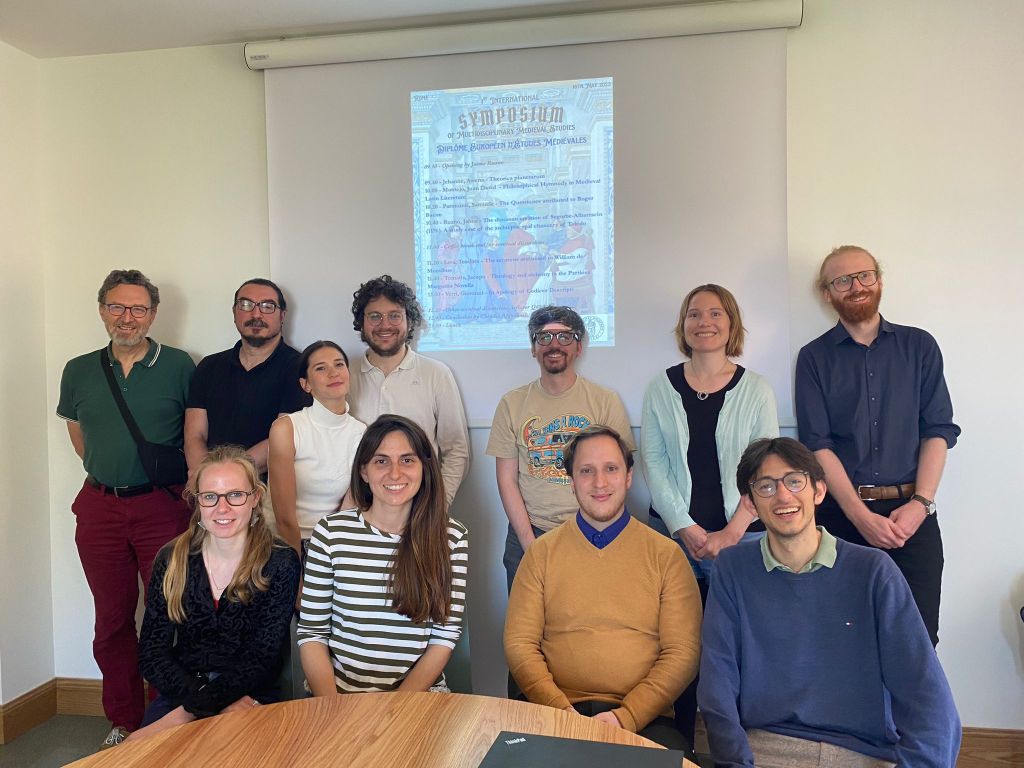
CODEX member Teodora Sava co-organised, alongside other PhD students from Italy, France, Spain, Germany, and Denmark the “First international Symposium of Multidisciplinary Medieval Studies” at the Norwegian Institute in Rome.

This is the first conference organised by students enrolled in the Diplôme Européen d’Études Médievales – a programme to which CODEX has been participating since 2016.

Teodora’s paper “The Sermons Attributed to William de Montibus” draws on her doctoral research at the Babeș-Bolyai University. Teodora is editing a cycle of sermons in Latin and Middle English; in Rome, she is studying a Vatican manuscript of the Filius matris sermons, which has hitherto received little attention.

24-28 March 2025: Adrian Papahagi lectures in Rome

Between 24-28 March 2025, CODEX director, Prof. Adrian Papahagi gave a series of courses and lectures in Rome.

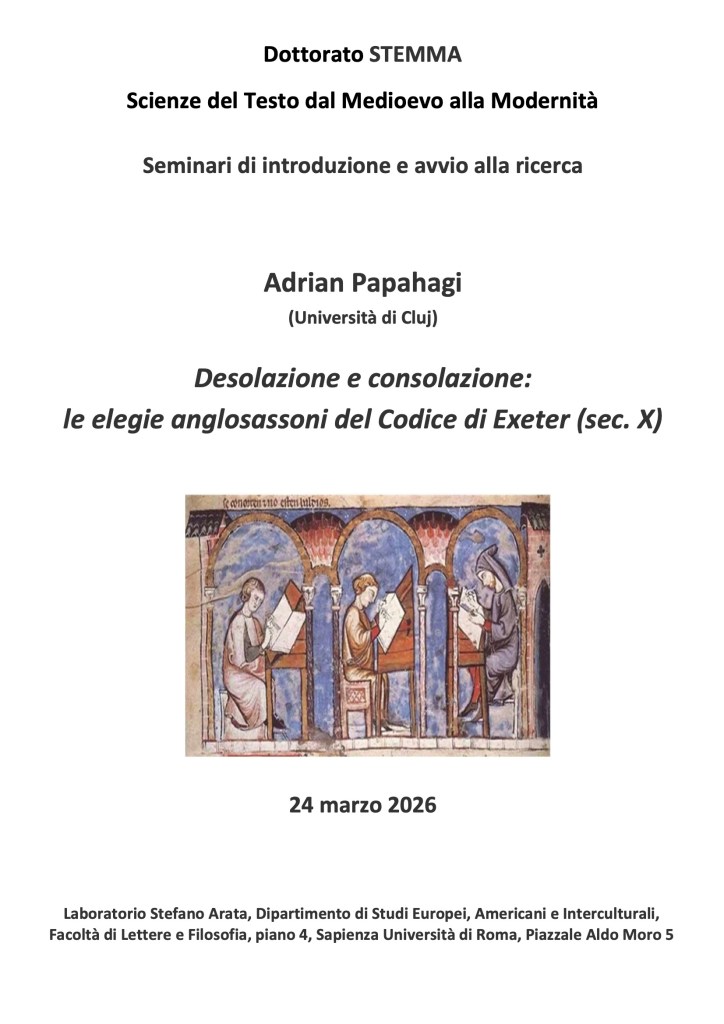
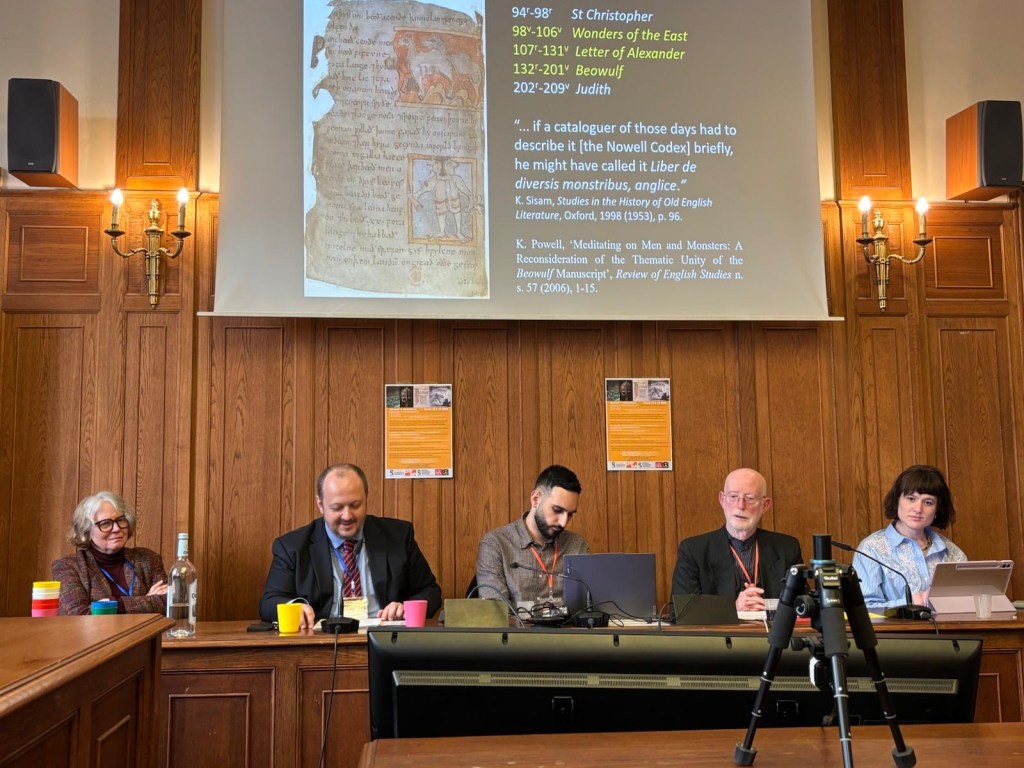
On March 25, Prof. Papahagi gave a lecture on the Nowell Codex (British Library, Cotton MS Vitellius A.XV), entitled “De diversis monstribus, anglice: Beowulf e il suo manoscritto” at the Università di Roma – La Sapienza. The lecture belongs to a cycle of events organised by the doctoral school STEMMA-Scienze del Testo dal Medioevo alla Modernità. Since 2024, Prof. Papahagi has been a member of this doctoral school. The lecture was introduced by Prof. Paolo Canettieri, director of STEMMA.

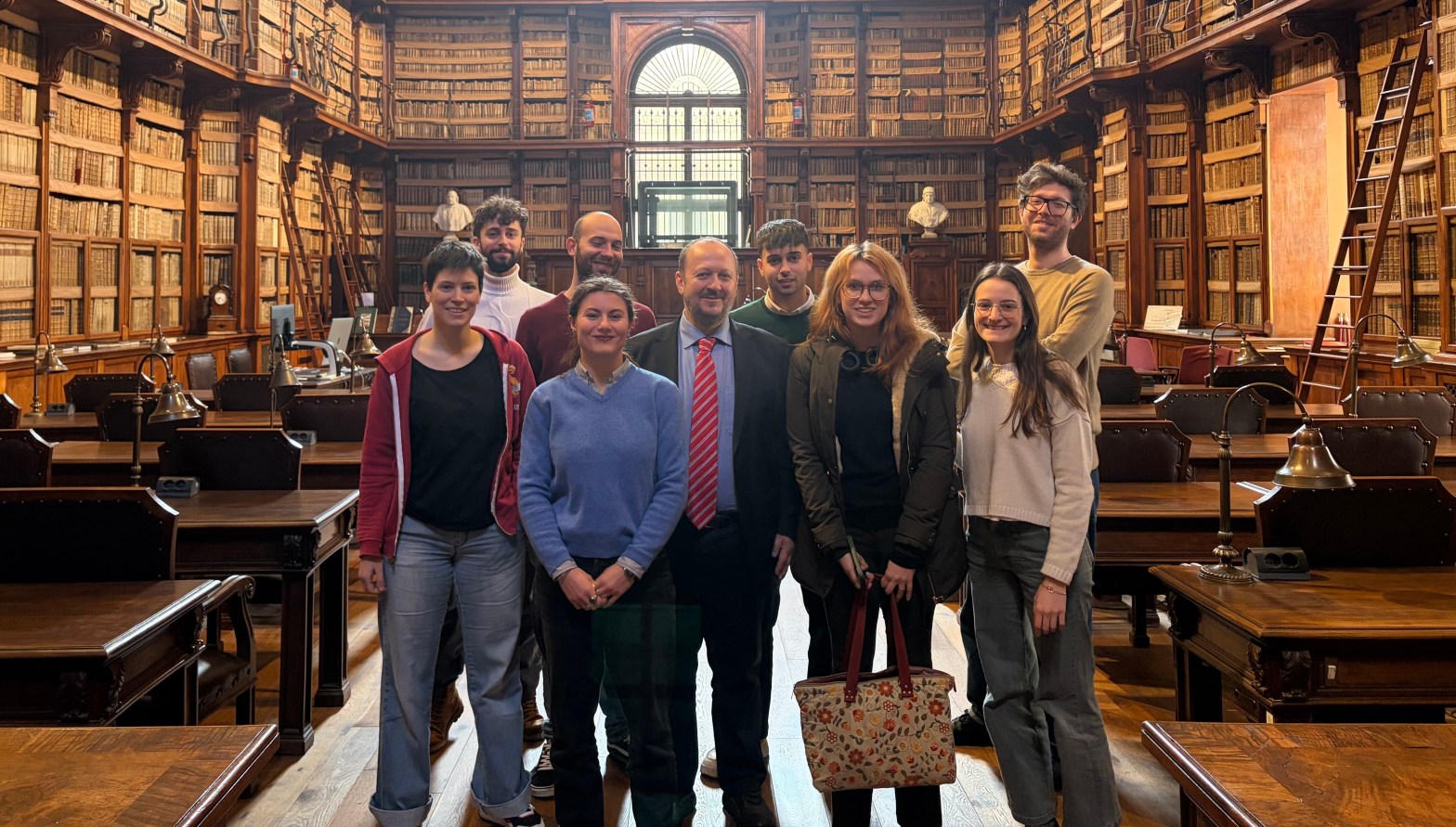
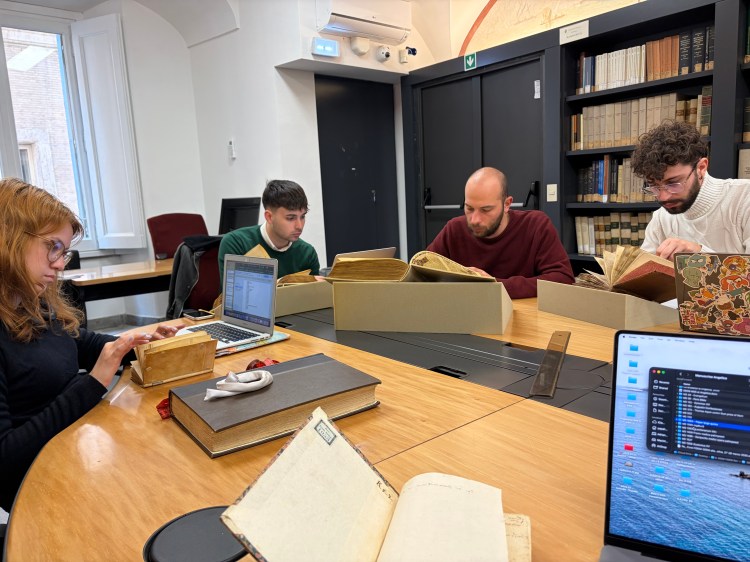
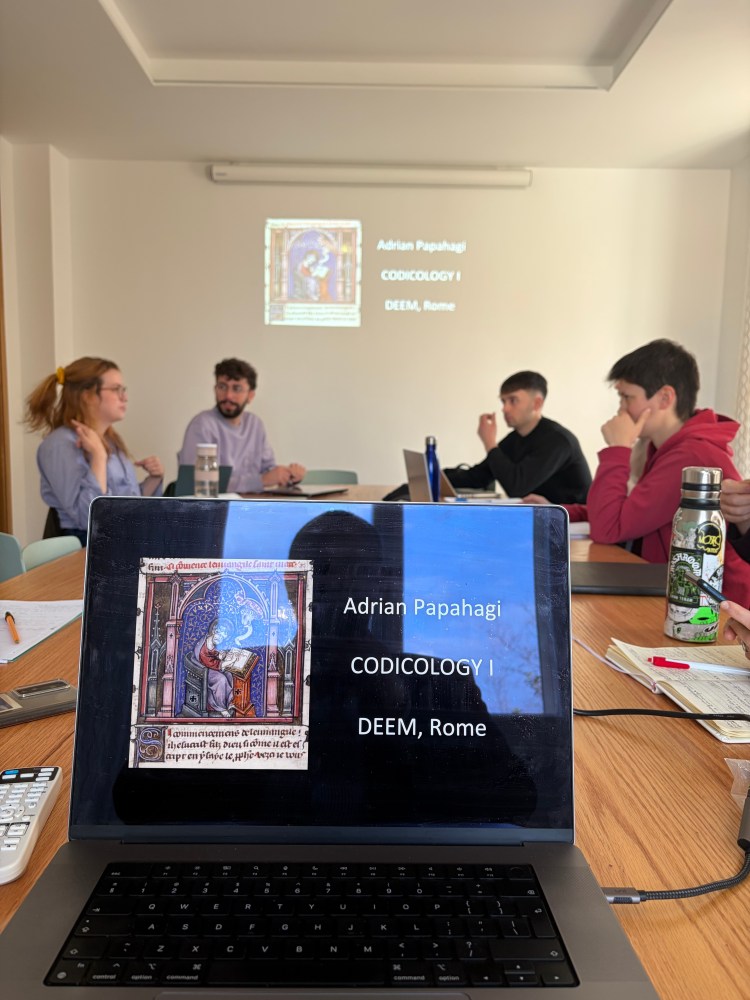
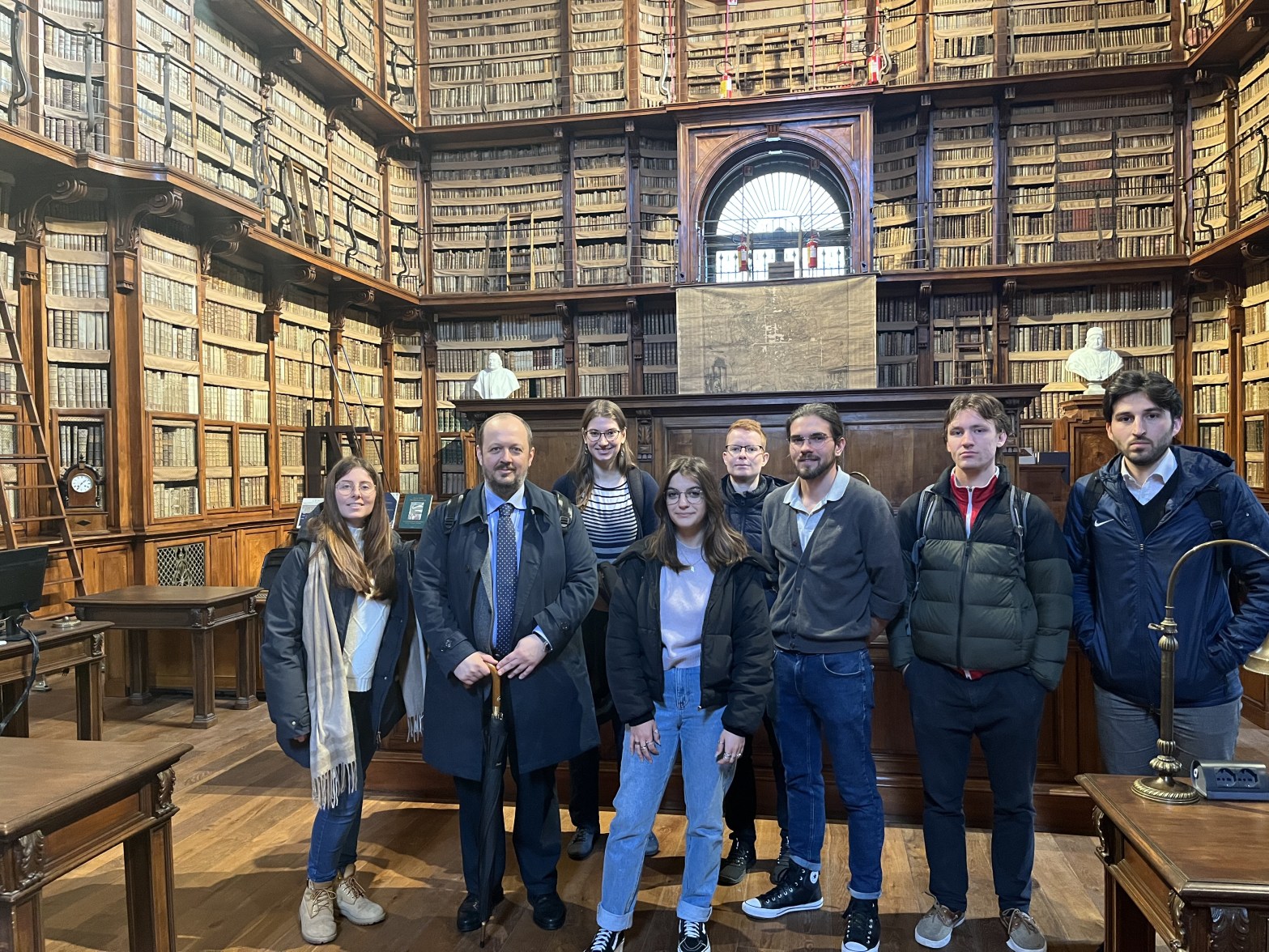
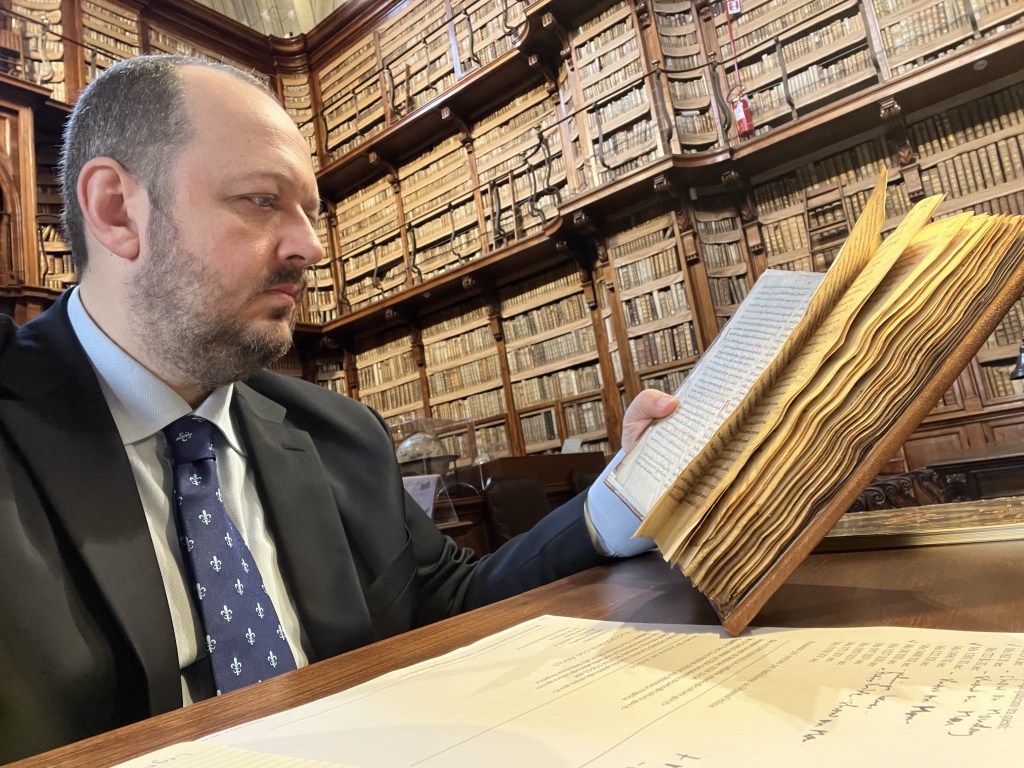
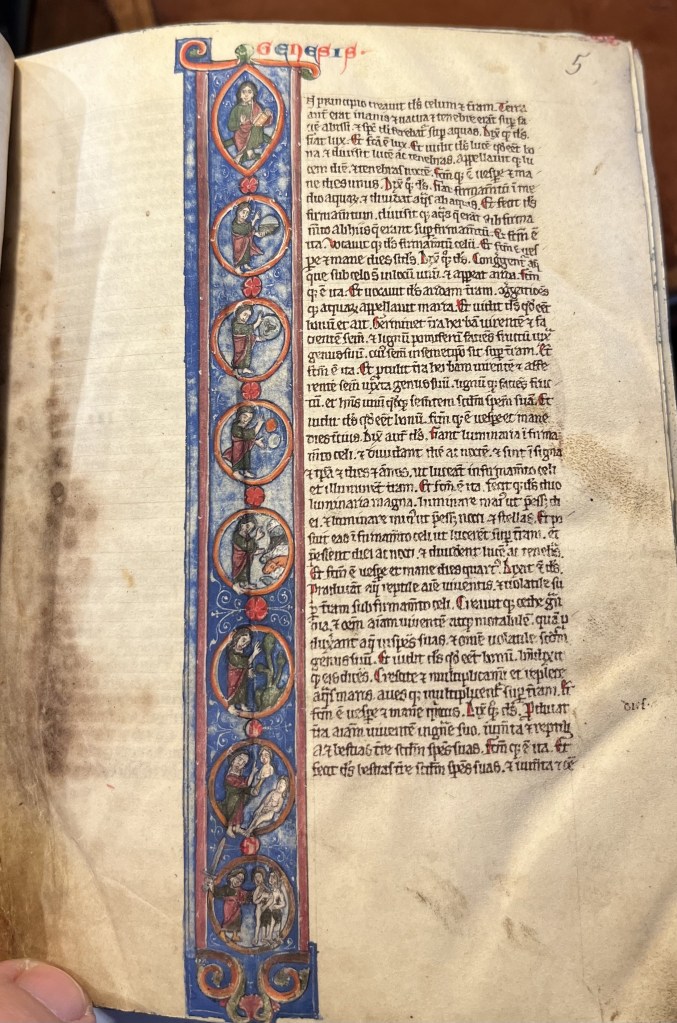
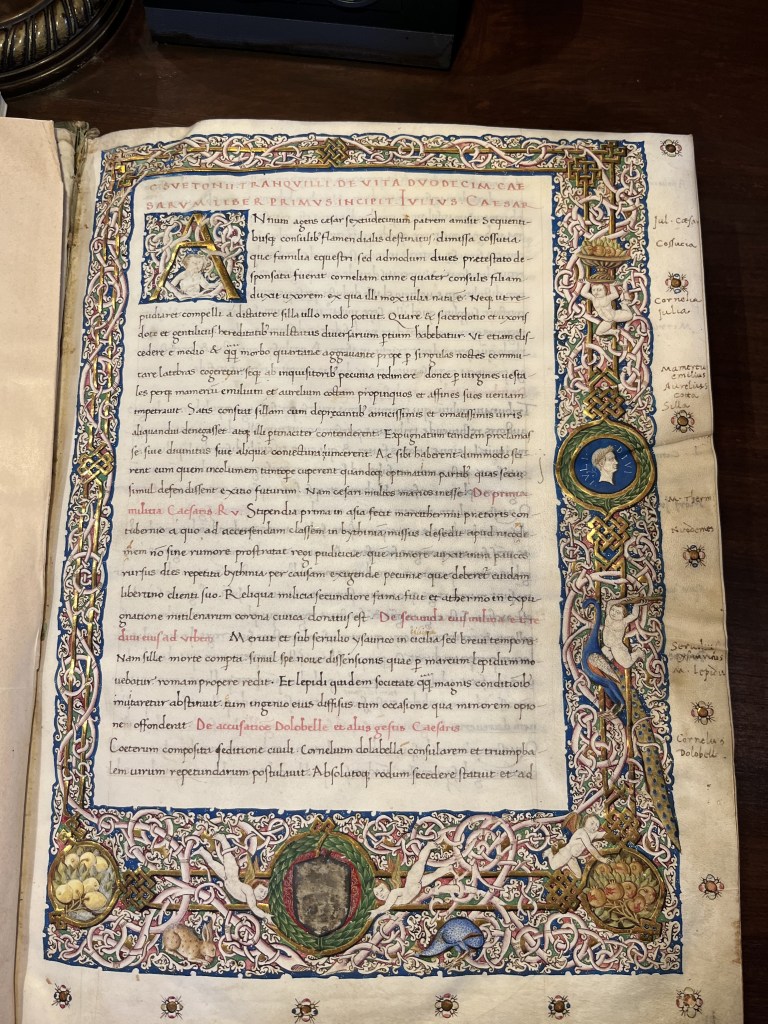
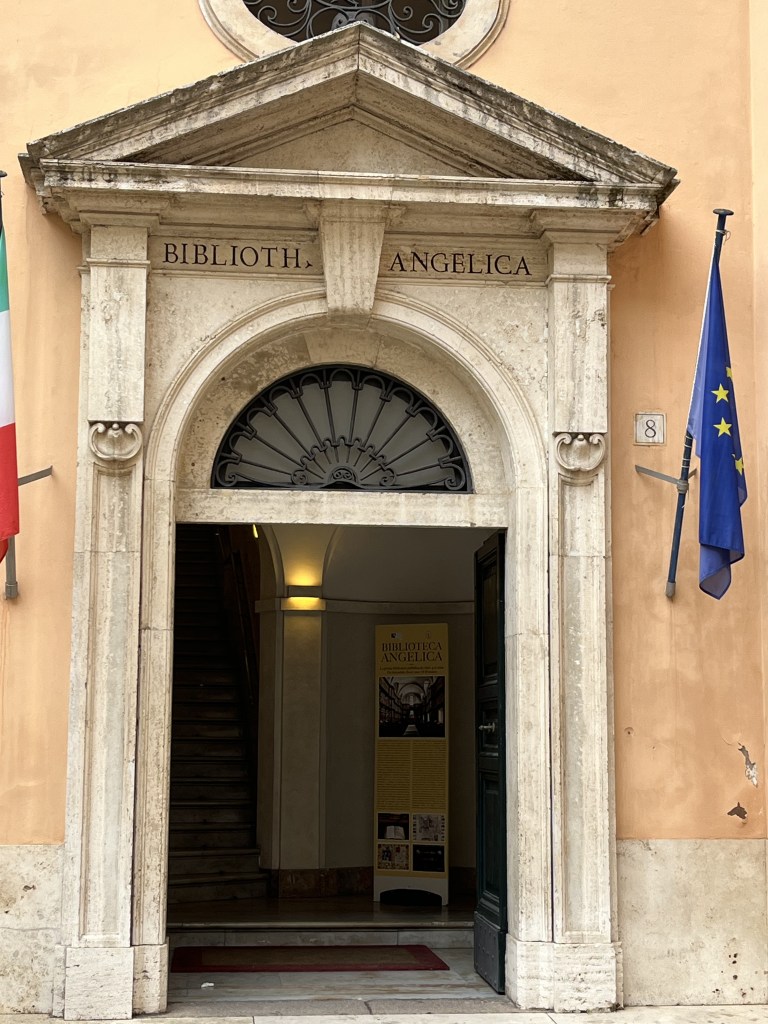
The whole week, Prof. Papahagi gave a codicology course within the Diplôme Européen d’Études Médiévales (DEEM), a programme organised by the Fédération Internationale des Instituts d’Études Médiévales (FIDEM), of which CODEX is a member. The courses were held at the Norwegian Institute of Rome (University of Oslo), and at the Biblioteca Angelica, and were attended by MA and PhD students from Italy, Norway, Spain, France, Denmark, Germany, and Romania.

New Publication: Wulfstan, Institutes of Polity (OE-Romanian)

We are delighted to announce the publication of a bilingual edition of Archbishop Wulfstan’s Institutes of Polity (bef. 1023):

Wulfstan, Rânduiala lumii, studiu, ediţie şi trad. Andrei Crişan, Cluj-Napoca: Presa Universitară Clujeană, 2024, ISBN 978-606-37-2360-5.

Two versions of the text are edited afresh and separately from Cambridge, CCC MS 201 and Oxford, The Bodleian Library, Junius MS 121. The introductory study and the facing-page translation make the Anglo-Saxon treatise of political theology accessible to Romanian readers.

CODEX member Andrei Crișan is currently completing a PhD dissertation on Wulfstan.

The book is available on the editor’s site, and (for now) in the Central University Library of Cluj (see catalogue).

DEEM: Apply until December 1st to Study Manuscripts in Rome

The Diploma in Medieval Studies (European Diploma for the Study of Medieval Latin Written Sources) was established in Louvain-la-Neuve in 1991. More than twenty European and non- European universities are involved in this programme. The courses focus on methodology and the teaching of auxiliary disciplines: Classical Latin, Medieval Latin, Palaeography, Codicology, Diplomatic, Textual Editing, and Digital Editing. All courses are taught in English. The teaching staff come from various countries with the aim of exposing Diploma students to a range of methodological approaches and current research perspectives. All courses will take place in an international setting at the Norwegian Institute in Rome and will include direct interaction with manuscript collections held in the numerous libraries and archives of Rome. All courses will be conducted in person. However, remote learning options will also be available for part of the course. A minimum of six participants is required for the course to be held. Attendance (both in-class and online) can be arranged in three formats: annual, modular and personalized.
APPLY HERE UNTIL DECEMBER 1st 2024.

9 August 2024, Alba Iulia: The Lorsch Gospels – Conference and Exhibition

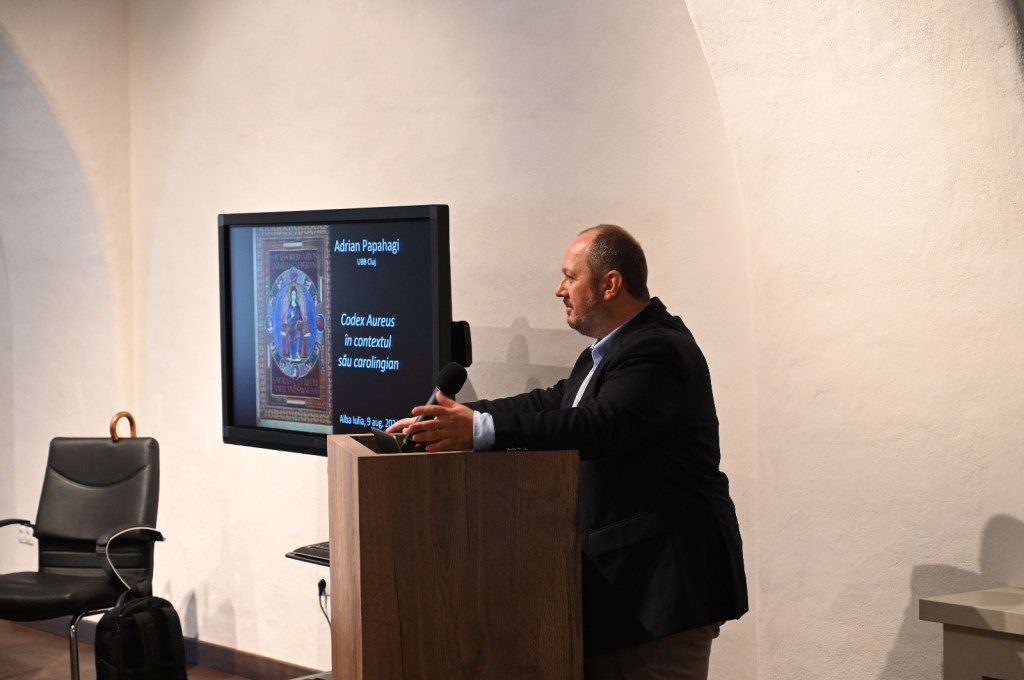
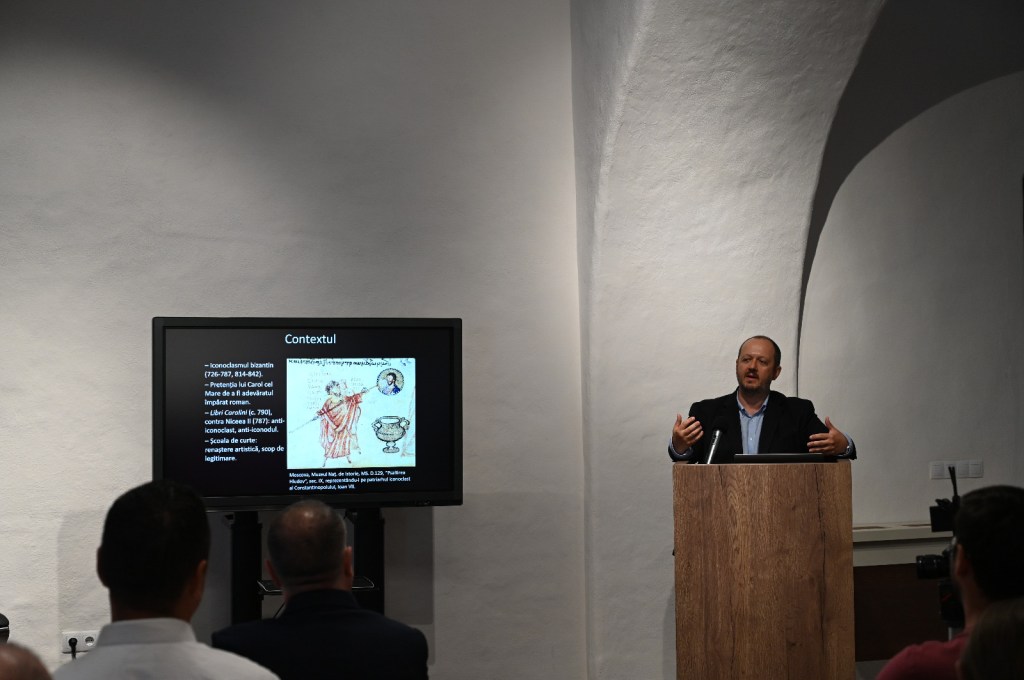
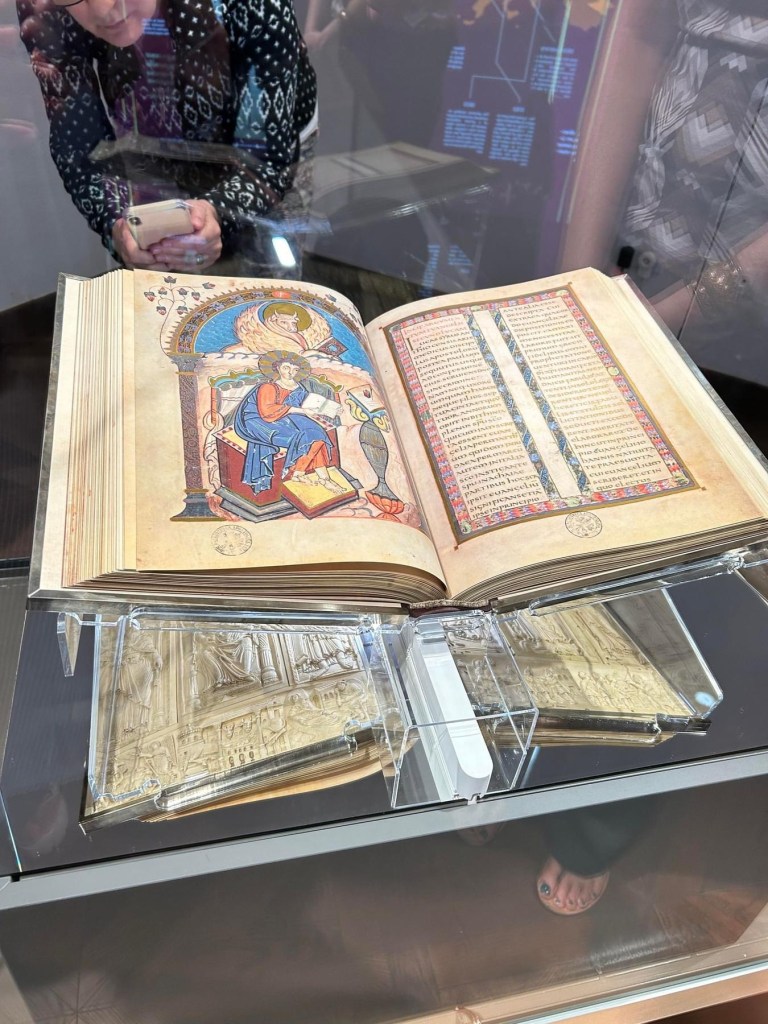
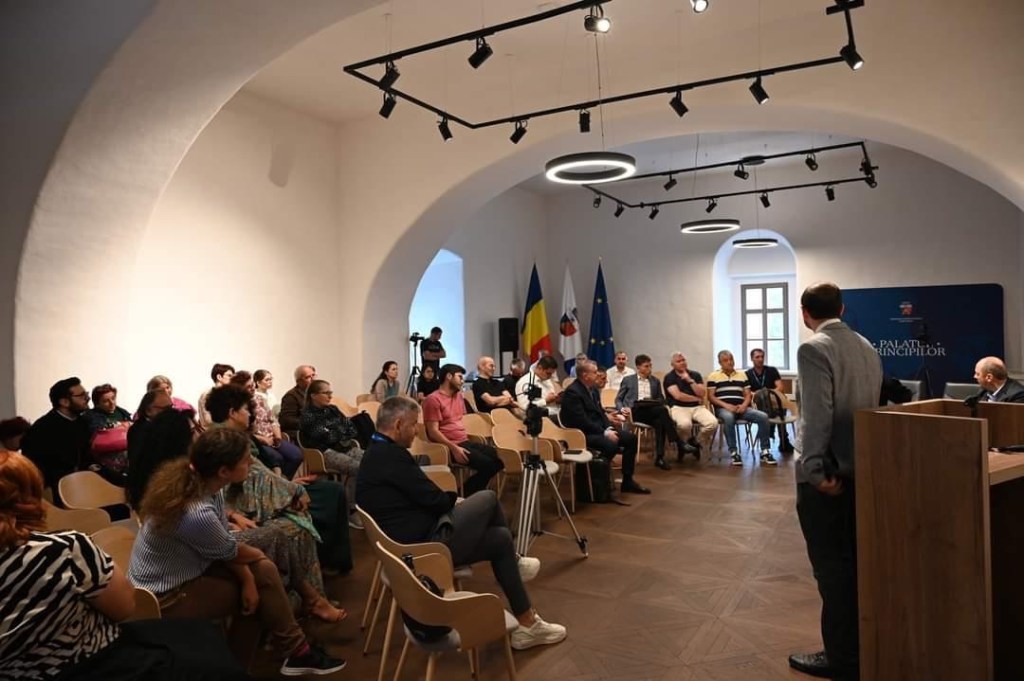
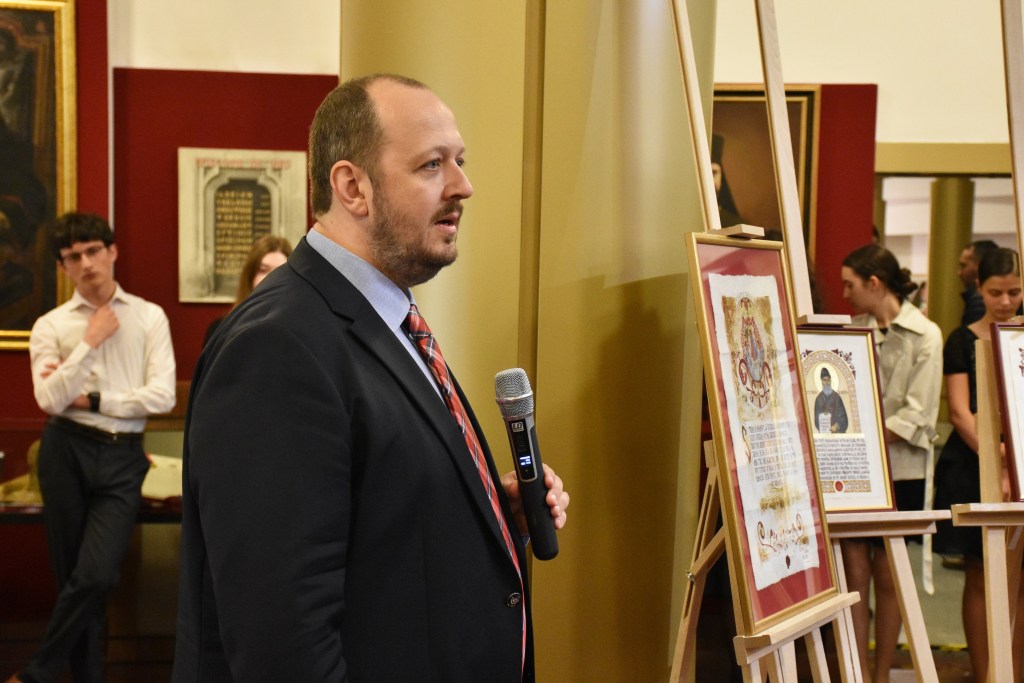
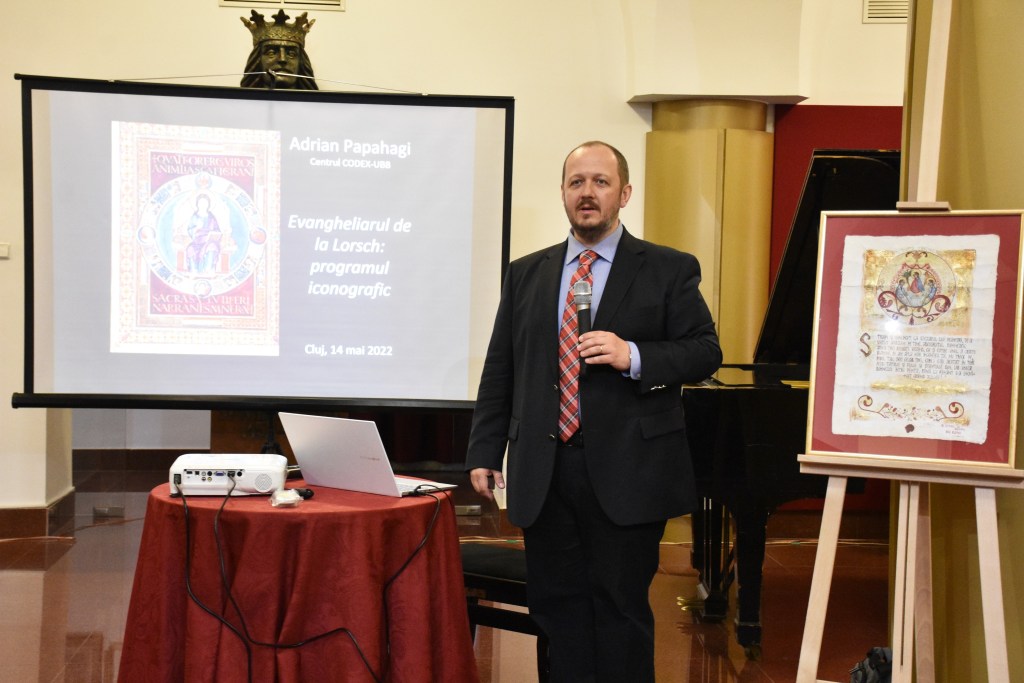
On Friday, August 9th, the Palace of Transylvanian Princes opened an exhibition on the most famous manuscript in Alba Iulia: the Codex Aureus (Lorsch Gospels, 1st part). The exhibition was preceded by conferences on the manuscript’s context, contents and reception given by CODEX members, Prof. Adrian Papahagi and Dr. Doina Hendre Biro. The conference was attended by a sizeable audience, and was greeted by the President of Alba County, Mr Ioan Dumitrel.

Ministry of Culture Award to FRAGMED Project

During a ceremony held on 13 June 2024, the Romanian Ministry of Culture awarded the FRAGMED Project a diploma in recognition of its contribution to national culture.

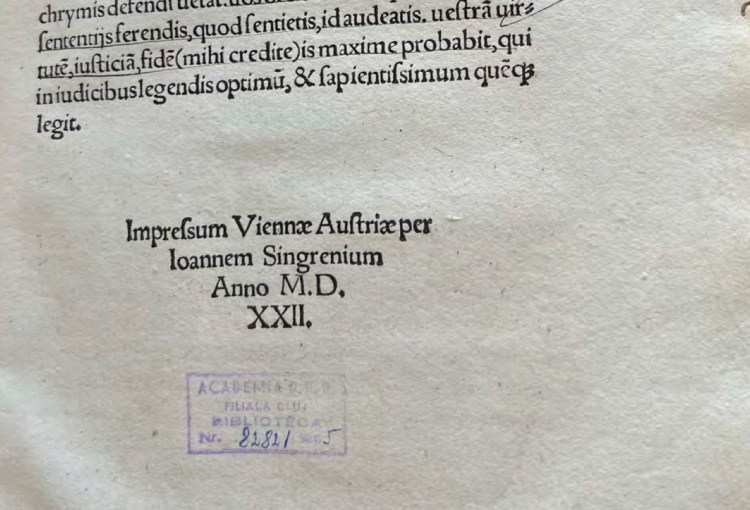
Our FRAGMED Project (financed through a SEE 2014-2021 grant) pioneered fragmentology in Romania, and created the first fragmenta codicum collection in Romania (shelfmark “Fragm. cod. lat.” at the Academy Library in Cluj).

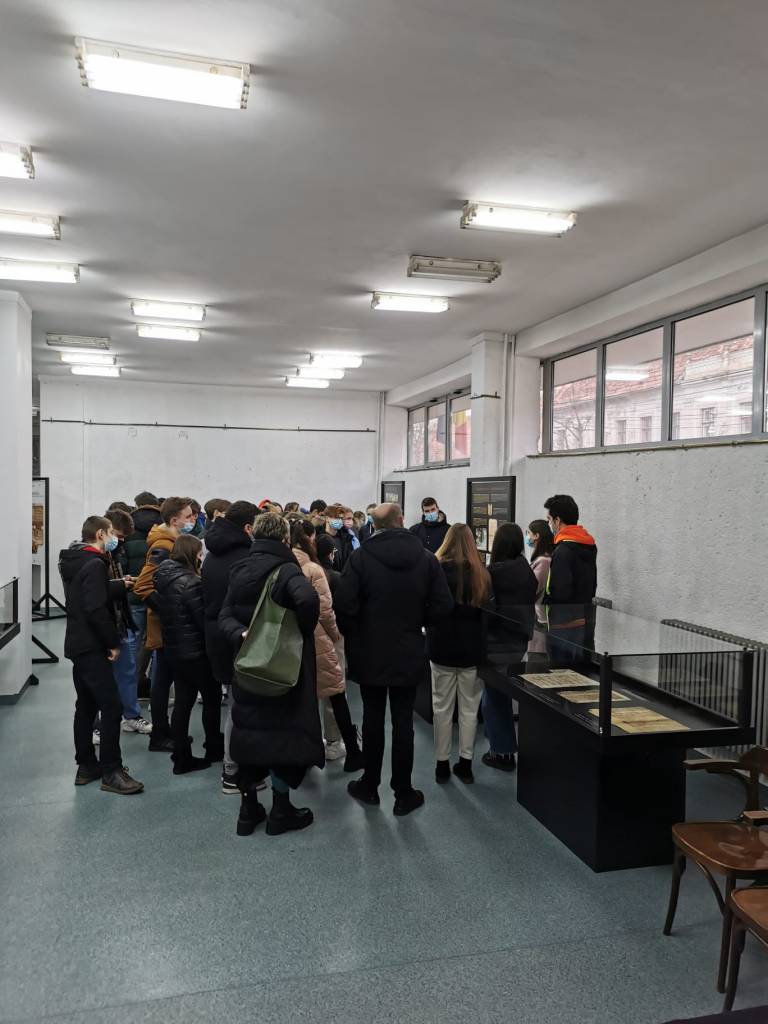
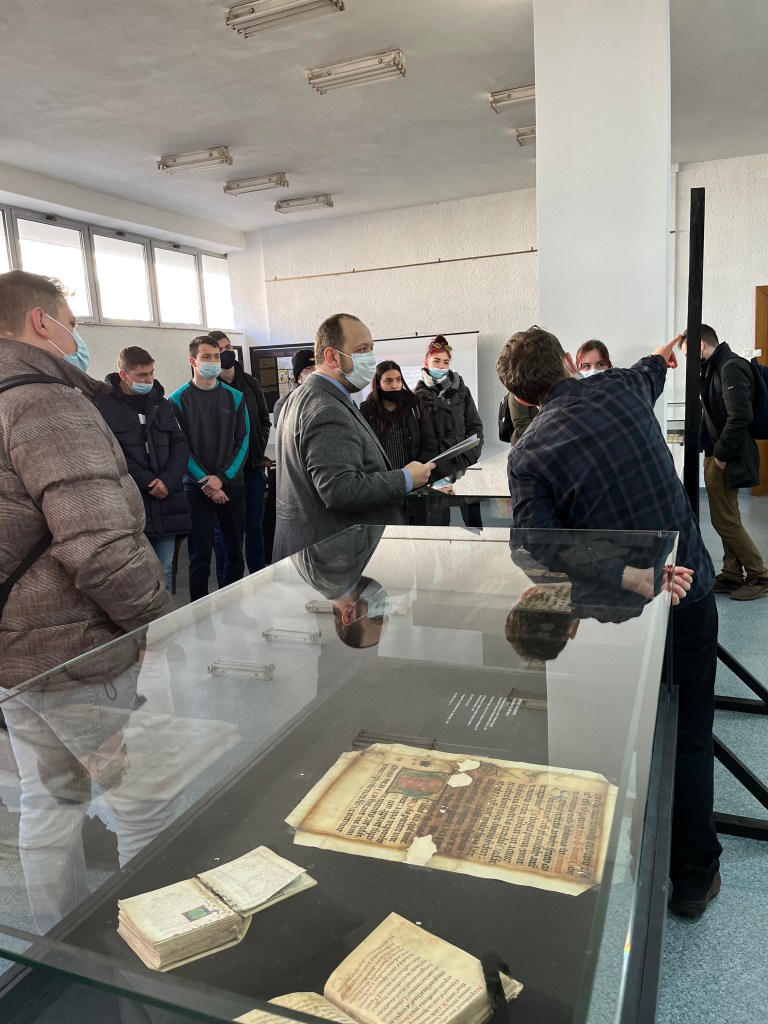
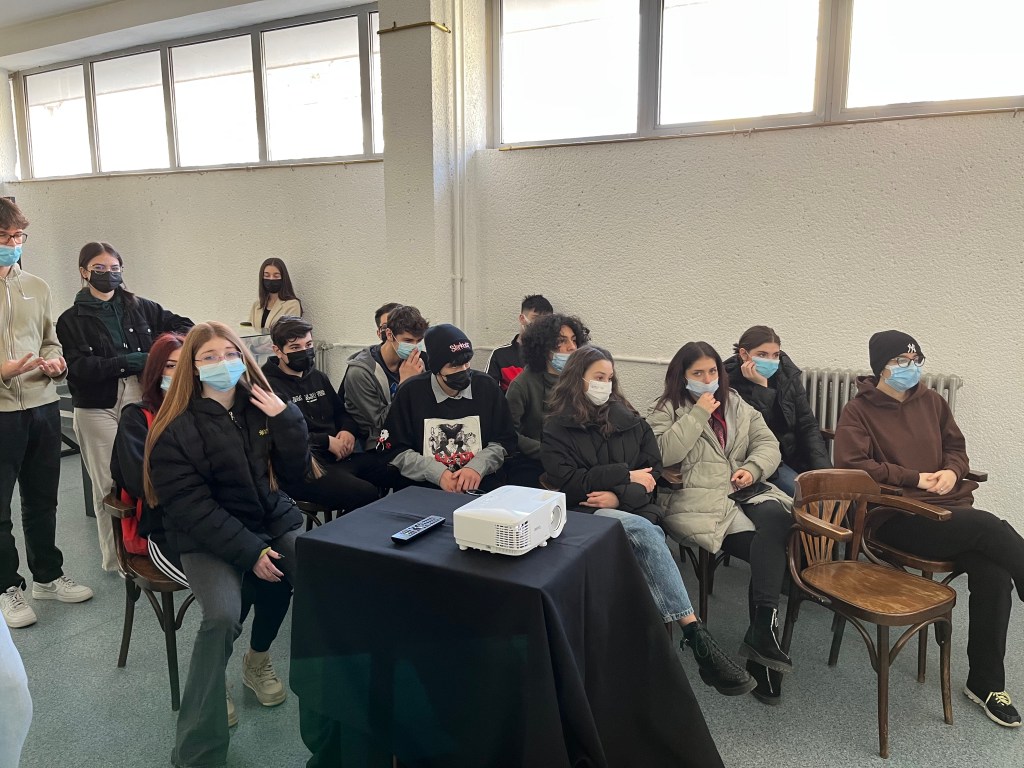
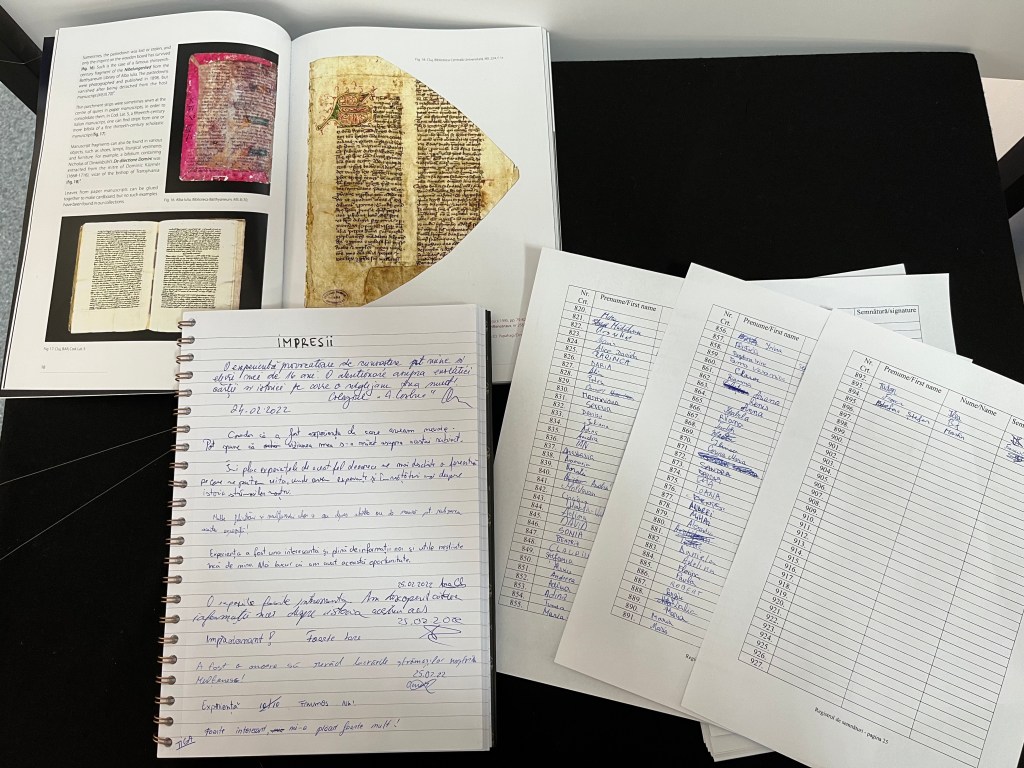
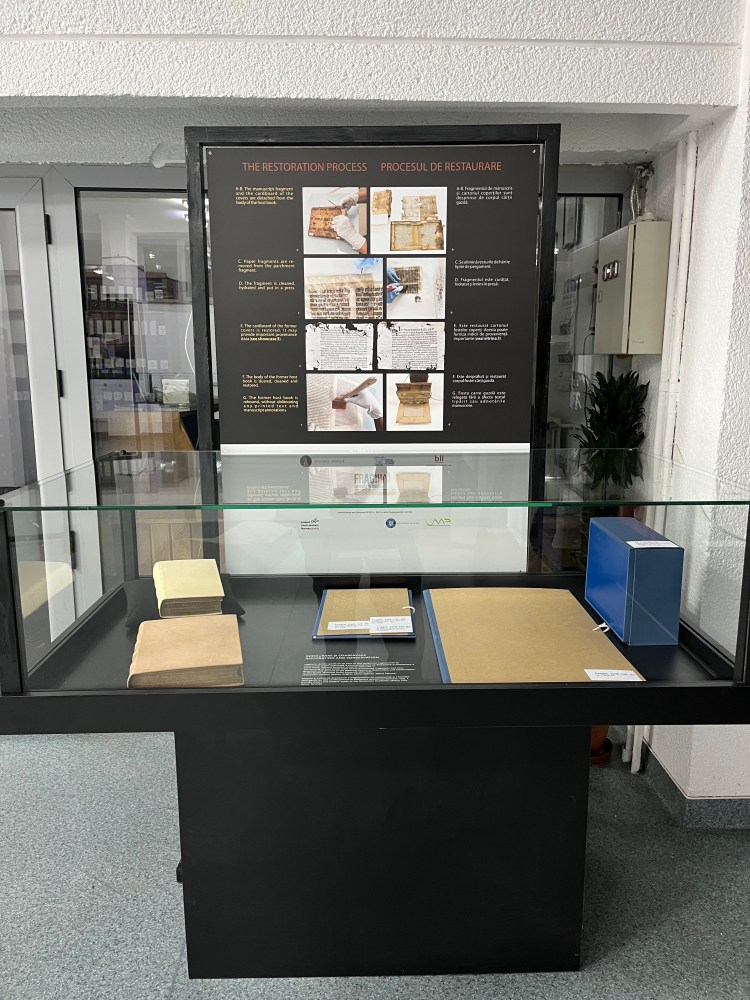
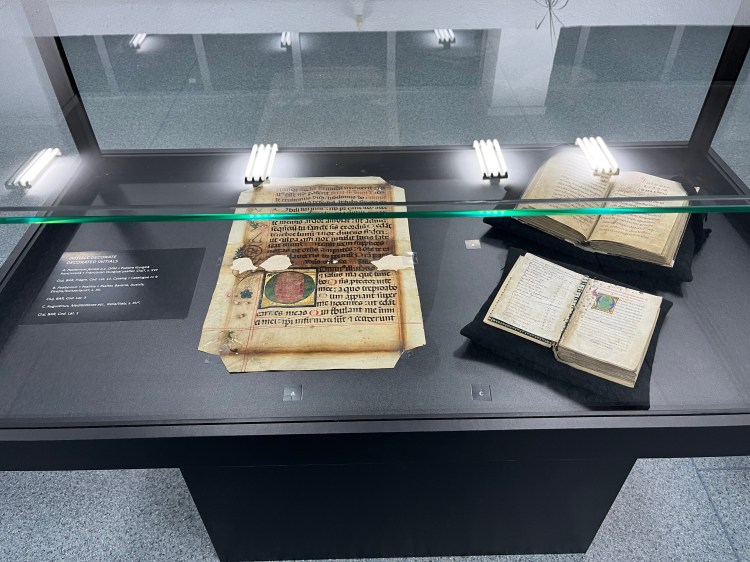
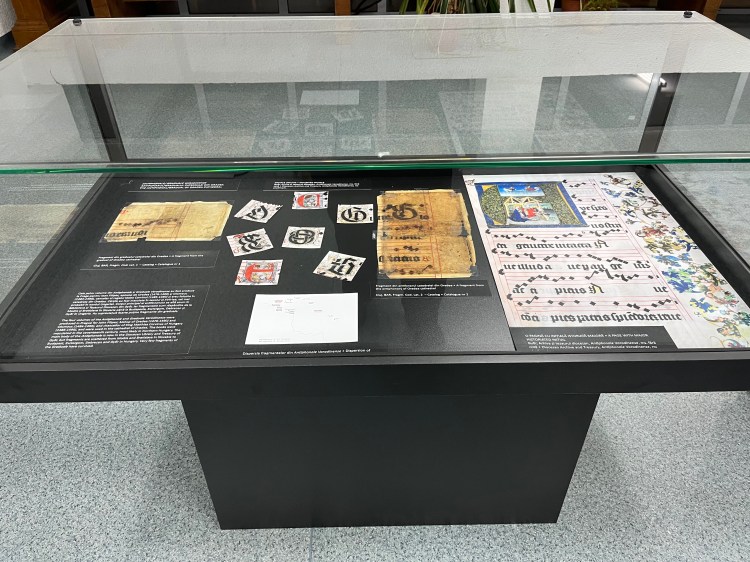
Restored fragments were published online on Fragmentarium, were exhibited in situ, and were described in a publication which can be downloaded for free (here). Over 2 000 persons, including numerous groups of pupils and students visited the exhibition.

11-13 March 2024 (Bratislava): Conference on Medieval and Early Modern Manuscripts

A conference on “Local Elements – Transregional Connections: Medieval and Early Modern Age Culture and Education in Central Europe” was held at Slovak National Gallery in Bratislava, on 11-13 March 2024.

CODEX member, Adrian Papahagi, gave a paper entitled The Circulation of Scribes, Scholars and Books between Present-Day Slovakia and Transylvania (15th-18th Centuries).

The conference participants were shown manuscripts and manuscript fragments at the National Archives of Slovakia, and the City Museum of Bratislava.

The conference programme can be read below:

Local Elements – Transregional Connections:
Medieval and Early Modern Age Culture and Education in
Central Europe

February-March 2024: Codicology Course in Rome

Since 2016, CODEX member, Adrian Papahagi has been teaching the codicology course of the Diplôme Européen d’Études Médiévales (DEEM), organised in Rome by the Fédération Internationale des Instituts d’Études Médiévales (FIDEM). The Codicology course consists of ten three-hours’ meetings, dispatched along two weeks. In the first week (February 26th-March 1st), students learned the basics of codicological analysis; in the second week (March 4th-8th), they got to work with medieval codices, and prepared detailed descriptions of assigned manuscripts.

In 2024, the class comprised eight MA, PhD and post-doc students from Czechia (Prague), Germany (Erfurt), Italy (Rome, Florence, Padua), Romania (Cluj), and Sweden (Stockholm).

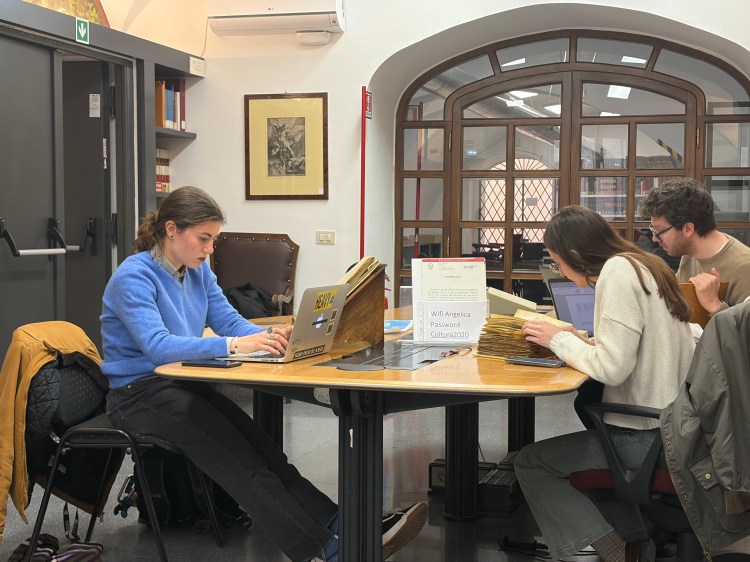
Many thanks to the University of Rome (La Sapienza), who hosted us during the first week of our course, and particularly to Dr Claudia Appolloni and Dr Massimiliano Lenzi, who made sure our activity at the Sapienza ran smoothly. In the second week, were delighted and grateful to work with manuscripts copied in the 9th-16th centuries in the splendid Biblioteca Angelica. We are thankful to Dr Umberto d’Angelo, director of the Biblioteca Angelica, Dr Claudia Giobbio, and to the other members of this great library’s competent and helpful staff.

Media Coverage: Nicolaus de Lyra Manuscript in Cluj

The recent rediscovery of a manuscript of Nicolaus de Lyra’s Postilla at the archive of St Michael’s Roman-Catholic parish in Cluj has attracted significant media attention.

Here are two media services (in Hungarian):

Exciting Discovery: Medieval Manuscript Emerges in Cluj

During the renovation of the medieval parish church of Cluj (completed in 2021), almost two thousand books kept in St Michael’s church (picture below) were transferred to the newly established archive of the Roman-Catholic Church. Until recently, almost nothing was known about these books, of which no catalogue exists.

The inventory of the collection, drafted on 18 December 1963 by canon Béla Baráth, then priest of St Michael’s church, lists 1838 printed books, and 52 manuscripts. The diligence of Dr Emőke Nagy, the archivist, has recently uncovered the only medieval manuscript in the collection (Nicholas of Lyra, Postilla super Evangelia, 1470), which had been kept separately for a while in the vicar’s office.

Since the scholarly community ignores the existence of this manuscript[6], I am happy to signal it here. The paper manuscript measures 405 x 290 mm, and counts 275 leaves. Like many of the library’s incunabula, this is a chained book (liber catenatus), with a perfectly preserved Gothic binding. It has a few decorated initials (red and blue flourished initials, and simple lombards), and many empty reserved spaces. Nicholas of Lyra’s commentaries to the four Gospels are completed with additions by Paul of Burgos (additiones Pauli Burgensis episcopi).

Cluj, Arhiva parohiei romano-catolice Sf. Mihail, MS 52 (323c?), f. 1r.

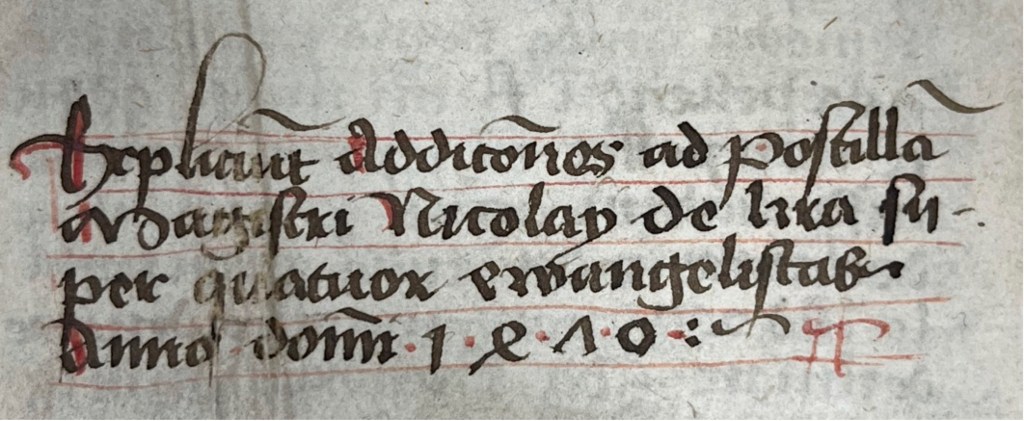
The manuscript has a dated colophon on f. 275v, which reads: Expliciunt addiciones ad postillam Magistri Nicolay de lira super quatuor ewangelistas. Anno domini 1470.

Cluj, Arhiva parohiei romano-catolice Sf. Mihail, MS 52 (323c?), f. 275v.

Another scribal formula at the end of the commentary to Mark shows that the manuscript was copied by a German-speaking scribe: Explicit exposicio literalis magistri Nicolai de lira super Marcum. (S)wie fro ich was do ich sprach. Deo Gracias. (f. 121v).

Cluj, Arhiva parohiei romano-catolice Sf. Mihail, MS 52 (323c?), f. 121v

Coming across Nicholas of Lyra’s Postilla instantly rang a bell, and I remembered having seen another copy of this work in the Batthyaneum Library in Alba Iulia. Most strikingly, this volume (MS. I.12) contains the commentay to the following texts of the New Testament (Acts of the Apostles, Epistles, Revelation). Moreover, the manuscript was copied in 1471, and has exactly the same size as St Michael’s book (405-410 x 290 mm).

Alba Iulia, Biblioteca Batthyaneum, MS I.12, f. 328v.

I knew that the bishops of Transylvania, from Batthyány himself to Gusztáv Majláth in 1913[8], were in the habit of transferring medieval manuscripts from parishes to the great library in Alba Iulia. Could this be another instance of a work split between Cluj and Alba Iulia?

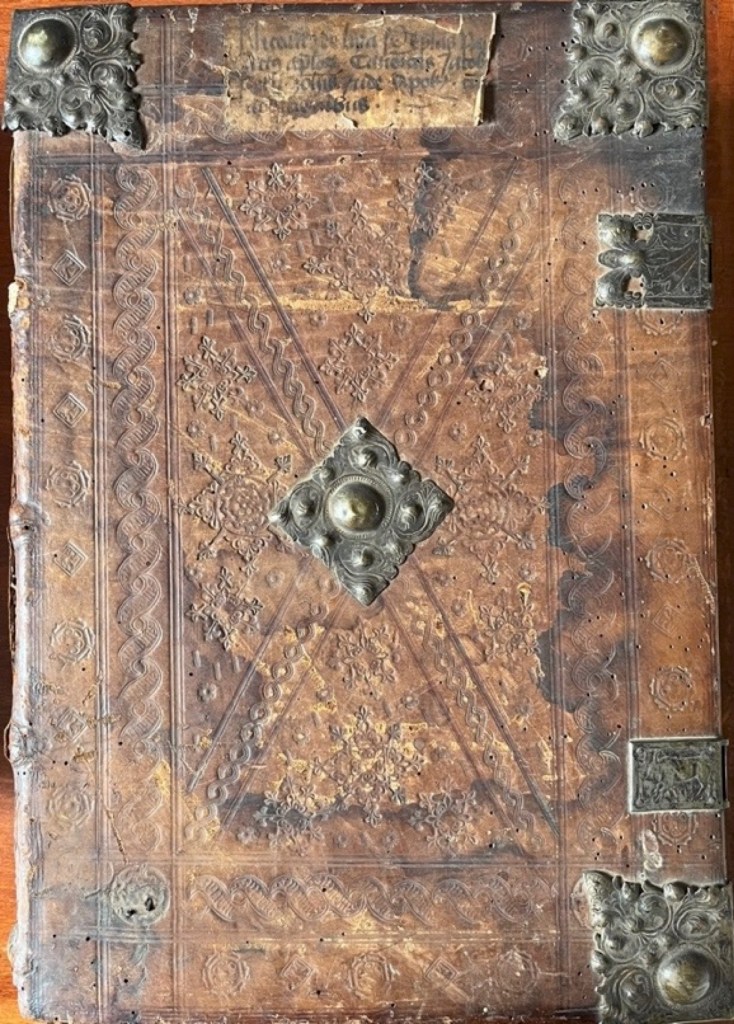
All one had to do was to compare the two volumes. Although they were copied by different scribes, the two manuscripts were certainly bound in the same workshop, as the iron fittings and some of the stamps on the blind-tooled binding demonstrate. Although the Alba Iulia manuscript has lost its chain, and the Cluj book has lost its label on the front cover, they also had these elements in common. Moreover, some of the same tools were used to decorate the bindings of various incunabula from Saint Michael’s collection, which demonstrates that the book in Alba Iulia was taken there from Cluj, at a moment which I must still identify.

Binding of Alba Iulia, Bibl. Batthyaneum, MS I.12

Binding of Cluj, Roman-Catholic Archive, MS inv. 52.

A future study will provide more information.

Adrian Papahagi

Quote as: Adrian Papahagi, ‘Exciting Discovery: Medieval Manuscript Emerges in Cluj’, at https://centrulcodex.com/2023/12/04/exciting-discovery-medieval-manuscript-emerges-in-cluj/


[1] Elena-Maria Schatz, Robertina Stoica, Catalogul colectiv al incunabulelor din România, Bucharest: CIMEC, 2007, nrs [B-120], [G-21], [G-42], [H-29], [M-71], [T-17].

[2] Thanks to Dr György Jakubinyi, former Roman-Catholic Archbishop of Alba Iulia, Dr Gergely Kovács, current Archbishop, and Dr Rita Magdolna Bernád, Archivist of the Roman-Catholic Diocese of Alba Iulia.

[3] Adrian Papahagi, Books from Lost Libraries: The Medieval Dioceses of Cenad, Oradea, and Transylvania, Cluj: Presa Universitară Clujeană, 2023, pp. 114-115, 136.

[4] Ibid, p. 114.

[5] Inventarul Bibliotecii Bisericii romano-catolice Sfîntul Mihail din Cluj: Cărți, Manuscrise – typewritten document.

[6] This includes our recent work, A. Papahagi, A. C. Dincă, with A. Mârza, Manuscrisele medievale occidentale din România. Census, Iași: Polirom, 2018.

[7] For instance, Frankfurt am Main, Universitätsbibliothek, Ms. Praed. 91, ff. 62r, 129r (Frankfurt?, 1475-1498); Leipzig, Universitätsbibliothek, Ms. 1590, f. 136r (Nürnberg, c. 1460-1465); Augsburg, Staats- und Stadtbibliothek, 2° Cof. 160, f. 104r (Schwaben, 1447); Augsburg, Universitätsbibliothek, Cod. III.1.2° 36, f. 404v (Hohenburg, 1460). Derived formulas also appear in Munich, Bayerische Staatsbibliothek, Cgm. 699, f. 85r (after 1491), and Vienna, Österreichische Nationalbibliothek, Cod. 3801, f. 242v (Mondsee, s. XV1). I would like to thank Mr Maximilian Nöldner and Prof. Margit Dahm, from the University of Kiel (DFG-Projekt: Kolophone in deutschsprachigen Handschriften des Mittelalters) for this information.

[8] Bishop Majláth transferred two graduals, copied in the early sixteenth century (now MSS I.1, I.2) from the Catholic High School (Lyceum) of Cluj to the Batthyaneum Library. See Papahagi, Books from Lost Libraries, p. 96.

[9] Vienna, Österreichische Nationalbibliothek, Cod. 1794, bound in Vienna around 1456; Otto Mazal, Europäische Einbandkunst aus Mittelalter und Neuzeit: Ausstellung der Handschriften- und Inkunabelsammlung der Österreichischen Nationalbibliothek, Prunksaal, 22. Mai-26. Oktober 1990, Graz: ADEVA, 1990, nr/fig. 29.

[10] Vienna, Österreichische Nationalbibliothek, Cod. 3147, bound in Vienna by Blasius Coniugatus around 1479; Mazal, Europäische Einbandkunst, nr/fig. 30.

[11] e. g. Vienna, Österreichische Nationalbibliothek, Cod. 13649, bound for the charterhouse of Gaming in 1513; Mazal, Europäische Einbandkunst, nr/fig. 35.

[12] see n. 10.

[13] T. Gottlieb, K. K. Hofbibliothek: Bucheinbände. Auswahl von technisch und geschichtlich bemerkenswerten Stücken, Vienna: Anton Schroll, 1910, cols 71-72, nr 78 and plate 78; G. Laurin, ‘Bemerkenswerte Einbände der Bibliothek des Franziskanerklosters in Graz’, Gutenberg-Jahrbuch 38 (1963), pp. 280-283; Adrian Papahagi, ‘The Library of Petrus Gotfart de Corona, Rector of the University of Vienna in 1473’, The Library 20.1 (2019), p. 37-38.

31 October 2023: Medieval Palaeography Masterclass (‘Liber de causis’)

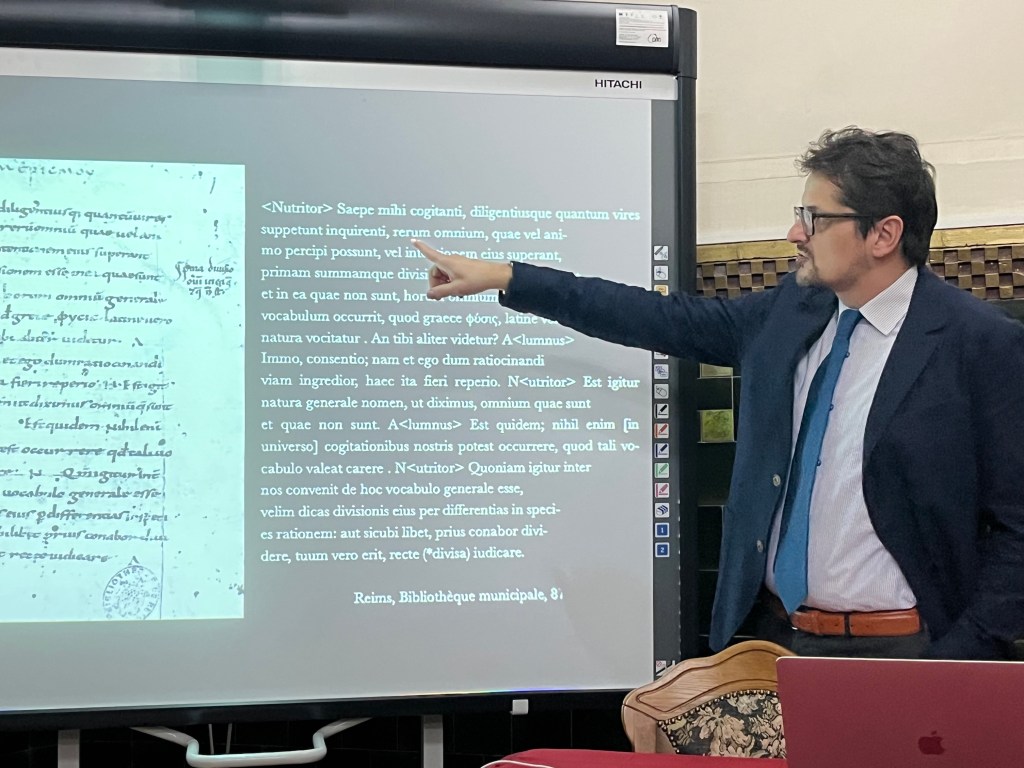
On 31 October 2023, Dr Dragoș Calma, Associate Professor of Medieval Philosophy at University College, Dublin, gave a class on medieval palaeography. The class was attended by the students of Adrian Papahagi’s course of Manuscript Studies (LLE 5122/5222), by students of Classics, and by PhD students in medieval studies.

The class read a series of manuscripts transmitting the Liber de causis, a ninth-century Arabic work, which became popular in the West in the Latin translation of Gerardus Cremonensis (d. 1187).

Dr Calma’s course was part of an exchange programme sponsored by the Romanian Research Council (CNCS – UEFISCDI, project PN-IV-P2-2.2-MCD-2023-0051).

30 October 2023: Conference Dragoș Calma (UCD)

On 30 October 2023, Dragoș Calma, Associate Professor of Medieval Philosophy at University College, Dublin, gave a conference on Ratio et Revelatio: A History of the Book in the Middle Ages. The conference studied the impact of the revealed Book, and of the philosopers’ books on late antique and early medieval culture, culminating with Eriugena’s synthesis of Western and Eastern thought.

Dr Calma’s conference was part of an exchange programme sponsored by the Romanian Research Council (CNCS – UEFISCDI, project PN-IV-P2-2.2-MCD-2023-0051).

5-6 October: Printing Centres and Peripheries

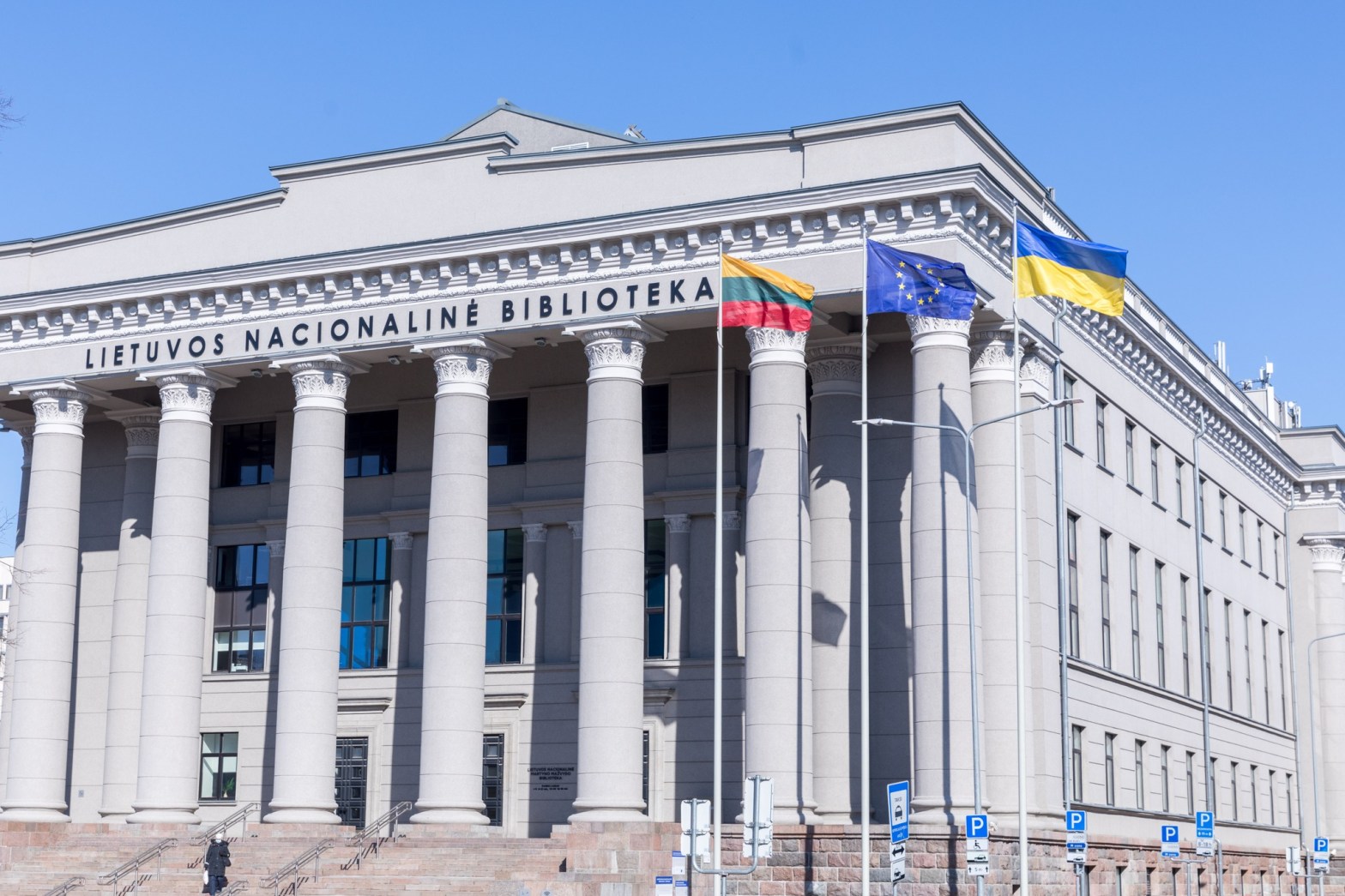
CODEX member Carmen Oanea gave a paper to the international conference on “Printing Centres and Peripheries in the Early Modern Period”, organised by the National Library of Lithuania. The conference was held in Vilnius on 5-6 October 2023.

Ms Oanea’s paper was entitled: Private Owners and Their Books. Reading Incunabula in 16th-Century Transylvania. The conference programme can be found at https://konferencijos.lnb.lt/printing-centers-and-peripheries/.

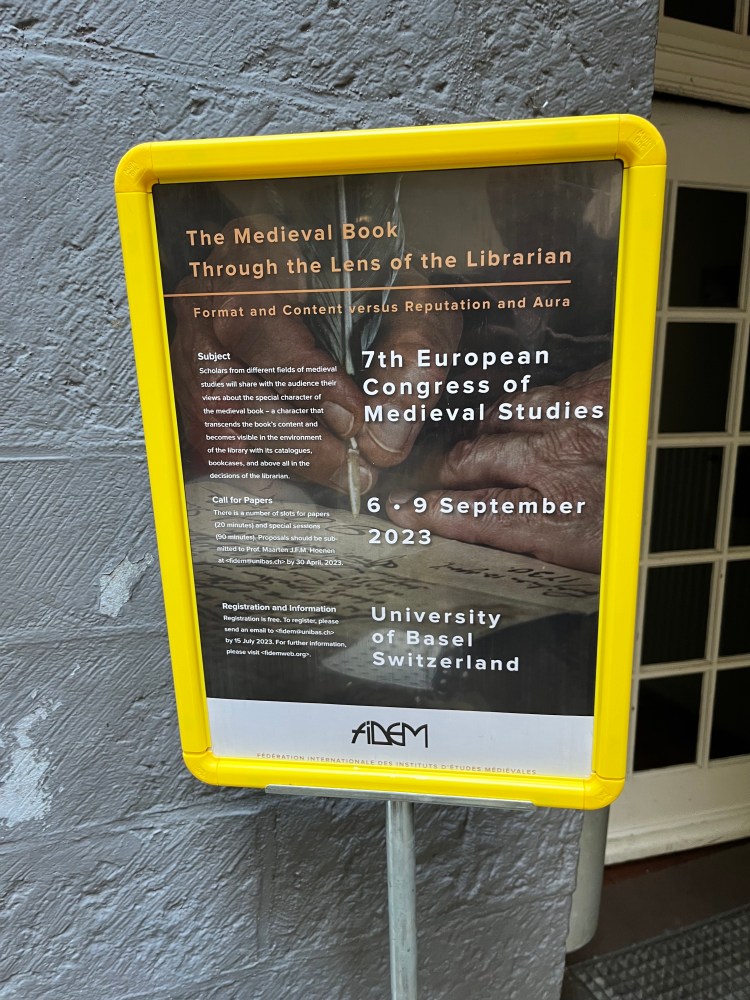
6-9 September: 7th European Congress of Medieval Studies (FIDEM)

The 7th European Congress of Medieval Studies of the Fédération Internationale des Instituts d’Études Médiévales (FIDEM) was held by the University of Basel, Switzerland, between 6-9 September. The congress is held every five years. CODEX, a member of FIDEM, was represented at the general assembly by Prof. Adrian Papahagi.

The topic of the congress was “The Medieval Book through the Lens of the Librarian”. Adrian Papahagi gave a paper entitled: “What Did Early-Modern Librarians Do to Medieval Books? Manuscripts and Manuscript Fragments from Transylvania”.

The full programme can be consulted here:

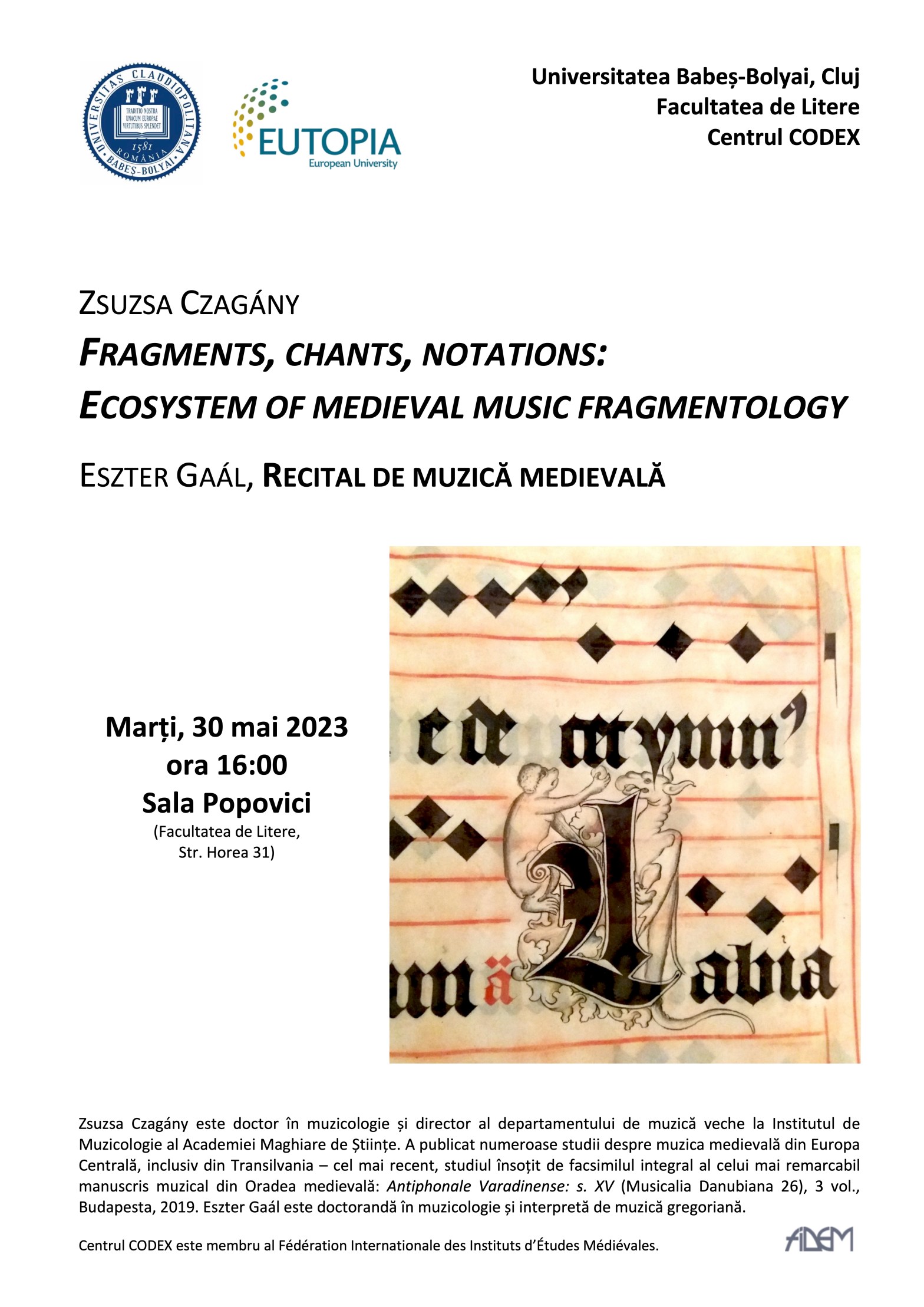
30 May 2023: Zsuzsa Czagány – Conference on Medieval Musical Fragments

On Tuesday, 30 May 2023, from 4 pm, Dr Zsuzsa Czagány will be giving a conference on Fragments, chants, notations: Ecosystem of medieval music fragmentology at the Faculty of Letters (Room Popovici). After the conference, Eszter Göbölösné-Gaál will sing bits of medieval liturgical music.

Dr Czagány is head of the department of Old Music at the Institute of Musicology, in Budapest. She has published widely on medieval musical manuscripts, and on medieval liturgy. Her latest book is study and full facsimile of the impressive antiphonal ordered by bishop John Filipec (1476-1490) for the cathedral of Oradea: Antiphonale Varadinense: s. XV (Musicalia Danubiana 26), 3 vols, Budapest, 2019. Eszter Gaál is a PhD student in medieval musicology.

The Batthyaneum “Codex Aureus” on the UNESCO Memory of the World Register

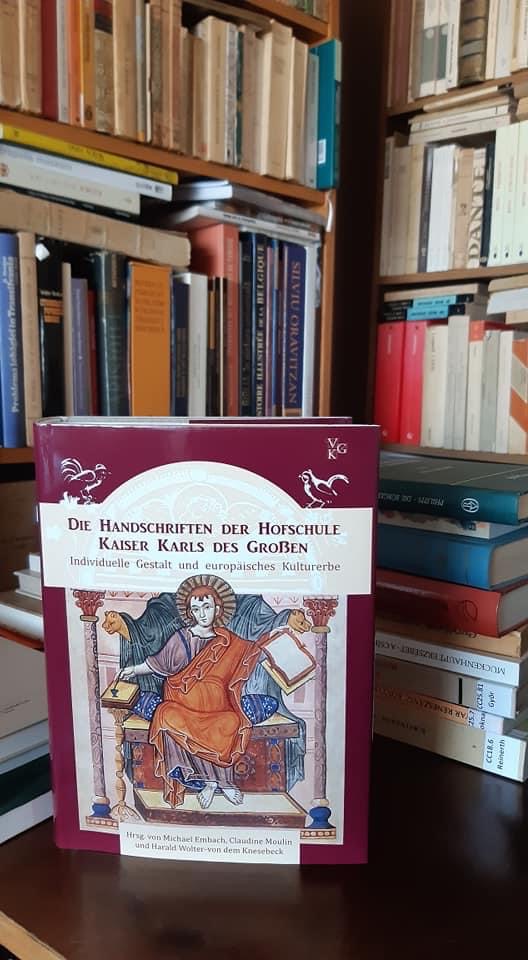
The Lorsch Gospels, a codex aureus whose first part is kept at the Batthyaneum Library of Alba Iulia (MS II.1) has been inscribed in the UNESCO Memory of the World register alongside with the other manuscripts of Charlemagne’s Court School (produced between c. 781 and c. 810).

The project was initiated in 2016 by Professor Michael Embach, then director of the University and City Library of Trier. For the past seven years, Prof. Adrian Papahagi (CODEX Centre) has served as link between the German initiative committee and the Romanian authorities.

New Publication: Books from Lost Libraries

CODEX has launched its series “Istoria cărții și a textelor”, published by Presa Universitară Clujeană.

The first title in the series is now available, and can be ordered from the publisher (follow this link):

Adrian Papahagi, Books from Lost Libraries: The Medieval Dioceses of Cenad, Oradea, and Transylvania, Cluj: Presa Universitară Clujeană, 2023 (hardcover, 276 pp., 60 lei).

The volume discusses extant books, book fragments, and information about lost books connected to the Catholic bishoprics of Cenad, Oradea, and Transylvania before the Reformation. It presents the work of the few identifiable scribes, illuminators and bookbinders active in these dioceses, and the circulation of manuscripts and incunabula to and from these provinces.

The period under scrutiny starts in the eleventh century, when the three dioceses were established. Books are mentioned in the eleventh and twelfth centuries, a few manuscripts of disputed origin survive from the twelfth, thirteenth and fourteenth centuries, but only the fifteenth and sixteenth centuries can be relatively well documented through inventories and surviving books. The fate of books is also followed during and after the Reformation, when most medieval collections were scattered or utterly destroyed.

The present research complements a recent census of medieval manuscripts in Romanian libraries by adducing as evidence manuscripts of local origin, provenance or relevance kept in foreign libraries.

New Publication: The Transylvanian Saxons and Their Books in the Middle Ages

CODEX has launched its series “Istoria cărții și a textelor”, published by Presa Universitară Clujeană.

The second title in the series is now available, and can be ordered from the publisher (follow this link):

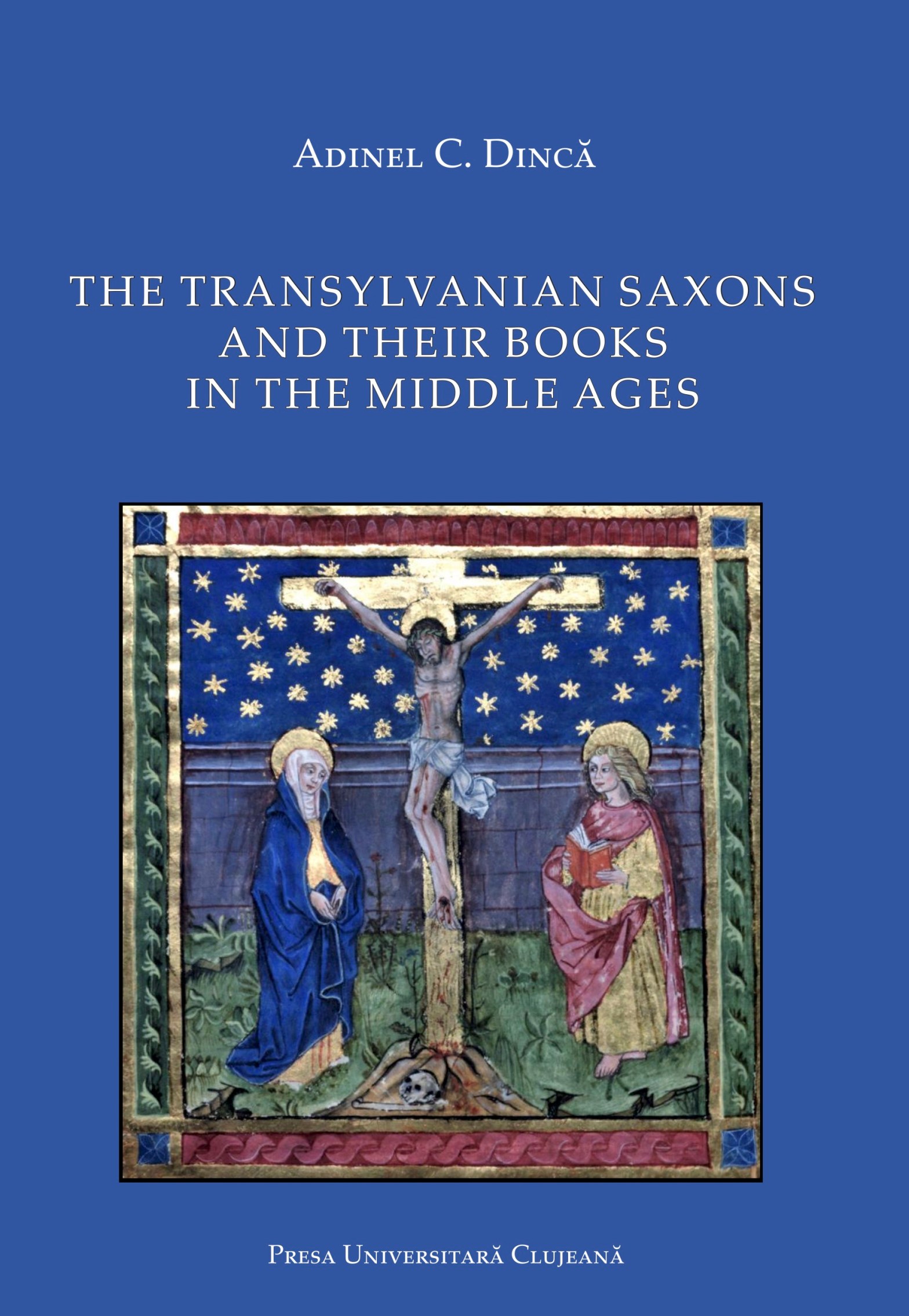
Adinel C. Dincă, The Transylvanian Saxons and Their Books in the Middle Ages, Cluj: Presa Universitară Clujeană, 2023 (hardcover, 210 pp., 55 lei).

This research underscores the significance of the Transylvanian Saxons as actors in the cultural history of Europe.

The presence of books in southern Transylvania (together with various other expressions of writing) draws the complex picture of a literate society, in which gifted young men attended a well-organised network of elementary schools, continued their training abroad, then returned from European universities, and served their home communities through ecclesiastical or secular careers.

This volume addresses less studied aspects of the culture of medieval Transylvania, such as the local decoration and illumination of manuscripts, charters, and printed books. It also aims to provide an update on the current state of research concerning the literate behaviour of the Saxon communities in medieval Transylvania, while suggesting future research directions.

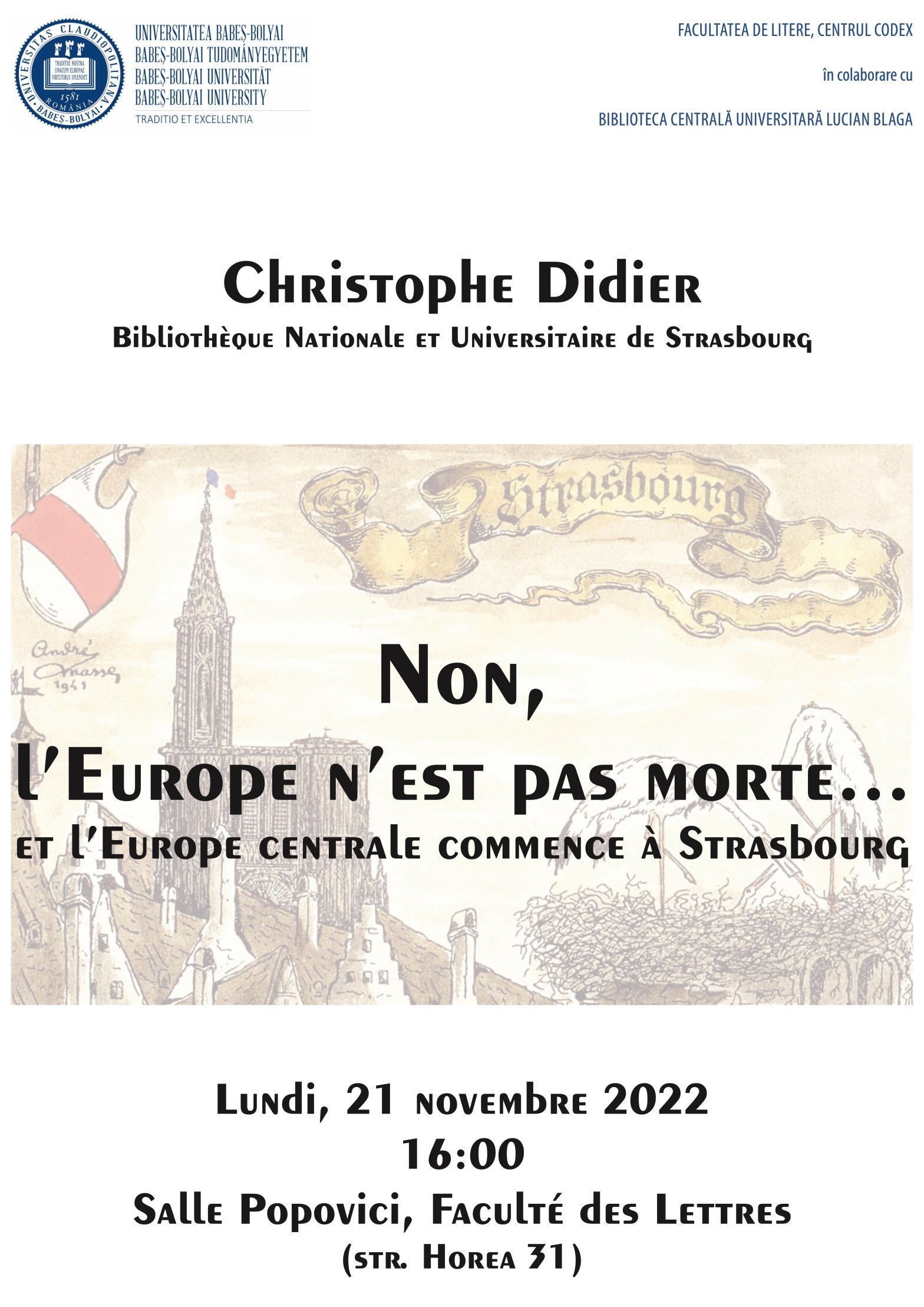
Conférence Christophe Didier (BNU Strasbourg)

Christophe Didier, délégué à la coopération internationale à la Bibliothèque Nationale Universitaire de Strasbourg, donnera une conférence à la Faculté des Lettres (Str. Horea 31), Salle Popovici, le lundi 21 novembre, à partir de 16h.

La conférence porte le titre provocateur: Non, l’Europe n’est pas morte… et l’Europe Centrale commence à Strasbourg.

La Bibliothèque nationale et universitaire de Strasbourg a, en France, une histoire particulière. Fondée par l’Empire allemand en 1870, à une époque où l’Alsace est allemande, elle devient après la Première Guerre mondiale, avec l’université, une porte ouverte vers l’espace germanique et l’Europe centrale et orientale. De ce passé subsistent une tradition d’ouverture qui a mené à de nombreux partenariats, et bien entendu de très riches collections qui englobent toutes les langues de l’Europe (et même d’au-delà). Les projets de la bibliothèque seront à l’avenir fortement marqués par l’obtention du label “Capitale mondiale du livre” que Strasbourg portera en 2024-2025, mais aussi par une politique internationale résolument ouverte vers l’Est. L’Europe centrale commence à Strasbourg…

‘Impressa Argentine’: Exposition d’incunables

Sont exposés ici treize incunables imprimés à Strasbourg, soit à peu près un dixième des incunables conservés à la Bibliothèque de l’Académie Roumaine de Cluj. Strasbourg, un des centres majeurs de l’imprimerie, constitue donc pour la culture de Cluj une source importante d’incunables, et ce dès le quinzième siècle.

L’exposition, réalisée par Adrian Papahagi et Carmen Oanea, membres du Centre CODEX, sera inaugurée lundi, 21 novembre 2022, à 10 h, à la Bibliothèque de l’Académie Roumaine (str. Kogălniceanu 12-14), à l’occasion de la visite d’une délégation universitaire de Strasbourg.

La brochure de l’exposition peut être consultée ci-dessus:


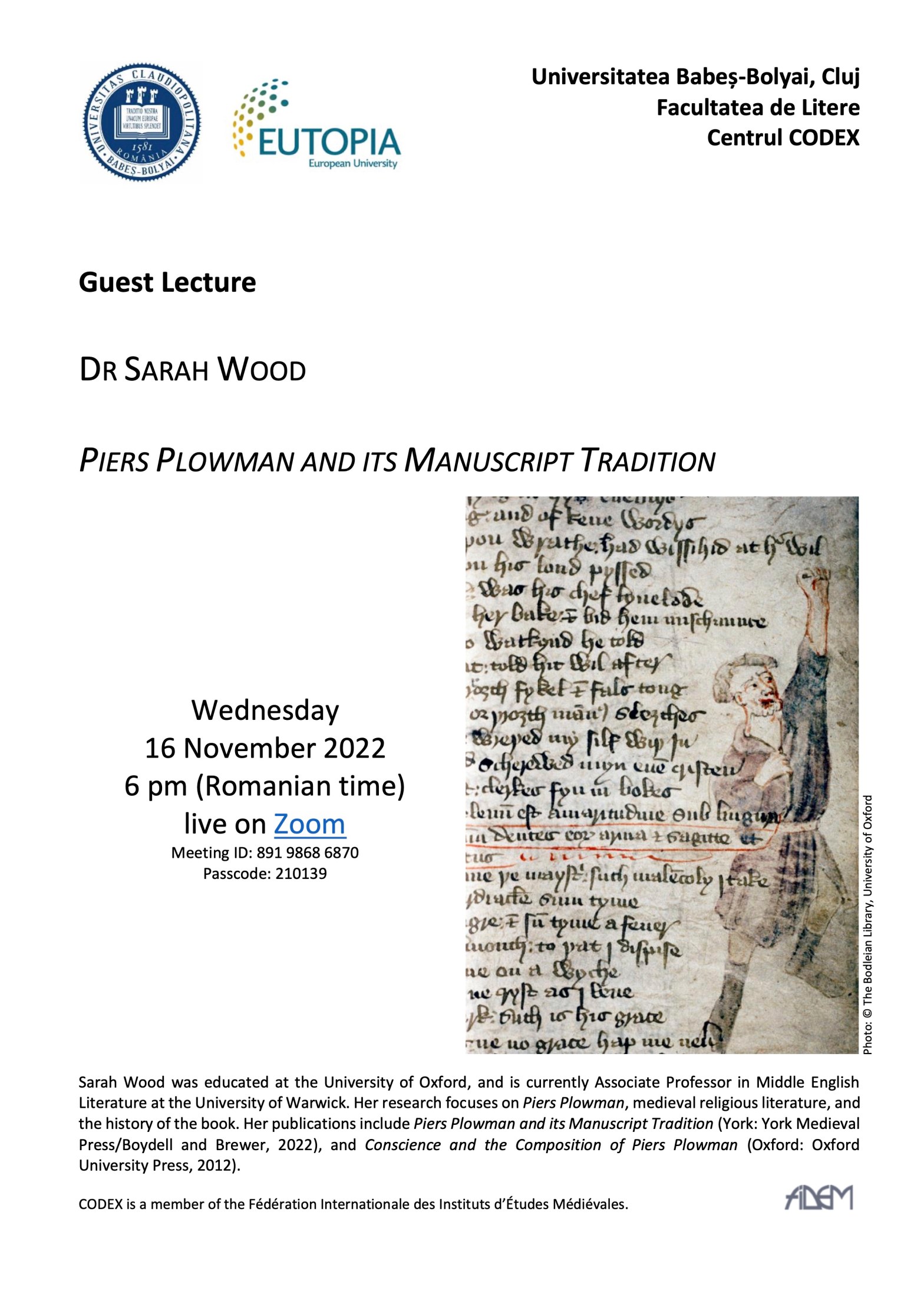
Lecture: Piers Plowman and Its Manuscripts

On Wednesday, 16 November 2022, at 6pm (Romanian time), Dr Sarah Wood (University of Warwick) is giving a guest lecture on ‘Piers Plowman and Its Manuscript Tradition’. The lecture can be attended live on Zoom (Meeting ID: 891 9868 6870; Passcode: 210139).

Sarah Wood was educated at the University of Oxford, and is currently Associate Professor in Middle English Literature at the University of Warwick. Her research focuses on Piers Plowman, medieval religious literature, and the history of the book. Her publications include Piers Plowman and its Manuscript Tradition (York: York Medieval Press/Boydell and Brewer, 2022), and Conscience and the Composition of Piers Plowman (Oxford: Oxford University Press, 2012).

Conference on ‘Sir Gawain and the Green Knight’

On Friday, 27 May 2022, from 10 am, Prof. Mircea M. Tomuș (Kirkwood Community College, Iowa) will present his translation of Sir Gawain and the Green KnightSir Gawain și Cavalerul cel Verde (Cluj: Școala Ardeleană, 2020).

Convenors: Prof. Michaela Mudure, Prof. Adrian Papahagi, Faculty of Letters.

Venue: Faculty of Letters, UBB Cluj (Str. Horea 31), Room Kisch.

DEEM students publish on Fragmentarium

The 2021-2022 class of the Diplôme Européen d’Études Médiévales (DEEM) studying codicology with Prof. Adrian Papahagi (CODEX-UBB) have just published two descriptions of manuscript fragments from the Academy Library-Cluj on Fragmentarium.

https://fragmentarium.ms/overview/F-5z0l

https://fragmentarium.ms/overview/F-32fd

The descriptions were elaborated during the seminars by the following MA, PhD and postdoctoral students: Angelo Bellettini (Toronto), Irene Binini (Parma), Giuseppe Colonna (Oxford), Elena Deinhammer (Linz), Thibault Emonet (Fribourg), Ole Fredrik Kullerud (Oslo), Wilhelm Ljungar (Stockholm), Carmen Oanea (Cluj), Jean-Gabriel Pophillat (Rome), Taneli Pupputi (Jyväskylä), José Carlos Sánchez López (Sevilla), Kajetan Škraban (Ljubljana).

The descriptions were elaborated during the seminars by the following MA, PhD and postdoc students Angelo Bellettini (Toronto), Irene Binini (Parma), Giuseppe Colonna (Oxford), Elena Deinhammer (Linz), Thibault Emonet (Fribourg), Ole Fredrik Kullerud (Oslo), Wilhelm Ljungar (Stockholm), Carmen Oanea (Cluj), Jean-Gabriel Pophillat (Rome), Taneli Pupputi (Jyväskylä), José Carlos Sánchez López (),

900+ visitors in the first month of FRAGMED exhibition

In its first month, the exhibition of manuscript fragments at the Romanian Academy Library of Cluj attracted a large public. Over 900 visitors (local and foreign scholars, groups of students and pupils accompanied by their tutors) were given tours by the research assistants of the CODEX Centre, Carmen Oanea and Andrei Crișan, and by the curator of the exhibition, Adrian Papahagi.

New Publication on Manuscript Fragments

This is the latest publication of the CODEX Centre:

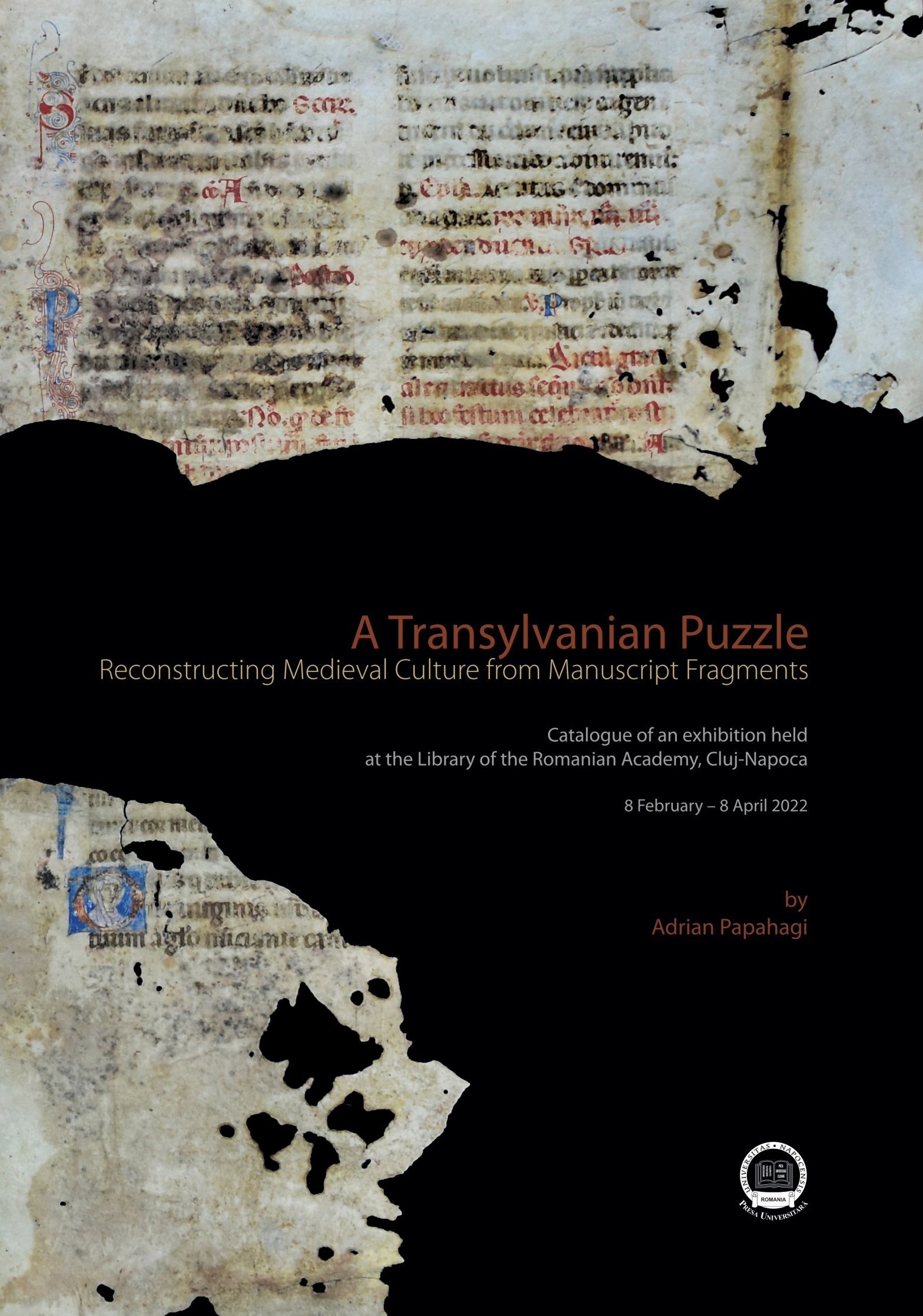
Adrian Papahagi, A Transylvanian Puzzle: Reconstructing Medieval Culture from Manuscript Fragments. Catalogue of an exhibition held at the Library of the Romanian Academy, Cluj-Napoca, 8 February-8 April 2022, Cluj: Presa Universitară Clujeană, 2022, 107 pp. + 109 colour illustrations and plates (ISBN 978-606-37-1392-7).

Fragmenta Codicum Exhibition (Feb.-Apr. 2022)

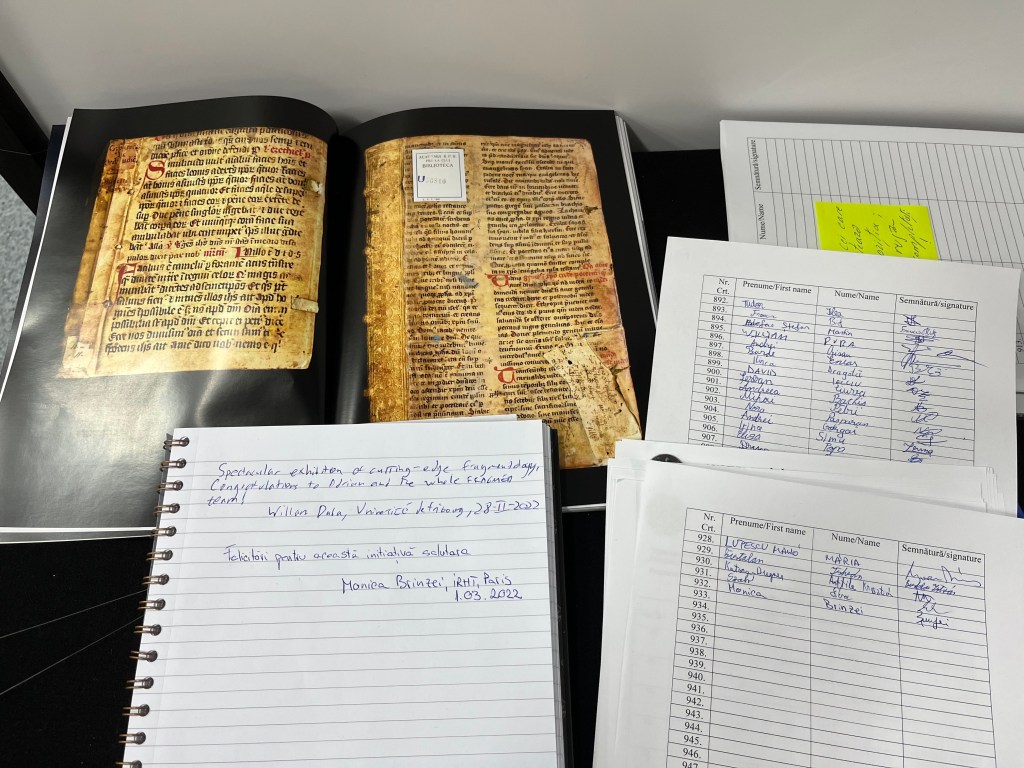
The FRAGMED project culminated with an exhibition of manuscripts and manuscript fragments at the Academy Library in Cluj, which opened on 8 February.

Prof. Doru Pamfil, President of the Cluj branch of the Romanian Academy, Prof. Daniel David, Rector of the Babeș-Bolyai University of Cluj, Prof. Sorin Crișan, Director of the Academy Library in Cluj, Mgr. Benedict of Bistrița, Dr Codruța Cuceu, manager of the FRAGMED project, and Prof. Adrian Papahagi, principal investigator of the FRAGMED project and curator of the exhibition gave short speeches.

Drs Zsuzsa Czagány and Gabriella Gilányi from the Institute of Musicology, Budapest and three of their PhD and MA students attended the opening. Ms Eszter Gaál and Mr Mózes Enyedi sang three pieces from the exhibited fragments:

1. Introit of Michaelmas, from the gradual of St Michael’s church, Cluj, s. XV/XVI (Alba Iulia, Bibl. Batthyaneum MS I.1 & Cluj, BAR, Fragm. Cod. Lat. 19-21);

2. ‘Lapides torrentes’ responsory, sung on the feast of St Stephen the Protomartyr, from an antiphonary fragment used in Cluj in the 15th c. (Cluj, BAR, Fragm. Cod. Lat. 14-15);

3. ‘Ave Spes Nostra’ antiphon, sung on the Annunciation, from the Oradea Antiphonal, c. 1476-1490 (Győr, Egyházmegyei Kincstár és Könyvtár, s.n. & Cluj, BAR Fragm. Cod. Lat. 1-2).

The event received ample coverage on national television and in the local press:

https://fb.watch/b3S7d6bPHg/

https://www.facebook.com/Batthyaneum/videos/696729841692597

13 Jan. 2022: Adrian Papahagi on Manuscript Fragments

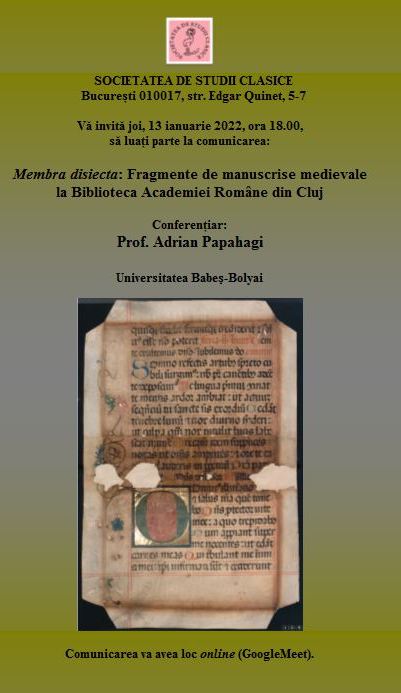
On 13 January 2022, from 6pm (CET), Adrian Papahagi is giving a conference on membra disiecta from medieval manuscripts to the Romanian Society of Classical Studies. The title of the conference is: “Membra disiecta: Fragmente de manuscrise medievale la Biblioteca Academiei Române din Cluj”.

The conference can be followed online on Google Meet at this link:  https://meet.google.com/tmw-hvcz-udn

8 Dec. 2021: Dragoș Calma on Editing Medieval Texts

On Wednesday, 8 December 2021, Dr Dragoș Calma gave a lecture on Editing Medieval Texts. Dr Calma answered the following questions: why do I edit; what do I edit; how do I edit? He spoke about major authors and minor texts, and about minor authors and their relevance for an intellectual landscape.

Rara avis: the lecture was held in person, at the Faculty of Letters (Room Eminescu, 4-6 pm).

Dragoș Calma is Associate Professor of Philosophy at University College Dublin. He obtained a BA in philosophy from UBB-Cluj, and a PhD in medieval philosophy from the Sorbonne (Paris IV). His publications include: Reading Proclus and the Book of Causes (ed.), Leiden: Brill, 2 vols, 2019-2020; Neoplatonism in the Middle Ages: New Commentaries on ‘Liber de Causis’ and ‘Elementatio Theologica’ (ed.), Turnhout: Brepols, 2016; Études sur le premier siècle de l’averroïsme latin. Approches et textes inédits, Turnhout: Brepols, 2011.

4 Nov. 2021: Christine Jakobi-Mirwald Conference

On Thursday, 4 November 2021, from 4 pm (Romanian time), CODEX organised a conference by:

Dr Christine Jakobi-Mirwald

‘Lost in Translation’: Speaking about Medieval Manuscripts

The conference was broadcast live on Zoom.

Christine Jakobi-Mirwald studied art history, French and Italian in Munich, and has a PhD in art history and manuscript studies from the University of Kassel. Her publications include: Das mittelalterliche Buch. Funktion und Ausstattung, Stuttgart: Reclam, 2004; Text – Buchstabe – Bild. Studien zur Entstehung der historisierten Initiale im 8. und 9. Jahrhundert, Berlin: Reimer, 1998; Buchmalerei. Ihre Terminologie in der Kunstgeschichte, Berlin: Reimer, 2nd edn 1997.

Academic Days of Cluj

CODEX members, Prof. Adrian Papahagi and Andrei Crișan, PhD candidate, gave papers at the “Academic Days of Cluj” conference, held online on 28-29 October 2021. The topic of this year’s conference was “Word and Image in European Book Production (15th-20th c.)”.

Prof. Adrian Papahagi spoke about “Describing medieval manuscript fragments: methods and problems”, and Mr Andrei Crișan gave a paper on “Contextualising late Anglo-Saxon law texts”.

The full programme of the conference can be found here:

13 Oct. 2021: Michelle P. Brown conference

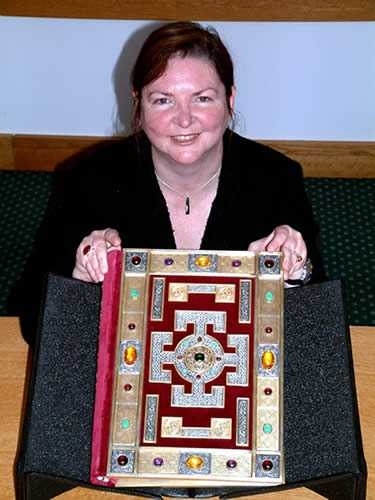
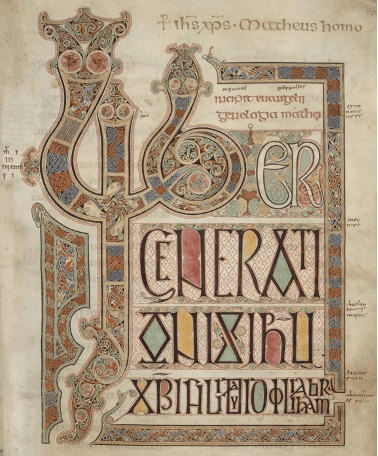
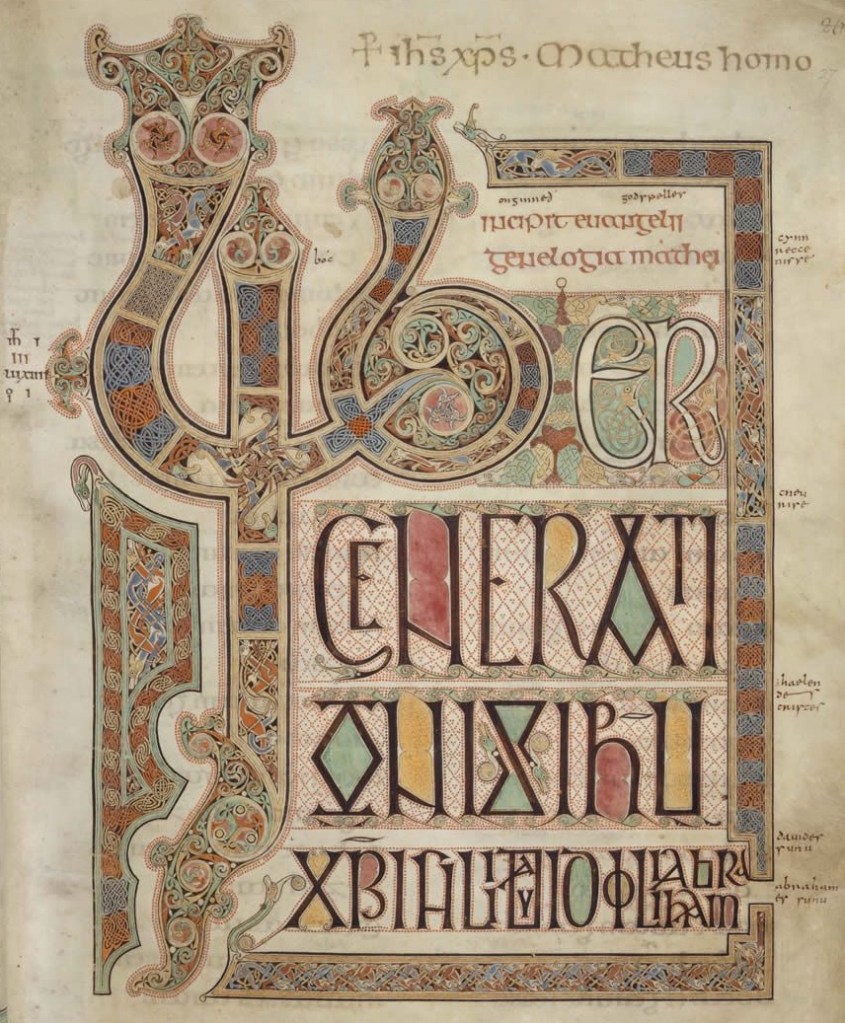
Michelle P. Brown, An Introduction to the Illuminated Manuscripts of Britain and Ireland, c. 600-850

Wednesday, 13 October 2021, 6pm local time (EEST), live on Zoom (link)

Michelle Brown is Professor Emerita of Medieval Manuscript Studies at the Institute of English Studies (School of Advanced Studies, University of London), and former curator of illuminated manuscripts at the British Library. Her publications include: Art of the Islands: Celtic, Pictish, Anglo-Saxon and Viking Visual Culture c. 450-1050, Oxford: Bodleian, 2016; The Lindisfarne Gospels and the Early Medieval World, London & Chicago: British Library and Univ. of Chicago Press, 2010; Manuscripts from the Anglo-Saxon Age, London & Toronto: British Library & Univ. of Toronto Press, 2008; ‎A Guide to Western Historical Scripts from Antiquity to 1600, Toronto: Univ. of Toronto Press, 1993.

Join Zoom Meeting

https://us02web.zoom.us/j/87901781068?pwd=UHMyd0FNdG9hcmdjS2Q3aVRiVy9WQT09

Meeting ID: 879 0178 1068

Passcode: 837492

Summer School in Berlin

Between 27 September- 1 October 2021, CODEX member, Andrei Crișan (PhD candidate), attended the Medieval Summer School: From Diplomatics to Genetics. Old and new fundamental research methods in medieval studies, organized in Berlin by the Centre for Medieval Studies at the Berlin-Brandenburg Academy of Sciences and Humanities (BBAW).

Programme: https://www.bbaw.de/die-akademie/mitarbeiterinnen-mitarbeiter/feuchter-joerg/summer-school-2021

CODEX AUTUMN CONFERENCES

All interested are invited to attend our guest lectures. No prior registration is required.

Wednesday, 13 October 2021, 6pm local time (EEST), live on Zoom (link)

Michelle P. Brown, An Introduction to the Illuminated Manuscripts of Britain and Ireland, c. 600-850

Michelle Brown is Professor Emerita of Medieval Manuscript Studies at the Institute of English Studies (School of Advanced Studies, University of London), and former curator of illuminated manuscripts at the British Library. Her publications include: Art of the Islands: Celtic, Pictish, Anglo-Saxon and Viking Visual Culture c. 450-1050, Oxford: Bodleian, 2016; The Lindisfarne Gospels and the Early Medieval World, London & Chicago: British Library and Univ. of Chicago Press, 2010; Manuscripts from the Anglo-Saxon Age, London & Toronto: British Library & Univ. of Toronto Press, 2008; ‎A Guide to Western Historical Scripts from Antiquity to 1600, Toronto: Univ. of Toronto Press, 1993.

Thursday, 4 November, 4pm local time (EET), Sala Eminescu, Fac. de Litere (Covid allowing), and live on Zoom (link)

Christine Jakobi-Mirwald, ‘Lost in Translation’: Speaking about Medieval Manuscripts

Christine Jakobi-Mirwald studied art history, French and Italian in Munich, and has a PhD in art history and manuscript studies from the University of Kassel. Her publications include: Das mittelalterliche Buch. Funktion und Ausstattung, Stuttgart: Reclam, 2004; Text – Buchstabe – Bild. Studien zur Entstehung der historisierten Initiale im 8. und 9. Jahrhundert, Berlin: Reimer, 1998; Buchmalerei. Ihre Terminologie in der Kunstgeschichte, Berlin: Reimer, 2nd edn 1997.

Thursday, 9 December, local time (EET), live on Zoom (link)

Dragoș Calma, Editing Medieval texts

Dragoș Calma is Associate Professor of Philosophy at University College Dublin. He obtained a BA in philosophy from UBB-Cluj, and a PhD in medieval philosophy from the Sorbonne (Paris IV). His publications include: Reading Proclus and the Book of Causes (ed.), Leiden: Brill, 2 vols, 2019-2020; Neoplatonism in the Middle Ages: New Commentaries on ‘Liber de Causis’ and ‘Elementatio Theologica’ (ed.), Turnhout: Brepols, 2016; Études sur le premier siècle de l’averroïsme latin. Approches et textes inédits, Turnhout: Brepols, 2011.

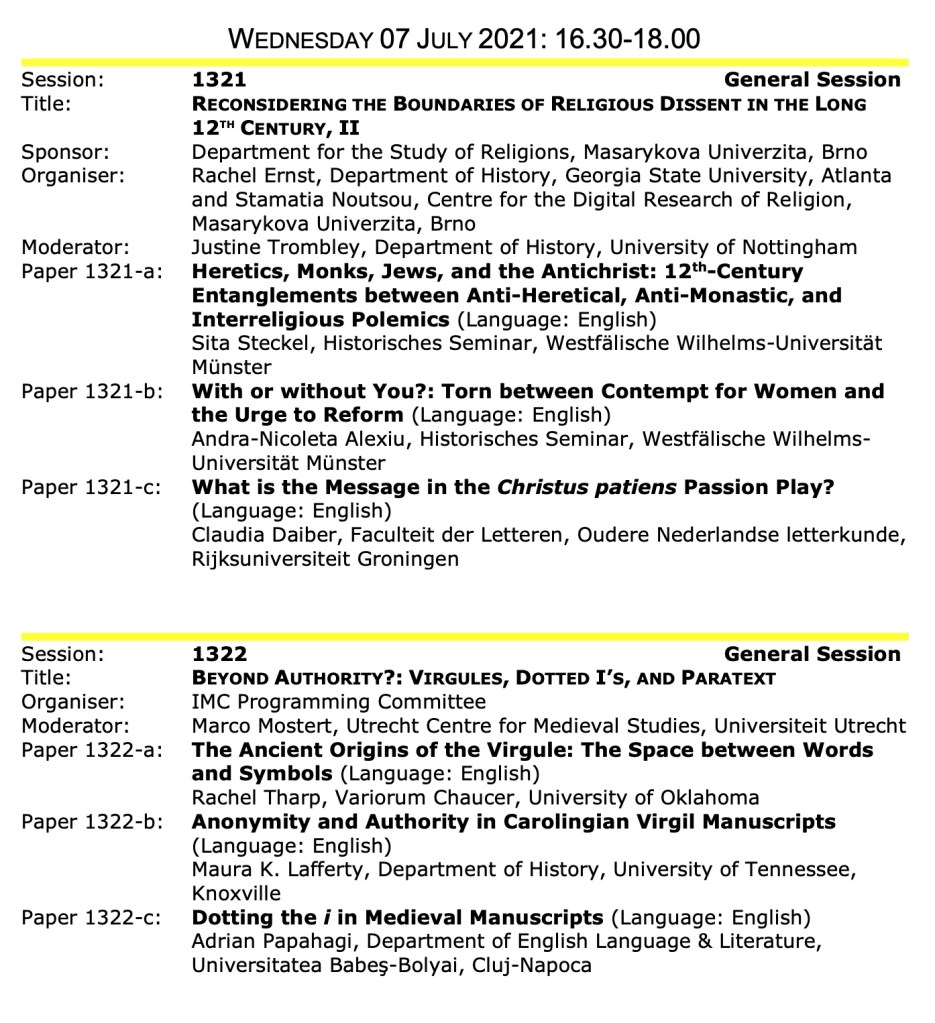
Dotting the ‘i’ in Medieval Manuscripts

Singling out the i‘s, especially when they appear in a series of minims, is a well-known aspect of Gothic manuscripts. However, little attention has been paid to the morphology of the “dots”. The present research explores an extensive corpus of manuscripts (ss. XIII-XV) in an attempt to assess whether such morphological variation is systematic, and chronologically or geographically determined. Can the shapes of “dots” on the i‘s provide a criterion for dating and localising manuscripts?

With the support of research assistants, MA students Carmen Oanea and Andrei Crișan, Adrian Papahagi has analysed over 2000 Gothic manuscripts in search of an answer. The results will be presented at the International Medieval Congress on 7 July 2021.

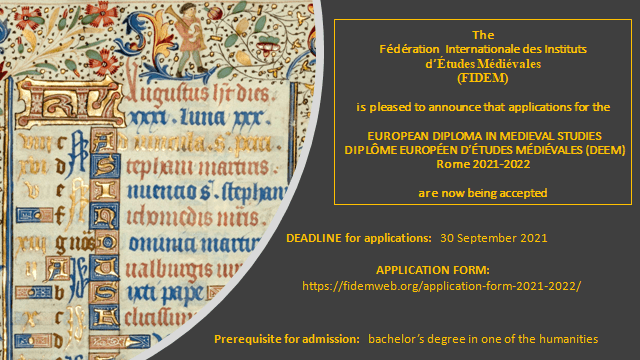
European Diploma in Medieval Studies-Call for Applications

The Diploma in Medieval Studies, created at Louvain-la-Neuve in 1991 by the Fédération Internationale des Instituts d’Etudes Médiévales (FIDEM), is organised in the framework of the ERASMUS+ programme in cooperation with LUMSA University in Rome (erasmuslumsa@lumsa.it). Students coming from universities with an Erasmus+ agreement with LUMSA (this is the case UBB-Cluj) do not have to pay the enrolment fee.

The courses, which are taught in Rome at the Norwegian Institute (https://www.hf.uio.no/dnir/english/), focus on methodology and teaching of auxiliary disciplines: Classical Latin, Medieval Latin, History of Libraries, Palaeography, Codicology, Diplomatic, and Text Editing.

Given the global Covid-19 outbreak, for the academic year 2021-2022 FIDEM has exceptionally decided to provide a partially blended DEEM programme, within which it will be possible to apply for both an in-class and an online course.

The in-class programme will be subject to the Covid-19 health measures issued by the Italian Government and, as the situation is almost certain to progressively stabilise, it will be provided only from 10 January 2022, starting with Medieval Latin I and continuing according to schedule (https://fidemweb.org/project/deem-2021-2022/).

The online programme, instead, will cover all the courses, starting on 25 October 2021 with  Italian I which is an optional course

A minimum of 6 participants is required for the course to start.

Attendance (both in-class and online) can take three forms: annual (60 ECTS), modular (30 ECTS), and personalised (2 or 4 ECTS).

The prerequisite for admission to the Diploma is a bachelor’s degree in one of the humanities

General coordination is by Doctor Massimiliano Lenzi (Sapienza, Università di Roma) (deem@fidemweb.org).

Click on the image below to apply:

‘Anglo-Saxon and Alemannic Traditions of Boethius’ at Oxford/UCL

On May 25th, 2021, Adrian Papahagi will give a paper on ‘Anglo-Saxon and Alemannic traditions of Boethius’s De Consolatione Philosophiae’ at an online symposium organised by the University of Oxford and University College London.

Full programme:

Rethinking English Literary Culture in the Age of Alfred: An Online Symposium

Monday April 26th
10.00 GMT (=11.00 British Summer Time), second screening 18.00 GMT (=19.00 British Summer Time)
Keynote: Malcolm Godden, ‘Why Did the English Switch from Verse to Prose?’

11.30 GMT (=12.30 BST), second screening 19.30 GMT (20.30 BST) – will follow on from the recording of the keynote
Christine Rauer, ‘Old English Prose before Alfred: The Mercian Dimension’
Susan Irvine, ‘Decorum and the Idea of an English Aureate Style in the Dialogues

David Johnson, ‘Eschatology in the Old English Dialogues

Wednesday April 28th, 10.00 GMT (=11.00 BST), second screening 18.00 GMT (=19.00 BST)
Daniel Anlezark, ‘The Old English Pastoral Care: Assessing the Evidence’
Greg Waite, ‘The Old English Bede: Some Reflections on Origins and Text’

Georgina Pitt, ‘Vibrant Matter: The Persuasive Agency of the Alfred Jewel’

Tuesday May 25th, 16.00 GMT (=17.00 BST), second screening Wednesday May 26th, 09.00 GMT (=10.00 BST)
Adrian Papahagi, ‘Anglo-Saxon and Alemannic Traditions of Boethius’s De Consolatione Philosophiae

Karmen Lenz, ‘Refrains and Frame Lines: Patterns in Sung Verse in the Consolatio and the Old English Boethius
Robert Gallagher, ‘Rethinking Latin in the Age of Alfred’

Tuesday June 29th, 17.00 GMT (=18.00 BST), second screening Wednesday June 30th, 09.00 GMT (10.00 BST)
Michael Treschow, ‘Ease and Unease in the Old English Boethius and Soliloquies
Erica Weaver, ‘Naked Thought: Touching Wisdom in the Old English Soliloquies’ Leslie Lockett, ‘The Old English Soliloquies and Scholarship in the Reign of Athelstan’

Tuesday September 28th, 17.00 GMT (=18.00 BST), second screening Wednesday September 29th, 09.00 GMT (=10.00 BST)
Jane Toswell, ‘The Psalms in the Ninth Century’
Emily Butler, ‘Reading the Prose Psalms in an Age of Populism’

Stephanie Clark, ‘Alfred and the Economics of Personhood’

Tuesday October 12th 17.00 GMT (=18.00), second screening Wednesday October 13th, 09.00 GMT (=10.00 BST)
Emily Kesling, ‘Writing-in Alfred in Tenth-Century Winchester’
Rosalind Love, ‘Cambridge, Corpus Christi College MS 206 and its Implications’

Tuesday October 26th, 15.00 GMT (= 16.00 BST), second screening Wednesday October 27th, 09.00 GMT (=10.00 BST)
Omar Khalaf, ‘Ælfred se casere: Kingship and Imperial Legitimation in the Old English Orosius

Hal Momma, ‘Monarchy, the Three Estates, and Beer: Alfred and Alfredian Political Philosophy’

Tuesday November 16th, 17.00 GMT (second screening Wednesday November 17th, 09.00 GMT)
Courtnay Konshuh, ‘The Compilation of MS A: An Exemplar Revised’
Anya Adair, ‘King Alfred’s Domboc and the Invention of English Legal Time’

Tomás Kalmar, ‘Si recte non dividas, peccas: On the coherence of Asser’s final chapters’

Tuesday November 30th, 17.00 GMT (second screening Wednesday December 1st, 09.00 GMT)
Nicole Discenza, ‘Alfredian geographies’
Elizabeth Tyler and Máire Ní Mhaonaigh, ‘Looking East and West: Contextualising Vernacular Writing in Alfred’s Time’ [double paper]

Tuesday December 7th 17.00 GMT (second screening Wednesday December 8th, 09.00 GMT)
Mercedes Salvador-Bello, ‘The Exeter Book and the Transmission of Poetic Anthologies in the (Post-)Alfredian Period’

Helen Appleton, ‘The Proverbs of Alfred and Legacies of Educational Reform’

Fragmentarium Conference by Adrian Papahagi

On Friday, 26 March 2021, at 16:00 CET/17:00 EET, Adrian Papahagi will give the next Fragmentarium conference on the topic:

“Evidence Preserved by Destruction: Recycling Medieval Manuscript Fragments in Transylvania during the (Counter)Reformation”

Please register at this link:
https://zoom.us/meeting/register/tJIkceivqzIsHNNLxdELus7pJp8NbAcUevXr

Future Fragmentarium conferences:

  • 23 April 2021: Dr. David Rundle (Center for Medieval and Early Modern Studies, University of Kent): Neil Ker and the tradition of studying fragments in the UK
  • 28 May 2021: Dr. Jennifer Bain (Dalhousie University) and Dr. Debra Lacoste (Cantus Database, The Institute of Medieval Music, University of Waterloo): “Digital Analysis of Chant Transmission (DACT): A Case Study of Two Fragments from the Binding of the Riesencodex”

Former conferences recorded at: https://www.youtube.com/channel/UCi-dRazqsoIDhr_QVbzIBjg

LE: The conference can now be watched here.

Balázs J. Nemes Curates Exhibition on Dominican Books

CODEX member, Dr Balázs J. Nemes is one of the curators of an exhibition on the medieval books of the Dominican sisters from Freiburg.

The exhibition is entitled

Buochmeisterinn
Handschriften und Frühdrucke aus dem Freiburger Dominikanerinnenkloster Adelhausen

and can be visited at the City Museum of Freiburg im Breisagau between 13 March and 13 June 2021, and online here:

DEEM Students on Fragmentarium

Nine MA and PhD students described manuscript fragments from the Academy Library in Cluj. The young researchers come from various European universities (Barcellona, Castilla-La Mancha, Cluj, Fribourg, Krakow, Sevilla, Torún, Venice), and are enrolled in the Diplôme Européen d’Études Médiévales, organised by the Fédération Internationale des Instituts d’Études Médiévales (FIDEM). This activity is part of the Codicology I course, given by Adrian Papahagi, director of CODEX.

On Monday, 8 March 2021, Dr William Duba (Univ. of Fribourg), the manager of Fragmentarium, introduced the students to Fragmentarium and fragmentology.

The students’ work has been published on Fragmentarium, and can be consulted at the following links:

https://fragmentarium.ms/overview/F-ryor – César Quijano

https://fragmentarium.ms/overview/F-jgz6 – Francesco Binotto

https://fragmentarium.ms/overview/F-4ooa – Sergi Rexach Camps

https://fragmentarium.ms/overview/F-r52f – Jordi Bossoms

https://fragmentarium.ms/overview/F-mlcm – Sandes Dindar

https://fragmentarium.ms/overview/F-cwel – Marcin Jan Janecki

https://fragmentarium.ms/overview/F-6zz3 – Zdzisław Koczarski

https://fragmentarium.ms/overview/F-7uts – Antonio Sánchez González

https://fragmentarium.ms/overview/F-aqny – Ioan-Andrei Crișan

Becoming BAR, Fragm. Cod. Lat. 12

Here is the passage from the unidentified wrapper of a book printed in 1520 to Cluj, Biblioteca Academiei Române (BAR), Fragm. Cod. Lat. 12, a beautiful twelfth-century fragment from a copy of Otto of Freising’s Chronicle.

The fragment has been restored and digitised at the National Unity Museum in Alba Iulia, and has been published on Fragmentarium.

The printed book has also been restored, and rebound in leather. Both items now stand prepared to face the coming centuries.